




Blog / New Chevrolet vehicles in Bartlett, TN

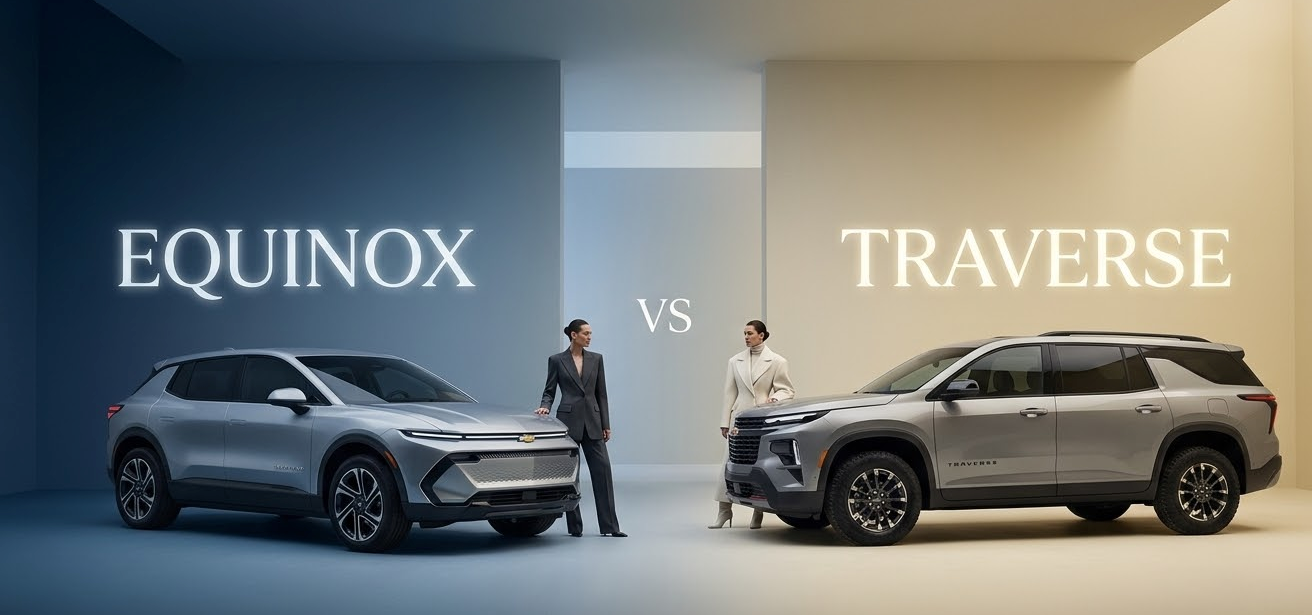
2026 Chevrolet Equinox vs Traverse: Which SUV Fits Your Bartlett Family

chevy equinox vs chevy traverse
Chevrolet SUV Comparison
2026 Chevrolet Equinox vs. Traverse: Which SUV Fits Your Bartlett Family?

The Equinox is the smarter compact SUV for shoppers who want value, efficiency, and easy daily driving. The Traverse is the stronger fit for families that need three-row space, more cargo room, stronger towing, and a more flexible cabin.

Choose the Equinox if...

You want seating for five, a lower starting price, easier parking, stronger efficiency, and enough space for everyday family life.

Choose the Traverse if...

You need up to eight seats, more cargo volume, stronger power, better towing capability, and more room for growing family needs.

If you are trying to choose between the 2026 Chevrolet Equinox and the 2026 Chevrolet Traverse near Bartlett, the short answer is simple. The Equinox is the smarter fit for buyers who want a five-passenger compact SUV with solid value, better efficiency, and easier daily maneuverability, while the Traverse is the better fit for families who need true three-row space, much more cargo volume, stronger towing, and a more premium cabin layout. Chevrolet currently lists the Equinox starting at $28,800 with seating for five, up to 63.5 cubic feet of max cargo volume, 26/28 city/highway mpg, an 11.3-inch touchscreen, and over 15 standard safety and driver assistance features. Chevrolet lists the Traverse starting at $40,800 with seating for up to eight, best-in-class 98 cubic feet of cargo volume, 19/24 city/highway mpg on 2WD models, a 17.7-inch touchscreen, and over 20 standard safety and driver assistance features.

At Dobbs Brothers Chevrolet of Bartlett, we look at this comparison from a shopper’s real life, not just from a spec sheet. The better question is how each SUV fits the way you actually drive around Bartlett, Memphis, Germantown, Arlington, Lakeland, and the rest of the greater Memphis area. Some buyers need something easy to park, efficient to run, and roomy enough for a small family. Others already know they are tired of packing around the limits of a compact SUV and need a vehicle that can handle carpools, road trips, child seats, sports bags, and weekend cargo without turning every drive into a game of compromise. Dobbs Brothers Chevrolet of Bartlett serves those local drivers with new Chevrolet inventory, financing tools, trade-in support, service, and test-drive scheduling from our location at 7850 HWY 64.

This guide breaks down the real space difference, the engine and transmission logic, fuel economy, technology layout, trim value, and the practical ownership question that matters most: whether you should stay in the Equinox lane or move up to the Traverse now instead of wishing you had done it a year from now.

Size, Seating, and Cargo Space Differences
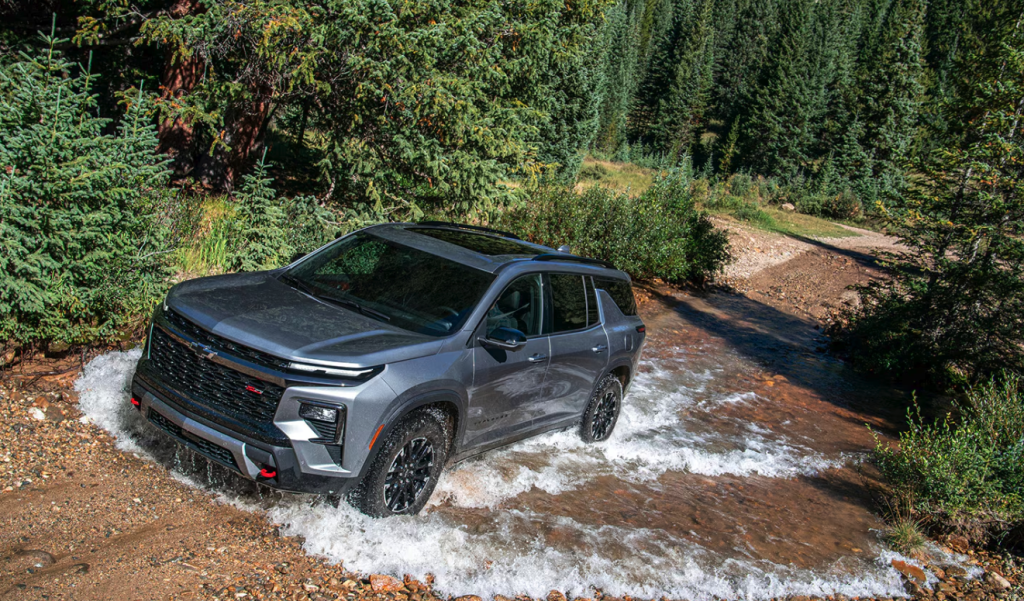
Key Takeaway: The Equinox is the better compact daily SUV for five-passenger households, while the Traverse is the right move for families who need more passenger flexibility, much larger cargo room, and a vehicle that can absorb future growth without feeling cramped.
2026 Chevy Traverse exterior

The biggest difference between the 2026 Equinox and the 2026 Traverse is not styling or even horsepower. It is mission. Chevrolet built the Equinox as a compact family SUV and the Traverse as a midsize three-row family SUV. That sounds obvious, but a lot of shoppers still compare them because the price jump is significant enough to require thought, while the promise of extra room is attractive enough to create doubt. Chevrolet lists the Equinox with seating for five, max cargo volume of 63.5 cubic feet, and starting MSRP of $28,800. Chevrolet lists the Traverse with seating for up to eight, best-in-class max cargo volume of 98 cubic feet, and starting MSRP of $40,800. That means the Traverse gives you far more total interior utility, but it also asks you to pay for space and capability you may not need every day. The smartest decision is not automatically the larger SUV. It is the SUV whose mission actually matches your household.

There is also a major physical size difference. In a current 2026 comparison data, the Equinox measures 183.2 inches long with a 107.5-inch wheelbase, while the Traverse measures 204.5 inches long with a 121.0-inch wheelbase. That is a meaningful jump in footprint, and it has consequences in both directions. The Traverse can provide more second-row comfort, more cabin openness, and a real third row, but the Equinox is easier to manage in tighter parking situations, garages, older driveways, and everyday suburban errands. Edmunds also lists the Equinox with a 37.1-foot turning circle and the Traverse at 39.0 feet, which helps illustrate why compact-SUV buyers often feel more relaxed in crowded shopping areas and school pickup lines. For many Bartlett households, that extra ease matters Monday through Friday even if the bigger vehicle looks more tempting on Saturday.

The Equinox works best for drivers who want a more efficient, easier-to-live-with SUV that still has enough cargo flexibility for groceries, strollers, backpacks, weekend luggage, and the normal clutter of family life. The Traverse works best for buyers who already know their household operates at a larger scale. More passengers, more travel gear, more use for a third row, or simply more desire to keep the vehicle longer as the family grows. If you buy the Equinox and use it within its intended mission, it feels smart and efficient. If you buy it while secretly needing Traverse space, it starts to feel undersized much faster. That is the ownership mistake worth avoiding.

Passenger Space and Family Packaging

Passenger packaging is one of the least glamorous parts of SUV shopping, but it is one of the most important. Chevrolet positions the Equinox as a five-passenger SUV with a roomy interior and flexible folding seats, while the Traverse is designed around available seating for up to eight with flexible second-row seating options, including bench seats or captain’s chairs depending on configuration. That difference changes everything. The Equinox is ideal for singles, couples, young families, and many households with one or two children. The Traverse is built for larger family movement and for households that need to carry extra passengers without constant tradeoffs. If your life includes grandparents, teammates, friends, or frequent carpool duty, the Traverse starts making sense very quickly.

The numbers reinforce that story. Chevrolet lists front leg room at 40.9 inches in the Equinox and 44.3 inches in the Traverse, with rear leg room at 39.9 inches for the Equinox and 41.5 inches for the Traverse. Shoulder room is also noticeably broader in the Traverse. Those figures are not just technical filler. They speak directly to how relaxed adults feel in the second row, how easy child-seat placement becomes, and how much the front seats must compromise for rear passengers. A compact SUV can be family-friendly, but a midsize three-row SUV simply has more room to distribute comfort across the cabin. That is especially true once rear-facing seats, booster seats, and growing kids start competing for the same space.

Chevrolet also gives the Traverse a stronger family-access story. LT includes Smart Slide Seats, and RS and High Country add One-Touch Fold second-row seats plus power-folding second- and third-row seating. The Equinox counters with a practical 60/40 split-bench rear seat and hidden rear cargo-floor storage, which are both useful features, but it does not have to solve the same problem. It is trying to make five-passenger family life easier. The Traverse is trying to make larger family logistics manageable. Those are different jobs, and that difference should shape your purchase decision more than a simple “small versus big” label ever could.

Cargo Room, Daily Utility, and the Real Cost of Outgrowing Your SUV

Cargo room is where the gap becomes especially clear. Chevrolet lists the Equinox at 63.5 cubic feet of maximum cargo volume and the Traverse at 98 cubic feet, which Chevrolet also calls best-in-class for the Traverse. In Chevrolet comparison data, the Equinox offers 29.8 cubic feet behind the rear seat, while the Traverse offers 22.9 cubic feet behind the third row and 56.6 cubic feet with the rear seats folded. The reason that matters is simple: the Traverse can carry people and cargo at the same time in ways the Equinox cannot. The Equinox is very usable for a compact SUV, but if you regularly need multiple rows occupied and still want meaningful luggage or sports-gear space, the Traverse is the more realistic answer.

2026 Chevy Traverse row seating

This is also where the “save money now” instinct can work against some buyers. A lot of families begin in a compact SUV thinking they will make it work. Then a second child arrives, weekend travel grows, strollers become wagons, team sports begin, and every loading event becomes tighter than it should be. The cost of outgrowing your SUV is not only financial. It is also mental. It shows up in packing stress, passenger compromises, and a feeling that the vehicle is always being asked to do one job too many. The Equinox is still a smart buy for many households, but only if you do not ask it to solve a midsize-SUV problem. That is one of the biggest blind spots in generic comparison content, and it is exactly why we tell buyers at Dobbs Brothers Chevrolet of Bartlett to think about the next three years, not just the next three months.

Three quick utility checkpoints can help narrow the decision:

  • Choose Equinox if your household rarely carries more than four people and you want easier parking, lower entry cost, and stronger fuel economy.
  • Choose Traverse if you need regular third-row access, carry larger loads, or want more room for child seats, road trips, and carpools.
  • Choose Traverse sooner rather than later if you already know your family needs are expanding and you do not want to replace the vehicle again too soon.

Who Truly Needs a Third Row and Who Does Not

Not every family needs a third row, and this is where an honest dealership conversation matters more than marketing. Some shoppers are drawn to the Traverse because a third row sounds like the “better family option.” Sometimes that is true. Sometimes it is just extra size and expense that will sit unused most of the year. If your daily routine is mostly one or two adults, one or two children, short errands, and occasional cargo duty, the Equinox can be the more rational purchase. It gives you the right amount of SUV without forcing you to pay the price, fuel, and footprint penalties of a larger vehicle. Chevrolet’s current lineup positioning supports that logic: Equinox sits in the compact family-SUV slot, and Traverse sits in the midsize three-row slot for buyers whose needs are clearly broader.

On the other hand, some buyers hesitate too long before moving up. If you have three children, frequent guest passengers, regular carpools, or a road-trip lifestyle, the Traverse is not “too much SUV.” It is the correct amount of SUV. It also provides a cleaner step below Tahoe and Suburban, which are excellent full-size SUVs but ask for an even larger size and budget commitment. Within Chevrolet’s own family, that makes the Traverse one of the most balanced choices for households that need real family capacity without jumping all the way to full-size ownership. This brand-to-brand logic matters because a smart Chevrolet comparison should start within the lineup first. Only after that should you worry about Hyundai Palisade, Toyota Grand Highlander, Honda Pilot, Toyota RAV4, or Hyundai Tucson. Your first question is which Chevrolet mission fits you best.

Performance, Fuel Economy, and Technology

Key Takeaway: The Equinox gives you better day-to-day efficiency and simpler compact-SUV value, while the Traverse gives you much more power, more towing strength, a larger cabin interface, and a broader safety and trim story for bigger families.

Chevrolet has built these two SUVs around very different power and utility priorities. The 2026 Equinox uses a 1.5L turbo engine producing 175 horsepower, with available all-wheel drive and up to 1,500 pounds of towing capacity. Chevrolet also lists 26/28 city/highway mpg for the Equinox in the current lineup summary. The 2026 Traverse uses a turbocharged 2.5L engine producing 328 horsepower and 326 lb-ft of torque, paired with an eight-speed automatic transmission and standard towing capacity of up to 5,000 pounds with included trailering equipment. Chevrolet lists 19/24 city/highway mpg for the Traverse on 2WD models, while the model page also highlights 20/26 mpg on FWD in its capability section. The difference is clear: Equinox is tuned for efficient everyday compact-SUV use, while Traverse is engineered to move more mass, more passengers, and more cargo with stronger reserve power.

That changes how each SUV feels in real ownership. The Equinox is easier to justify for buyers whose life is centered on commutes, errands, lighter family duty, and budget consciousness. The Traverse makes more sense if you want stronger highway merging, easier loaded-up acceleration, and real trailer flexibility. Edmunds comparison data echoes that gap with 175 horsepower and 184 lb-ft of torque for the Equinox LT versus 328 horsepower and 326 lb-ft for the Traverse LT. Edmunds also lists fuel economy at 26/29/27 mpg for the Equinox LT and 20/26/22 mpg for the Traverse LT in its current comparison tool, which tracks closely with Chevrolet’s overall positioning even if specific figures vary by drivetrain.
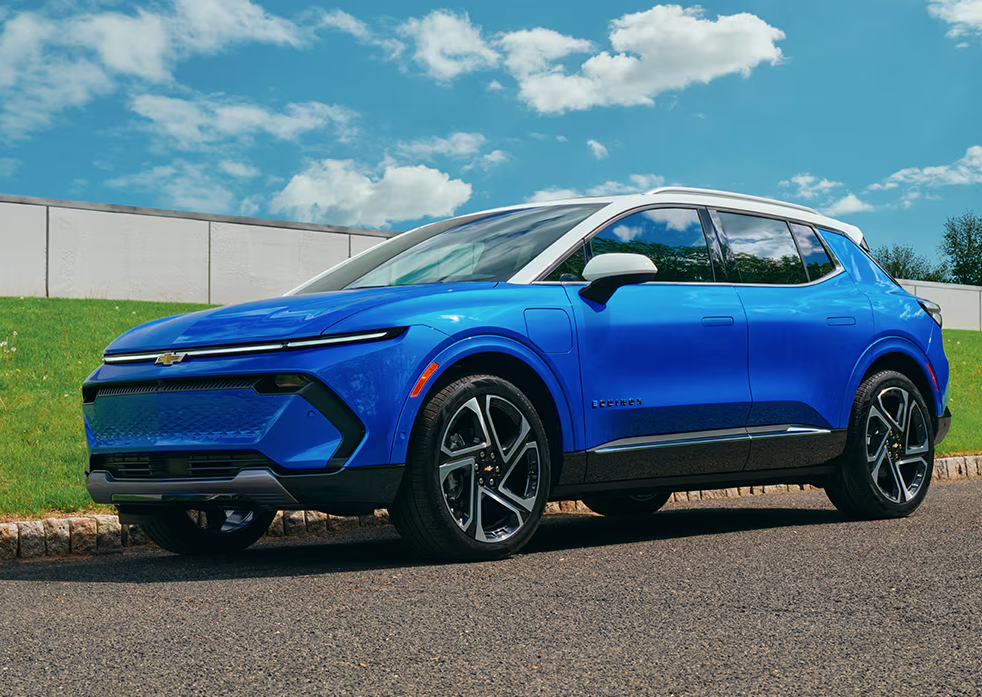
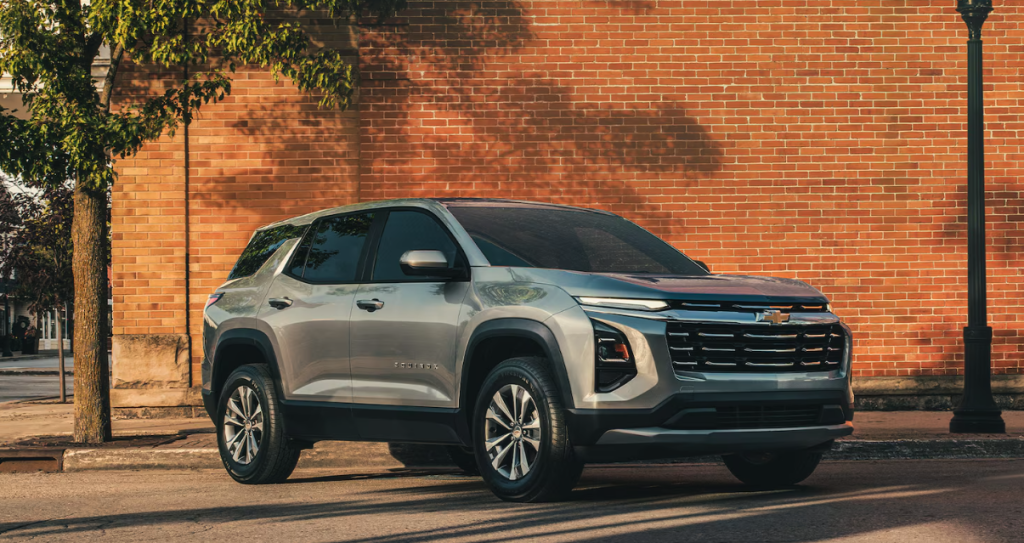
2026 Chevrolet Equinox exterior

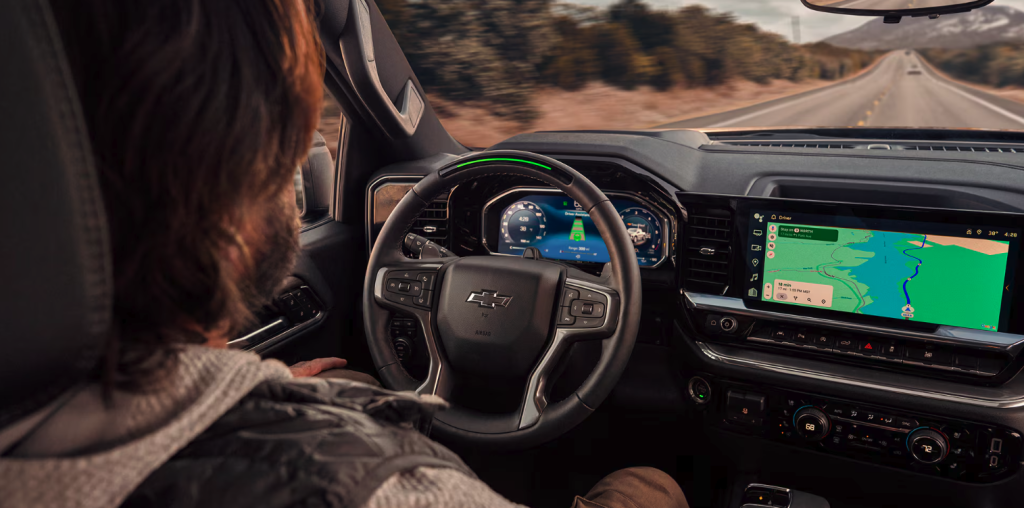
The technology gap is equally important. Chevrolet gives the Equinox an 11.3-inch infotainment touchscreen and an 11-inch Driver Information Center, plus Google built-in, Adaptive Cruise Control, wireless Apple CarPlay and Android Auto compatibility, and over 15 standard safety and driver assistance features including Chevy Safety Assist. Chevrolet gives the Traverse an 11-inch Driver Information Center and a much larger standard 17.7-inch touchscreen, plus Google built-in, available HD Surround Vision, available Super Cruise on High Country and RS through the Enhanced Driving Package, and over 20 standard safety and driver assistance features. In plain English, the Equinox already feels modern and competitive. The Traverse feels like a larger, more premium technology environment.

1.5L Turbo Equinox vs 2.5L Turbo Traverse

The Equinox powertrain makes sense for the vehicle’s mission. Chevrolet’s 1.5L turbo engine gives the compact SUV enough output for daily driving while helping preserve efficiency and pricing discipline. For a lot of buyers, that is exactly the right formula. It keeps the Equinox from trying to be something it is not. It is not a heavy hauler, and it is not supposed to be. It is a compact family SUV designed to move five passengers comfortably, handle daily cargo, and stay easy to live with over long ownership. Its available all-wheel drive, standard Drive Mode Selector, and 1,500-pound towing capacity are useful bonuses, not the center of the vehicle’s identity.

The Traverse, by contrast, uses its 2.5L turbo engine to solve the heavier-duty family problem. More passengers, more mass, more cargo, more aerodynamic load, and more demand for relaxed acceleration all push Chevrolet toward a stronger output profile. That is why the Traverse’s torque figure matters so much. It is not just the headline 328 horsepower. It is the 326 lb-ft that gives the midsize SUV more confidence when loaded, merging, climbing, or towing. Chevrolet also points out that this powertrain delivers improved performance and greater efficiency than the previous V6 generation, which is a useful reminder that more cylinders do not automatically equal a better modern family SUV. Here, the engineering goal is usable torque and packaged capability.

There is also a practical transmission difference. Chevrolet lists the Equinox LT with a continuously variable automatic and the Traverse LT with an eight-speed shiftable automatic. Chevrolet’s own pages also specify an eight-speed automatic for the Traverse and a CVT on FWD Equinox trims in the configurator. That matters because it helps explain why the Traverse feels more traditional under load, while the Equinox leans more toward smoothness and efficiency. Neither setup is wrong. They are simply matched to different buyer priorities. If you want the more efficient daily tool, the Equinox is correctly engineered. If you want stronger response for a heavier family role, the Traverse is correctly engineered.

Screens, Safety Tech, and Trim Value

Chevrolet has done a smart job separating these SUVs by technology without making the Equinox feel stripped down. The Equinox gives you an 11.3-inch touchscreen, an 11-inch Driver Information Center, Google built-in, and over 15 standard safety and driver assistance features. Standard features include Automatic Emergency Braking, Front Pedestrian Braking, Lane Keep Assist with Lane Departure Warning, Forward Collision Alert, Following Distance Indicator, IntelliBeam, Side Bicyclist Alert, Adaptive Cruise Control, Rear Park Assist, HD Rear Vision Camera, Lane Change Alert with Side Blind Zone Alert, and Rear Cross Traffic Braking. That is a strong value equation in a compact SUV price band.

The Traverse raises the ceiling. Chevrolet gives it a standard 17.7-inch touchscreen, the same 11-inch Driver Information Center, available HD Surround Vision, available Super Cruise on High Country and RS, and over 20 standard safety and driver assistance features. Chevrolet specifically highlights features such as Front Pedestrian and Bicycle Braking, Blind Zone Steering Assist, Rear Cross Traffic Braking, Adaptive Cruise Control, Rear Pedestrian Alert, Side Bicyclist Alert, and Intersection Automatic Emergency Braking. This is where the Traverse starts to feel less like “the bigger SUV” and more like “the more premium family platform.” If your household spends lots of time in traffic, on highways, or in mixed-use parking lots, those added layers have real value.

Trim strategy matters too. Chevrolet currently structures the Equinox around LT, RS, and ACTIV on the live model page, with LT at $28,800 and both RS and ACTIV at $33,600. LT is the everyday value choice. RS adds blacked-out style, 19-inch wheels, and a sportier look. ACTIV adds all-terrain tires, uniquely tuned suspension, and more rugged appearance details. Traverse starts with LT at $40,800, then Z71 at $48,900, High Country at $55,100, and RS at $55,400. That creates a very clear value ladder from compact practicality to midsize family capability and then into more premium or rugged expressions. Chevrolet’s lineup logic is one of the strongest parts of this comparison because it gives buyers a natural path upward only if their needs truly justify it.

Chevy Equinox vs Chevy Traverse Pricing and Trim Level Overview

Specification2026 Chevrolet Equinox2026 Chevrolet Traverse
Starting MSRP$28,800$40,800
Seating5Up to 8
Max Cargo Volume63.5 cu. ft.98 cu. ft.
Base Engine1.5L Turbo2.5L Turbo
Horsepower175 hp328 hp
Torque184 lb-ft326 lb-ft
TransmissionCVT on FWD trims8-speed automatic
Towing CapacityUp to 1,500 lbs.Up to 5,000 lbs.
Fuel Economy26/28 city/hwy19/24 city/hwy on 2WD models
Standard Center Screen11.3 inches17.7 inches
Standard Driver Display11 inches11 inches
Standard Safety BundleOver 15 featuresOver 20 features
Best ForSmall families, commuters, value shoppersGrowing families, road trips, carpools, more cargo and towing

The table combines current Chevrolet model data with Edmunds comparison data for torque and transmission detail.

Three fast trim-value takeaways stand out:

  • Equinox LT is the smart entry point for value-focused buyers who still want modern screens and strong standard safety.
  • Equinox RS or ACTIV make sense if you want more style or mild rugged character without moving into a larger SUV.
  • Traverse LT or Z71 are the most logical jump-up choices for families that need more seats, more flexibility, and more capability than a compact SUV can realistically provide.

Compare Both SUVs at Dobbs Brothers Chevrolet of Bartlett

Key Takeaway: The best way to choose between Equinox and Traverse is to compare them in person at Dobbs Brothers Chevrolet of Bartlett, because this decision is really about lifestyle fit, not just published dimensions.

At Dobbs Brothers Chevrolet of Bartlett, we have found that this comparison becomes much easier once shoppers sit in both SUVs back to back. On paper, the Equinox looks like a strong value and the Traverse looks like the roomier upgrade. In person, the difference becomes more personal. Some drivers immediately realize the Equinox is all they need. Others open the Traverse, fold the seats, sit in the second and third rows, and realize they would rather buy once and have the extra space now. That is why we always recommend testing both if your household is on the edge between compact and midsize needs. Our dealership serves Bartlett, Memphis, Germantown, Collierville, Arlington, Lakeland, and nearby communities with Chevrolet inventory, financing support, value-your-trade tools, service, and local test-drive availability.

2026 Chevrolet Equinox cargo space

The local angle matters too. Bartlett drivers are not shopping in a vacuum. They are dealing with school routines, short suburban trips, parking lots, family errands, and regional highway travel. The Equinox is excellent for buyers who value ease, efficiency, and everyday convenience. The Traverse is stronger for families whose schedules are more crowded and whose cargo or passenger needs change often. Neither choice is wrong. The right choice depends on whether your daily life behaves like a compact-SUV life or a midsize-three-row life. That is not something a generic national comparison can answer as well as a side-by-side test drive at a local Chevrolet dealership.

Visit Dobbs Brothers Chevrolet of Bartlett if you want to compare both SUVs with your own routine in mind. Bring the child seats, stroller, sports bags, or passengers that usually shape your week. Sit in the Equinox first, then step into the Traverse and judge the difference honestly instead of guessing from photos. Ask our team to walk you through trim differences, current offers, financing options, and trade value while the comparison is still fresh. That kind of real-world test usually answers the question faster than another hour of online browsing.

You can also start on our website before you visit our Bartlett showroom. Review current Chevrolet specials, check financing options, estimate your trade-in value, and narrow down whether Equinox or Traverse deserves the first test drive. Then come see us at 7850 HWY 64 and compare both SUVs where the decision becomes practical instead of abstract. A local dealership conversation can save you from buying too little SUV or spending for more SUV than you actually need. At Dobbs Brothers Chevrolet of Bartlett, that is exactly the kind of decision support we want to provide.

Ready to Compare the Equinox and Traverse?

Shop current Chevrolet inventory, schedule a test drive, or estimate your trade value before visiting Dobbs Brothers Chevrolet of Bartlett.

This comparison matters more in a market like Bartlett because local driving is mixed. Many buyers do not need a huge full-size SUV, but many also discover that a compact SUV starts feeling tight sooner than expected. That is why the Equinox versus Traverse decision is such an important midpoint choice in the Chevrolet family. It determines whether you prioritize lower cost and easier daily handling now, or extra room and future-proofing for the next several years. Inside Chevrolet’s lineup, this is one of the most important brand-vs-brand decisions for family shoppers because the jump from Equinox to Traverse is not just about luxury. It is about lifestyle capacity.
2026 Chevrolet Equinox trims

2026 Chevy Equinox vs Traverse FAQs

Key Takeaway: Most Bartlett-area shoppers choosing between these SUVs are really deciding how much room they need, how much efficiency they want, and how long they need the vehicle to keep fitting their family.
Is the 2026 Chevrolet Equinox big enough for a family of four?

Yes, the 2026 Chevrolet Equinox can be an excellent fit for a family of four, especially if your daily needs revolve around commuting, school runs, errands, and moderate cargo. Chevrolet gives the Equinox seating for five, up to 63.5 cubic feet of max cargo volume, and a modern technology package that includes an 11.3-inch touchscreen and over 15 standard safety and driver assistance features. The key is honesty about your real needs. If your family of four travels light and does not need a third row, Equinox makes a lot of sense. If your family of four also carries extra gear, friends, or frequent road-trip loads, Traverse may be the better long-term fit.

Is the 2026 Chevrolet Traverse worth the extra money over the Equinox?

For many buyers, yes. The Traverse justifies its higher price by delivering much more interior flexibility, available seating for up to eight, best-in-class 98 cubic feet of cargo volume, a 328-horsepower turbocharged engine, up to 5,000 pounds of towing capacity, and a larger 17.7-inch touchscreen. Those upgrades matter if your family truly uses the extra room and capability. If you do not need a third row or larger cargo area, the Equinox remains the better value. The extra money only pays off if the extra space and performance solve a real household need. At Dobbs Brothers Chevrolet of Bartlett, that is the question we help shoppers answer in person.

Which SUV should Bartlett drivers test drive first, the Equinox or the Traverse?

Start with the vehicle that best matches your likely mission. If you think your needs are mostly daily commuting, light family use, and budget-conscious ownership, begin with the Equinox. If you already suspect you need more seats, more cargo flexibility, or more road-trip comfort, begin with the Traverse. The best move, though, is to drive both on the same visit. Seeing the size, screen layout, passenger room, and cargo differences back to back usually makes the right answer obvious. At Dobbs Brothers Chevrolet of Bartlett, that side-by-side comparison is often the fastest route to a confident decision.

The 2026 Chevrolet Equinox and 2026 Chevrolet Traverse are both strong SUVs, but they are strong for different reasons. Equinox is the compact choice for buyers who want value, efficiency, modern tech, and enough space for everyday family life without stepping into a larger footprint. Traverse is the midsize choice for buyers who need true three-row flexibility, much more cargo room, stronger power, and a vehicle that can keep up with a busier family schedule. The best way to decide is to compare both at Dobbs Brothers Chevrolet of Bartlett, where our team can help you match your budget, trade-in, financing options, and real passenger needs to the right Chevrolet SUV. Visit us at 7850 HWY 64 in Bartlett and let us help you make the smarter family-SUV decision.
Posted in:

Related Posts

2027 vs. 2026 Chevrolet Silverado 1500: Should You Buy Now or Wait?

2027 vs. 2026 Chevrolet Silverado 1500: Should You Buy Now or Wait?

Chevrolet's redesigned 2027 Silverado 1500 brings new engines and a smaller, simplified trim lineup, but that does not automatically mean every truck buyer should wait for it. The trim count drops from nine to seven, both V8 engines have been replaced, the turbocharged four-cylinder gains 40 horsepower, and towing and payload ceilings move up modestly rather than dramatically. Dobbs Brothers Chevrolet of Bartlett is fielding this exact question from shoppers right now: buy a 2026 Silverado we can put you in today, or wait on a 2027 order with published starting MSRP and local availability to discuss with our team. If you need a truck this month for work or towing, or you have a specific configuration you have been eyeing on our lot, this comparison walks through exactly what changed, what stayed the same, and how we would think through the decision with you. 2027 vs. 2026 Silverado 1500 Buying Guide What Actually Changed From 2026 to 2027 2026 vs. 2027 Side by Side and Which One Fits You What This Means for Bartlett and Memphis-Area Buyers Financing Insight: What Waiting Actually Means for Your Payment and Trade Timing Local Dealer Insight: What We're Telling Bartlett Shoppers Right Now Key Takeaways FAQ A model-year changeover is the period when an automaker replaces an outgoing vehicle generation with a redesigned or updated one, often affecting trim structure, powertrains, technology, and pricing. It is relevant to buyers deciding whether to purchase a current-generation vehicle or wait for the next one. For Chevrolet Silverado 1500 shoppers in Bartlett and the Memphis metro, the 2026-to-2027 changeover involves new engines and a revised trim lineup rather than a full platform overhaul of every system. What Actually Changed From 2026 to 2027 We'd summarize the changeover this way: the trim lineup got simpler, the V8 engines got replaced, and the capability ceiling moved up by a modest amount rather than a dramatic one. Trim Lineup Changes, 9 Trims Down to 7 The 2026 Silverado 1500 offers nine trims: Work Truck, Custom, Custom Trail Boss, LT, RST, LT Trail Boss, LTZ, High Country, and ZR2. For 2027, Chevrolet consolidates that down to seven: Work Truck, Custom, Silverado (replacing the LT name), Custom Trail Boss, Trail Boss, High Country, and ZR2, plus a ZR2 Bison special edition above standard ZR2. RST and the separate LTZ badge do not carry over as their own 2027 trim names. If you currently have your eye on an RST or LTZ configuration specifically, we'd point out that those exact trim names go away for 2027, even though similar equipment likely lands on adjacent trims. Here's how the 2026 lineup maps to 2027: 2026 Trim 2027 Status Work Truck Carries over as Work Truck Custom Carries over as Custom LT Renamed Silverado Custom Trail Boss Carries over as Custom Trail Boss LT Trail Boss Renamed Trail Boss RST Discontinued as a separate trim name LTZ Discontinued as a separate trim name High Country Carries over as High Country ZR2 Carries over as ZR2, plus a new ZR2 Bison special edition above it Both V8 Engines Replaced, TurboMax Gets More Power This is the biggest mechanical change. The 2026 lineup's 5.3L EcoTec3 V8 (355 hp, 383 lb-ft) and 6.2L EcoTec3 V8 (420 hp, 460 lb-ft) are both retired for 2027, replaced by an all-new 5.7L V8 (402 hp, 428 lb-ft) and an all-new 6.6L V8 (481 hp, 501 lb-ft) that Chevrolet describes as the most powerful naturally aspirated V8 in its class. The 2.7L TurboMax carries over as a name but gains real power, moving from 310 hp and 430 lb-ft in 2026 to 350 hp and 455 lb-ft in 2027. The 3.0L Duramax diesel is the one engine that stays essentially unchanged, at 305 hp and 495 lb-ft in both model years. 2026 TurboMax 2.7L: 310 hp / 430 lb-ft 2027 TurboMax 2.7L: 350 hp / 455 lb-ft 2026 EcoTec3 5.3L V8 and 6.2L V8: both discontinued for 2027 2027 all-new 5.7L V8: 402 hp / 428 lb-ft 2027 all-new 6.6L V8: 481 hp / 501 lb-ft 3.0L Duramax diesel: 305 hp / 495 lb-ft, carried over largely unchanged The same comparison laid out by engine: Engine 2026 Output 2027 Output Status 2.7L TurboMax (turbo I4) 310 hp / 430 lb-ft 350 hp / 455 lb-ft Carries over, gains power 5.3L EcoTec3 V8 355 hp / 383 lb-ft Discontinued Replaced by the new 5.7L V8 6.2L EcoTec3 V8 420 hp / 460 lb-ft Discontinued Replaced by the new 6.6L V8 5.7L V8 (new for 2027) Not offered 402 hp / 428 lb-ft All-new engine 6.6L V8 (new for 2027) Not offered 481 hp / 501 lb-ft All-new engine 3.0L Duramax diesel 305 hp / 495 lb-ft 305 hp / 495 lb-ft Largely unchanged Towing and Payload Move Up, Modestly Chevrolet's own 2026 materials put max available towing at up to 13,300 pounds when properly equipped and max available payload at 2,260 pounds, both figures that depend heavily on engine, cab, and bed choice. For 2027, the ceiling moves to 13,700 pounds of towing (on the new 5.7L V8 with the Max Trailering Package on specific cab and bed combinations) and 2,340 pounds of payload (on the TurboMax). We'd call that a real but incremental gain, not a generational leap, and we'd review your specific configuration's trailering information and door-jamb payload label rather than assume the top numbers apply to every build. 2026 vs. 2027 Side by Side and Which One Fits You We tell most shoppers this decision comes down to whether you need a truck this month or can wait for the 2027 configuration you want to become available locally. 2026 Silverado 1500 vs. 2027 Silverado 1500 Feature 2026 Silverado 1500 2027 Silverado 1500 Trim Count 9 trims (WT, Custom, Custom Trail Boss, LT, RST, LT Trail Boss, LTZ, High Country, ZR2) 7 trims (WT, Custom, Silverado, Custom Trail Boss, Trail Boss, High Country, ZR2) plus ZR2 Bison Base Engine 2.7L TurboMax, 310 hp / 430 lb-ft 2.7L TurboMax, 350 hp / 455 lb-ft Available V8s 5.3L (355 hp) and 6.2L (420 hp) EcoTec3 All-new 5.7L (402 hp) and 6.6L (481 hp) Diesel 3.0L Duramax, 305 hp / 495 lb-ft 3.0L Duramax, 305 hp / 495 lb-ft (largely unchanged) Max Towing Up to 13,300 lbs (when properly equipped) Up to 13,700 lbs (5.7L V8, Double Cab Standard Bed 2WD with Max Trailering Package) Max Payload Up to 2,260 lbs Up to 2,340 lbs Standard Screens Varies by trim 16.3-inch touchscreen and 12.2-inch digital cluster standard on every trim Starting MSRP WT from $37,200 (destination and fees not included) WT from $38,600 (destination and fees not included) Available at Dobbs Brothers Bartlett Yes, on our current lot Order and early-arrival timing still finalizing Chevrolet has published starting MSRP for the 2027 lineup. The table shows the WT starting MSRP for each model year before destination and fees; contact Dobbs Brothers Chevrolet for pricing on the specific configuration you want and any current offers. Who Should Buy the 2026 Now, Who Should Wait for the 2027 We'd frame the decision around three questions: Do you need a truck this month for work, towing, or a trade-in deadline? A 2026 Silverado on our lot is a known configuration with no production ramp-up wait. Does the RST or LTZ trim name specifically matter to you, or were you drawn to features that land on other 2027 trims anyway? If it's the latter, waiting may not change much for you. Is the maximum towing gain of 400 pounds or maximum payload gain of 80 pounds enough to matter for what you actually haul? For most weekend towing and family use, the 2026 lineup's capability is still substantial; for buyers regularly pushing close to their old truck's towing limit, the 2027's ceiling may be worth the wait. Compare a 2026 on Our Lot to 2027 Order Details If you're weighing a 2026 Silverado we can show you today against ordering a 2027, we would rather walk through both options with you in person than have you guess from a spec sheet. Our sales team at Dobbs Brothers Chevrolet can pull up our current Silverado 1500 inventory so you can see exactly which 2026 trims and engines are available right now, and we can also check current 2026 Silverado offers that may apply before the changeover. Call our sales team at 901-451-6720, or stop by our showroom at 7850 US-64 in Bartlett, and we'll go through your specific towing needs, trim preferences, and timeline together. We would rather help you make the right call for your situation than assume newer is automatically better for everyone. Compare 2026 and 2027 Silverado Options What This Means for Bartlett and Memphis-Area Buyers We think the towing and payload gains matter most to contractors and regular trailer-towers, and matter least to daily commuters and light-duty truck buyers. Local Timing, Trade-In, and Towing-Use Context For Bartlett and Memphis-area contractors hauling equipment to job sites, or families towing boats to Pickwick Lake or campers along I-40, the 2027's higher payload and towing ceiling is a genuine, if modest, upgrade. For drivers using a Silverado mainly for commuting around Cordova and Germantown with occasional light towing, the 2026 lineup's existing capability already covers most weekend use, and buying now means avoiding any production ramp-up wait ahead of the 2027's announced late-2026 availability. West Tennessee's summer heat and occasional winter ice affect both model years the same way; neither generation changes how a truck handles those conditions in any way we can point to specifically. Value Your Trade Before You Decide Whether you end up buying a 2026 Silverado today or ordering a 2027, trading in your current vehicle works the same way on our end. Our finance team at Dobbs Brothers Chevrolet can value your trade now so you know your equity position before committing to either path, and we can hold that appraisal conversation alongside a GM Financial payment estimate for whichever truck you choose. Reach our team at 901-451-6720, or stop by our service department on US-64 if your current truck needs a look before you trade it in. Current incentives and GM Financial programs change month to month, so we'd confirm live numbers with you rather than quote anything here. Value Your Trade Financing Insight: What Waiting Actually Means for Your Payment and Trade Timing We'd tell you plainly that waiting for the 2027 is not free, since your current vehicle keeps depreciating and 2026 incentives may not carry forward once the changeover happens. Model-year changeovers often come with manufacturer incentives on the outgoing vehicle as dealers work through remaining inventory, but those offers are not guaranteed to continue once the 2027 is fully available, and we cannot promise what current or future GM Financial programs will look like at that point. If you are trading in a vehicle, its value generally does not improve while you wait, and a few months of additional mileage and age work against you rather than for you. That does not mean waiting is the wrong call for every buyer, but it does mean the "wait and see" option carries its own costs, not just a delay with no consequence. Local Dealer Insight: What We're Telling Bartlett Shoppers Right Now Most of the Bartlett shoppers asking us about this are less concerned with horsepower numbers and more concerned with whether their specific trim or use case is still available. Here is what we're actually hearing and telling people as of this fall: Contractors ask most often about the payload difference, since a few hundred pounds can matter for a fully loaded bed; we tell them the TurboMax's payload gain is real but modest, and to confirm their exact needs against current 2026 configurations we have on the lot. Families ask whether they should hold off on a 2026 purchase; for most commuting and moderate towing use, we don't see a strong reason to wait, since the 2026 lineup remains a fully capable truck. RST and LTZ loyalists ask what happens to those trims; we tell them those exact names are going away for 2027, so if that specific badge matters to you, a 2026 purchase now may be the only way to get it. Diesel buyers ask if the Duramax changes for 2027; based on what Chevrolet has confirmed so far, the core output figures look largely consistent, with Chevrolet listing 305 horsepower and 495 lb-ft for the 2027 Duramax. Key Takeaways The 2027 Silverado 1500 drops from nine 2026 trims to seven, with RST and LTZ not carrying over as separate trim names. Both 2026 V8 engines (5.3L and 6.2L) are replaced by all-new 5.7L and 6.6L V8s for 2027, while the TurboMax four-cylinder gains 40 horsepower and the Duramax diesel stays largely the same. Towing moves from a 2026 ceiling of 13,300 pounds up to 13,700 pounds for 2027, and payload moves from 2,260 to 2,340 pounds, both modest rather than dramatic gains. Every 2027 Silverado gets a standard 16.3-inch touchscreen and 12.2-inch digital cluster, while 2026 screen sizes vary more by trim. Chevrolet has published 2027 starting MSRP, with WT starting at $38,600 before destination and fees; our team can provide pricing and offers for your specific configuration. Our Bartlett team can compare a 2026 truck on our lot today against 2027 order details based on your specific towing needs and timeline. FAQ Will 2026 Silverado prices drop once the 2027 arrives? It's common for outgoing model-year vehicles to see manufacturer incentives increase as a changeover approaches, but we can't guarantee a specific discount or promise that current offers will continue. Our sales team can check current 2026 Silverado pricing and any active incentives when you're ready to talk numbers, so you're working from a live figure rather than an assumption. Is the 5.3L V8 gone for good? Yes, based on what Chevrolet has confirmed, the 5.3L EcoTec3 V8 is not part of the 2027 Silverado 1500 lineup. It's replaced by an all-new 5.7L V8 rated at 402 horsepower and 428 lb-ft of torque. If you specifically want a 5.3L-equipped Silverado, a 2026 model on our lot would be the way to get one. Can I order a 2027 Silverado now and trade in my current truck later? We can start that conversation with you now, though final 2027 order timing and trim-by-trim availability are still being confirmed. We'd recommend getting a trade-in valuation from our team closer to when your order is ready to finalize, since vehicle values and current market conditions can shift between now and then. Should contractors wait for the 2027's payload bump? It depends on how close you regularly run to your current truck's payload limit. The 2027 TurboMax's 2,340-pound max payload is a real gain over the 2026 lineup's 2,260-pound ceiling, but if your typical loads have comfortable margin under 2,260 pounds already, we don't see a strong reason to delay a purchase for that difference alone. We're helping Bartlett and Memphis-area truck buyers work through this exact 2026-versus-2027 decision every week, and we would rather compare your specific towing needs, trim preferences, and timeline in person than have you guess from a spec sheet. As an authorized Chevrolet dealer with current 2026 Silverado inventory on our lot at 7850 US-64 in Bartlett, we can show you what's available today, and our finance team can walk through GM Financial options for either the 2026 or a future 2027 order. Call us at 901-451-6720 to start that conversation, or stop by our showroom to see what's currently on the lot. We can also value your trade-in now, whether you decide to buy today or wait. Contact Dobbs Brothers Chevrolet

2027 Chevrolet Silverado 1500 First Look for Bartlett Truck Buyers

2027 Chevrolet Silverado 1500 First Look for Bartlett Truck Buyers

Chevrolet has redesigned the Silverado 1500 for 2027, and the changes go well beyond a new grille. The truck arrives with two all-new V8 engines, a standardized set of larger screens across every trim, and towing numbers that shift depending on which engine you choose rather than which trim you pick. Dobbs Brothers Chevrolet of Bartlett is tracking this redesign closely because it changes some of the basic math truck buyers use to pick a configuration. If you tow a trailer to Pickwick Lake on weekends, haul equipment for a Memphis-area jobsite, or just want the most truck for your money on US-64, the 2027 Silverado changes what "best trim for towing" and "best trim for payload" actually mean. This article walks through the new trim lineup, the four engine options and what each one is actually good at, the technology that's now standard, and what we'd tell a Bartlett-area buyer trying to decide whether to order a 2027 or buy off our current 2026 lot. 2027 Silverado 1500 Buying Guide Trim Lineup and New Engines Towing, Payload, and Trim Fit Technology and Local Ownership Context Local Dealer Insight: What Bartlett-Area Truck Buyers Are Asking Us Ownership Reality Check: Buy the 2026 Now or Wait for the 2027 Key Takeaways FAQ The 2027 Chevrolet Silverado 1500 is a redesigned half-ton pickup truck built on an updated version of Chevrolet's light-duty truck platform, offered in gas, turbocharged, and diesel powertrains across seven trim levels. It is used by personal truck buyers, tradespeople, and trailer owners who need a full-size pickup for daily driving, hauling, and towing. For Chevrolet shoppers across Bartlett and the Memphis metro, it represents the first major mechanical and technology update to the Silverado 1500 in several years. Trim Lineup and New Engines We think the biggest story on the 2027 Silverado isn't a new trim name, it's that Chevrolet replaced both V8 engines at once. The Seven 2027 Trims, Work Truck Through ZR2 The 2027 Silverado 1500 keeps a familiar seven-trim structure: Work Truck, Custom, Silverado (the trim formerly badged LT), Custom Trail Boss, Trail Boss, High Country, and ZR2, with an available ZR2 Bison Edition adding equipment to the standard ZR2. We don't see a separate "Z71" trim on this generation of the half-ton; Chevrolet labels the mainstream Silverado trim as Silverado (LT/Z71), with the Z71 Off-Road Package standard on its 4WD models. Wheel sizes range from 18 to 22 inches depending on trim, and exact cab, bed, engine, and trim availability should be confirmed with our team before you order. A few things worth knowing about where each trim sits: Work Truck and Custom are the value-focused, fleet-friendly trims. Silverado (formerly LT) is the mainstream family and personal-use trim. Custom Trail Boss and Trail Boss add factory off-road suspension and styling without stepping up to ZR2 hardware. High Country is the top comfort and luxury trim. ZR2 and ZR2 Bison are the dedicated off-road trims, with Bison adding further off-road hardware as an available edition. Here's that same lineup at a glance: Trim Where It Sits Work Truck Value-focused, fleet-friendly Custom Value-focused, fleet-friendly Silverado (formerly LT) Mainstream family and personal-use trim Custom Trail Boss Factory off-road suspension and styling, no ZR2 hardware Trail Boss Factory off-road suspension and styling, no ZR2 hardware High Country Top comfort and luxury trim ZR2 Dedicated off-road trim ZR2 Bison Available off-road edition of ZR2 All-New 5.7L and 6.6L V8s Replace the 5.3L and 6.2L The bigger news is under the hood. Chevrolet retired the long-running 5.3L and 6.2L V8s and replaced them with two new engines: a 5.7L V8 (402 horsepower, 428 lb-ft of torque) and a 6.6L V8 (481 horsepower, 501 lb-ft of torque). Chevrolet describes the 6.6L as the most powerful naturally aspirated V8 in its class. Both are genuinely new engine families, not updated versions of the outgoing 5.3L and 6.2L, which is why we wouldn't carry over any 2026 V8 towing or payload numbers when talking about the 2027 truck. Enhanced TurboMax 2.7L and Duramax 3.0L Diesel The enhanced turbocharged 2.7L TurboMax four-cylinder delivers 350 horsepower and 455 lb-ft for 2027, while the 3.0L Duramax turbodiesel inline-six continues with 305 horsepower and 495 lb-ft. All four engines, gas and diesel alike, pair with a 10-speed automatic transmission. One gap Edmunds has pointed out, and we think it's a fair critique, is that Chevrolet has not added a hybrid Silverado for 2027, even as some competitors offer one. Towing, Payload, and Trim Fit We tell shoppers the same thing every time: on the 2027 Silverado, the engine you choose matters more for towing and payload than the trim badge on the tailgate. Towing and Payload by Engine Here is how the four engines compare on Chevrolet's confirmed figures. Towing and payload numbers vary by cab, bed, and axle configuration, and the top figure for each engine requires a specific setup, so treat these as the high end of the range rather than a number every build of that engine will hit. Engine Horsepower / Torque Max Towing Max Payload 2.7L TurboMax (turbo I4) 350 hp / 455 lb-ft 9,400 lbs 2,340 lbs 5.7L V8 (new) 402 hp / 428 lb-ft 13,700 lbs* 2,170 lbs 6.6L V8 (new) 481 hp / 501 lb-ft 9,700 lbs 1,510 lbs 3.0L Duramax diesel 305 hp / 495 lb-ft 12,000 lbs 1,870 lbs *The 5.7L V8's 13,700-pound rating requires the Max Trailering Package on a Double Cab Standard Bed 2WD; other cab and bed combinations are rated lower. The 5.7L V8 posts the highest towing number in the lineup, ahead of even the more powerful 6.6L V8, while the entry-level TurboMax actually carries the best payload rating of the four. That is not a typo. It is simply how Chevrolet has tuned suspension, gearing, and curb weight across the range for 2027, and it means the most powerful engine on paper is not automatically the right choice if towing capacity is your main concern. Matching an Engine to Actual Bartlett-Area Towing and Work Needs We recommend thinking about this by what you actually haul, not by horsepower alone: Pulling a boat to Pickwick Lake or a travel trailer on I-40: the 5.7L V8 gives you the most trailering headroom of the four engines, provided the cab and bed match the Max Trailering Package requirements. Hauling mulch, equipment, or a loaded bed for contractor work around Memphis and Shelby County: the TurboMax's 2,340-pound payload edges out every other engine, even the V8s. Long highway miles with steady torque and diesel fuel economy: the Duramax's 495 lb-ft and 12,000-pound tow rating make it a strong fit for drivers who spend more time on the interstate than in stop-and-go traffic. Maximum available horsepower for daily driving feel, with towing needs in the 9,000 to 10,000-pound range: the 6.6L V8 is the strongest naturally aspirated engine in its class, even though it is not the towing leader. Here's that same matchup at a glance: If You Mostly... We'd Point You Toward Tow a boat or travel trailer on I-40 5.7L V8 (highest towing ceiling with the Max Trailering Package) Haul mulch, equipment, or contractor loads 2.7L TurboMax (highest payload rating in the lineup) Drive long highway miles and want diesel fuel economy 3.0L Duramax turbodiesel Want maximum horsepower for daily driving feel 6.6L V8 (strongest naturally aspirated engine in its class) Get Your Trim and Engine Comparison Started With Our Team If you're trying to decide between the 5.7L V8 and the Duramax diesel, or whether Trail Boss or ZR2 fits how you actually use a truck, we would rather walk through it with you than have you guess from a spec sheet. Our sales team at Dobbs Brothers Chevrolet can compare trims side by side, confirm which cab and bed combinations are pairing with which engines as 2027 ordering and local availability develop, and get you on our list for the redesigned Silverado as it becomes available. We can also pull current details from our new Silverado 1500 inventory so you can see what's already on the ground at our Bartlett location while you wait on the 2027. Give us a call at 901-451-6720, or stop by our showroom at 7850 US-64 in Bartlett, and we'll go over engine choice, trim fit, and current lead times together. We would rather spend twenty minutes matching you to the right configuration now than have you order the wrong engine for what you actually tow. Compare Silverado Configurations Technology and Local Ownership Context We think the standard-screen upgrade matters as much to daily drivers as the new engines matter to towing customers. Standard Screens, Google Built-In, Apple CarPlay, and Android Auto Every 2027 Silverado now comes standard with a 16.3-inch center touchscreen and a 12.2-inch digital driver display, with an 11.5-inch passenger screen added on ZR2 and High Country. Chevrolet has kept built-in Google services, including Google Maps, the Google Play store, and Google's Gemini voice assistant, and integrates both Apple CarPlay and Android Auto into the new user interface, which now run in a large window alongside native trailering and vehicle-status screens rather than replacing them. Super Cruise hands-free driving technology continues to be available on compatible configurations. For Bartlett and Memphis-area commuters, that combination matters in practical terms: you get Chevrolet's own trailering and vehicle-status tools alongside whichever phone mirroring you already use, without picking one system over the other. West Tennessee's summer heat and the occasional hard rain along I-40 and I-240 also make the standard larger displays genuinely more useful for weather and traffic information than a smaller factory screen would be. Get Your Silverado Questions Answered Locally Whether you have a current 2026 Silverado that needs service before winter or you are weighing a trade toward the 2027, our team at Dobbs Brothers Chevrolet can help with either. Our service department on US-64 can handle maintenance on your current truck while you wait for 2027 order details to firm up, and our finance team can help you value your trade so you know where you stand before deciding whether to wait. Reach our service department at 901-382-5644, or call our main line at 901-451-6720 if you would rather talk trucks with our sales team first. We would also point out that current GM Financial programs and any applicable 2027 launch incentives can change, so we'd confirm live numbers with you rather than quote anything here. Value Your Trade Local Dealer Insight: What Bartlett-Area Truck Buyers Are Asking Us Most of the questions we're fielding right now are about timing and trim fit, not whether the redesign is worth it. The two questions we hear most often about the 2027 Silverado are when it will actually be available to buy, and whether a current 2026 truck on our lot is still a smart purchase. On availability, Chevrolet lists availability for late 2026, though exact arrival at any individual store, including ours, depends on allocation and order timing that we can't fully predict yet. On trim fit, the engine questions are mostly the same ones we mapped out above: contractors ask about payload, weekend towers ask about the 5.7L V8's trailering number, and diesel-curious buyers ask whether the Duramax is worth the step up in price. For current ordering details and local availability, we're telling people the same thing we're telling you here: come talk to us once you know what you tow and haul most often, and we can help match that to an engine rather than a trim level alone. Ownership Reality Check: Buy the 2026 Now or Wait for the 2027 We tell most shoppers this is really a math and timing question, not a "which truck is better" question. A 2026 Silverado on our lot today is a known quantity: confirmed pricing, established engine and trim history, and no wait. A 2027 order means new engines and updated technology, but also a genuinely new platform in its first model year, along with configuration-specific pricing and current incentive programs to confirm before you buy. Neither choice is automatically right. A few things we'd weigh with you before you decide: If you need a truck now for work or towing, a 2026 Silverado avoids any production ramp-up delays on the redesigned model. If the 5.7L V8's towing number or the standardized larger screens matter more to you than getting a truck this month, waiting for the 2027 may be worth it. Competitors including the Ford F-150, Ram 1500, and Chevrolet's own corporate sibling, the GMC Sierra 1500, are working through similar redesign cycles, so the 2027 Silverado is not choosing in isolation. We'd rather compare your specific needs against what's actually on our lot and what's confirmed for 2027 than guess at a competitor's exact answer for you. Trading in a current truck works either way. We can appraise it now whether you're buying today or holding it until a 2027 order comes in. Key Takeaways The 2027 Silverado 1500 keeps a seven-trim lineup (Work Truck, Custom, Silverado, Custom Trail Boss, Trail Boss, High Country, ZR2) plus a ZR2 Bison special edition, with no separate Z71 trim on this generation. Chevrolet replaced both V8 engines: a new 5.7L V8 (402 hp/428 lb-ft) and a new 6.6L V8 (481 hp/501 lb-ft) join the enhanced 2.7L TurboMax and 3.0L Duramax diesel. The 5.7L V8 posts the highest max towing figure in the lineup at 13,700 pounds (with the Max Trailering Package on specific cab/bed builds), while the TurboMax four-cylinder actually leads on payload. Every 2027 Silverado gets a standard 16.3-inch touchscreen and 12.2-inch digital cluster, plus Apple CarPlay and Android Auto integrated alongside Google built-in. Chevrolet lists availability for late 2026, though final trim-by-trim availability and pricing should be confirmed with our team before you order. Our Bartlett team can compare a 2026 purchase today against a 2027 order based on how you actually tow and haul, not just on spec-sheet horsepower. FAQ When can I order or buy a 2027 Silverado 1500 in Bartlett? Chevrolet lists the 2027 Silverado 1500 as available in late 2026, but exact order timing and allocation at our Bartlett store will depend on Chevrolet's rollout schedule. We would rather give you a confirmed answer than a guess, so call our sales team at 901-451-6720 and we can tell you what we currently know about order guides and expected arrival for the trim and engine you want. Is there a hybrid engine option on the 2027 Silverado? No. The 2027 lineup offers the 2.7L TurboMax turbo four-cylinder, the new 5.7L V8, the new 6.6L V8, and the 3.0L Duramax turbodiesel, but Chevrolet has not added a hybrid powertrain for this generation. If fuel economy on the highway is your main priority, we'd point you toward the Duramax diesel or the TurboMax rather than a hybrid alternative that doesn't currently exist in this lineup. What's the difference between Trail Boss and ZR2 on the 2027 Silverado? Trail Boss and Custom Trail Boss add factory off-road suspension and styling to a more mainstream truck without the full off-road hardware of ZR2. ZR2, and the higher ZR2 Bison special edition above it, step up to dedicated off-road components built for more serious trail use. If you want some lifted stance and capability for occasional dirt roads or job sites, Trail Boss is usually the better fit; if off-roading is a regular part of how you use the truck, we'd steer you toward ZR2. Does the 2027 Silverado still support Apple CarPlay and Android Auto? Yes. Chevrolet integrates both Apple CarPlay and Android Auto into its new user interface for 2027, running alongside the truck's built-in Google services rather than replacing them, all displayed on the standard 16.3-inch touchscreen. You get your phone's mapping and apps and Chevrolet's own trailering and vehicle-status tools in the same interface. We're already fielding questions about the redesigned 2027 Silverado 1500 from truck buyers across Bartlett, Memphis, Cordova, and Shelby County, and we'd rather help you sort through the new engine lineup and trim choices in person than have you guess from a spec sheet. As an authorized Chevrolet dealer with a GM-trained service team on US-64, we can compare a current 2026 Silverado against what's confirmed for the 2027, help you match an engine to what you actually tow or haul, and get your name on our list as local availability develops. Stop by our showroom at 7850 US-64 in Bartlett, or call our sales team at 901-451-6720 to start that conversation today. We can also value a trade-in for you in the meantime, whether you're buying now or waiting on the redesign. Contact Dobbs Brothers Chevrolet

Blazer EV SS Performance Guide for Bartlett

Blazer EV SS Performance Guide for Bartlett

The 2027 Chevrolet Blazer EV SS is the performance flagship of the Blazer EV lineup, producing up to 615 horsepower and 650 lb-ft of torque with Wide Open Watts enabled. Chevrolet estimates 0–60 mph in 3.4 seconds with that performance mode active, while the SS still carries an EPA-estimated 302 miles of electric range, all-wheel drive, five-passenger seating and 59.1 cubic feet of maximum cargo space. That combination makes the SS more interesting than a simple acceleration story. For a Bartlett driver, the more useful question is whether the entire performance package fits your daily routine. The SS adds 22-inch wheels and standard Super Cruise with a three-year OnStar Super Cruise plan, while the 2027 Blazer EV also introduces a native NACS charge port that expands how easily owners can access compatible public charging infrastructure. If maximum acceleration is one of the reasons you want an EV, the SS has a very clear purpose. If your priorities are mostly commuting, range, charging convenience and Blazer EV styling, the RS deserves a close look too. The strongest Blazer EV choice is not automatically the one with the largest horsepower figure. It is the one whose performance, charging and technology package matches the miles you actually drive. What is the Blazer EV SS? The Chevrolet Blazer EV SS is the high-performance version of the all-electric Blazer EV SUV. For 2027, Chevrolet rates it at up to 615 horsepower and 650 lb-ft of torque with Wide Open Watts, with a GM-estimated 0–60 mph time of 3.4 seconds, 302 miles of EPA-estimated range, standard Super Cruise and 22-inch wheels. 2027 Chevrolet Blazer EV SS Performance & Ownership Guide Blazer EV SS Performance Basics 615 Horsepower and Wide Open Watts 0–60 Performance Blazer EV SS vs RS Range and Performance Tradeoffs 2027 NACS Charging Home Charging Bartlett and Memphis EV Ownership SUV Cargo and Daily Practicality Super Cruise and Technology Is the SS Too Much for Daily Driving? What to Compare on a Test Drive Ownership Reality Check Key Takeaways Blazer EV SS FAQ Blazer EV SS Performance Basics The SS sits above LT and RS in the 2027 Blazer EV lineup. Chevrolet positions LT as the more straightforward all-electric choice, RS as the style-focused step up and SS as the performance model. That structure matters because the SS is not simply an appearance package added to an RS. Chevrolet gives the SS a performance-oriented all-wheel-drive setup, Wide Open Watts performance mode, 22-inch Gloss Black wheels and substantially higher peak output. Super Cruise also becomes standard on SS rather than available equipment. At the same time, the SS keeps the practical structure that makes Blazer EV useful as an SUV. It seats up to five and retains 59.1 cubic feet of maximum cargo volume. You are not trading away the rear seats or cargo area to get the performance model. 615 Horsepower and Wide Open Watts The headline figures for the Blazer EV SS are 615 horsepower and 650 lb-ft of torque. Chevrolet specifies that those maximum numbers are achieved with Wide Open Watts, commonly referred to as WOW mode. That qualifier is important. Performance EV specifications often describe the vehicle at its maximum available output rather than implying every accelerator input in every drive mode produces the same response. Wide Open Watts exists specifically to unlock the SS's strongest acceleration capability. For normal Bartlett or Memphis driving, you do not need to use maximum performance simply because it is available. An EV can deliver immediate low-speed response during ordinary commuting without every trip becoming a full-power acceleration run. The advantage of the SS is that the additional output is available when you want it. This is also why the SS-versus-RS question should not begin and end with horsepower. If you have no interest in using that performance, a large portion of what makes SS distinct may not be central to your ownership experience. 0–60 Performance Chevrolet gives the 2027 Blazer EV SS a GM-estimated 0–60 mph time of 3.4 seconds with Wide Open Watts enabled. That is manufacturer-estimated performance under the conditions required for the system, not a promise that every launch on every surface will reproduce exactly 3.4 seconds. Temperature, battery state, road surface, tire condition and other variables can affect acceleration. More importantly, that level of acceleration needs to be treated with respect on public roads. The usefulness of the performance figure is that it shows how far SS sits above the normal expectation for a two-row Chevrolet SUV. Quick acceleration can be enjoyable for merging and passing, but maximum acceleration is rarely required for normal traffic. A test drive should therefore include ordinary throttle response as well as a safe demonstration of stronger acceleration where conditions allow. Performance AWD All-wheel drive is part of the SS performance formula. Electric AWD can react differently from a traditional gasoline drivetrain because propulsion can be managed electronically across the electric drive system without waiting for a conventional engine and transmission to build speed. That does not mean AWD eliminates traction limits. Tires still determine the physical contact with the road, and heavy rain, standing water or poor surfaces still require appropriate speed and attention. The useful distinction is that SS combines its high output with an AWD system rather than asking the front tires alone to manage 615 horsepower. The system helps turn the performance specification into usable propulsion, while normal driver responsibility remains unchanged. Blazer EV SS vs RS: What Actually Changes? RS is the most useful comparison for an SS shopper because both sit above LT and emphasize stronger visual identity. But the reason to move from RS to SS should be more specific than simply wanting the highest trim. The 2027 RS uses 21-inch wheels and offers Super Cruise as available equipment. Its headline 312-mile EPA range applies to the front-wheel-drive configuration. The SS uses 22-inch wheels, comes with Super Cruise standard and has its own 302-mile EPA-estimated range figure with its performance AWD setup. That means the range comparison is not perfectly apples to apples. The RS headline number represents FWD, while SS is the performance AWD model. Still, the figures tell you something important: Chevrolet has kept the SS above the 300-mile EPA threshold even while giving it dramatically more performance. 2027 Blazer EV RS vs SS Comparison Feature Blazer EV RS Blazer EV SS Primary Role Style-focused upper trim Performance flagship Headline Range 312 miles EPA-est. with FWD 302 miles EPA-est. Wheels 21-inch 22-inch Gloss Black Wide Open Watts No SS performance mode Yes Peak Output Depends on drivetrain configuration 615 hp / 650 lb-ft with WOW 0–60 mph Not positioned around SS launch performance 3.4 sec., GM-est. with WOW Super Cruise Available Standard with 3-year OnStar Super Cruise plan NACS Charge Port Standard 2027 architecture Standard 2027 architecture Best Decision Question Do I want Blazer EV style and range without SS output? Will I actually value the performance and standard technology? The SS upgrade makes the most sense when the performance itself is part of why you want the vehicle. It is not simply a more expensive RS with another badge. The propulsion performance, WOW mode, 22-inch wheel package and standard Super Cruise create a different ownership proposition. RS remains important because not every Blazer EV buyer needs 615 horsepower to enjoy electric response, large-screen technology and more than 300 miles of EPA-estimated range. Range and Performance Tradeoffs Chevrolet gives the 2027 Blazer EV SS an EPA-estimated electric range of 302 miles. That figure is useful for comparing vehicles under standardized testing, but it should not be treated as a guaranteed distance on every full charge. Real-world EV range changes with conditions. Higher highway speed, aggressive acceleration, cabin heating or cooling, extreme temperatures, elevation changes, passenger and cargo load and other factors can increase energy consumption. For an SS owner, driving style deserves particular attention because the vehicle makes strong acceleration so accessible. Using maximum output repeatedly consumes energy differently from maintaining a steady highway or suburban pace. 302 Miles Does Not Mean 302 Miles Every Time EPA range is a standardized estimate, not a promise. A driver making short Bartlett errands at moderate speeds may see a very different energy-use pattern from someone spending most of the day at sustained interstate speeds. That should not be interpreted as a flaw specific to Blazer EV. Gasoline vehicles also change fuel consumption based on speed, load, temperature and acceleration. EVs simply make the connection between energy use and remaining range more visible on the dashboard. Plan longer trips using the vehicle's current state of charge, route, charging availability and actual conditions rather than assuming the EPA number is a fixed travel radius. What WOW Mode Means for Everyday Range Wide Open Watts exists to access the SS's maximum performance. There is no reason to treat it as the default way the SUV must be driven. For the ordinary commute, smooth acceleration and regenerative braking can help make better use of stored energy. When you want the full performance experience, WOW is available. That separation is one of the useful characteristics of a performance EV: the vehicle can be extremely quick without requiring aggressive driving all the time. The ownership question is whether having that capability available matters enough to choose SS over a less performance-focused Blazer EV configuration. 2027 NACS Charging Changes the Blazer EV Ownership Equation One of the most meaningful updates for the 2027 Blazer EV is not horsepower. It is the charging port. Chevrolet now equips the 2027 Blazer EV with a standard NACS charge port. That is different from the previous model-year charging setup, where Tesla Supercharger access was described around compatible vehicles using a GM-approved NACS adapter. For a 2027 owner, the native NACS port simplifies access to compatible NACS charging infrastructure. Chevrolet says the Blazer EV can access more than 250,000 public chargers across North America and specifically highlights Tesla Supercharger access. Native NACS Port NACS refers to the charging connector standard used by Tesla and increasingly adopted across the North American EV industry. Having the port directly on the 2027 Blazer EV changes the physical connection compared with relying on an adapter for a compatible NACS charger. That does not mean every charging station automatically works in exactly the same way. Network access, charger compatibility, payment setup, vehicle software and charger availability still matter. Chevrolet also supports Plug & Charge at compatible public stations when the owner is enrolled in Energy Pass through the myChevrolet app. That can reduce the number of authentication steps at supported chargers. Why We Are Not Publishing a Peak 2027 DC Charging Rate Charging specifications are an area where older information can stay in search results long after a vehicle changes model years. Previous Blazer EV documentation and independent tests provide peak-rate and charging-time figures, but Chevrolet's current 2027 consumer page does not publish an exact peak DC rate in the primary specification set used for this article. For that reason, we would rather not carry a prior-year peak charging number into a 2027 buying guide and present it as current fact. Peak kW also does not tell the whole charging story. Battery temperature, starting state of charge, charger capability and charging curve all affect the speed of an actual session. A vehicle may touch a high peak briefly and still take a different amount of time overall than another EV with a similar headline number. Charging note: Public charging performance depends on the vehicle, battery temperature, state of charge, charger capability and network conditions. A charger displaying a high maximum output does not guarantee the vehicle will receive that rate throughout the session. Home Charging: The Most Important EV Question May Be Where You Park Chevrolet includes a Dual Level Charge Cord with the 2027 Blazer EV. The cord supports both Level 1 charging from a 120-volt source and Level 2 charging from an appropriate 240-volt source. For many EV shoppers, home charging matters more to day-to-day ownership than public fast charging. A vehicle that spends the night near a suitable home charging setup can begin many mornings with energy added while the owner was sleeping. Level 1 Charging Level 1 uses a standard 120-volt electrical source. It can be useful for lower-mileage routines, supplemental charging or situations where faster home charging is not immediately available. Because the charging power is much lower than a dedicated Level 2 setup, it may not be the most practical primary solution for a driver who regularly uses a large portion of the SS battery between charging sessions. Level 2 Charging Level 2 uses 240-volt charging and is generally the more useful home solution for drivers who expect to recharge an EV substantially overnight. The exact installation should be matched to the home's electrical system, charger and applicable local requirements. Do not assume an existing 240-volt outlet or circuit is automatically suitable simply because the connector can physically be adapted. A qualified electrician can evaluate circuit capacity and installation requirements when necessary. Home Charging vs Public Charging A Bartlett homeowner with convenient 240-volt access has a very different EV routine from a driver who relies primarily on public stations. Neither situation automatically rules EV ownership in or out, but the amount of planning changes. If home charging is not available, look closely at the compatible public stations near your normal route, workplace and longer-trip destinations before deciding. The 2027 NACS port broadens charging compatibility, but location and reliability still matter more than a network count on a webpage. For a deeper introduction to Level 1, Level 2 and public DC charging concepts, Dobbs Brothers Chevrolet also has a Silverado EV Home Charging Guide for Bartlett. The vehicle is different, but the basic home-charging concepts remain useful. Bartlett and Memphis EV Ownership EV ownership around Bartlett does not require a special driving lifestyle, but it does reward planning around where the vehicle sits and where it travels most often. A local commuter who can charge at home may rely on public fast charging only occasionally. A driver making frequent regional trips has more reason to understand public charging locations and route-planning tools. Someone without home charging needs to evaluate charging infrastructure much earlier in the shopping process. Memphis Highway Driving Sustained highway speed can increase energy consumption compared with slower mixed driving. That means a driver spending significant time on I-40 or I-240 should think in terms of real route conditions rather than assuming the EPA figure will appear identically on every trip. The myChevrolet app can help locate available public chargers and plan routes, but charging stops should still be considered with enough buffer for traffic, charger availability and changing conditions. Tennessee Heat and Climate Control Hot weather does not justify exaggerated claims that heat automatically ruins an EV battery. Modern EVs use thermal-management systems designed to manage battery temperature. However, climate-control demand and environmental conditions can affect vehicle energy use. Cooling the cabin on a hot day consumes energy, just as heating or air conditioning affects fuel use in a combustion vehicle. Preconditioning while the vehicle is connected to home charging can sometimes help prepare the cabin before departure without relying entirely on stored battery energy after the trip begins. Charging Routine Matters More Than Charging Anxiety The most useful way to evaluate EV ownership is to compare the vehicle's available range and charging options with your actual weekly mileage. If the SS regularly travels much less than its available range and returns to a reliable charging location each night, charging may become a routine rather than a special event. If the vehicle is expected to cover long distances frequently without dependable home charging, public infrastructure becomes a larger part of the decision. That distinction is more valuable than simply asking whether 302 miles is “enough.” Performance Without Giving Up SUV Practicality The Blazer EV SS is unusually quick, but Chevrolet has not turned it into a two-seat performance experiment. It still seats up to five passengers and provides up to 59.1 cubic feet of maximum cargo space. That matters because the vehicle can serve more than one role. A driver can use the performance on an appropriate road and still use the same SUV for commuting, grocery runs, luggage, family travel or daily cargo. Five-Passenger Layout SS keeps the same basic two-row passenger mission as the rest of the Blazer EV lineup. A performance buyer is not being asked to sacrifice the second row to access the highest-output model. If you regularly need three rows, however, Blazer EV is not designed to solve that problem. The SS performance badge does not change the seating architecture. 59.1 Cubic Feet of Maximum Cargo Space Maximum cargo volume provides flexibility for larger loads when the rear seating is configured appropriately. The important ownership point is that the SS maintains this cargo architecture while adding its performance hardware. For shoppers cross-shopping performance sedans or coupes, that can be a major reason to consider the Blazer EV SS. The straight-line performance is paired with a conventional SUV hatch and rear-seat arrangement. 22-Inch Wheels Are Part of the Ownership Package The SS uses 22-inch Gloss Black wheels, compared with 21-inch wheels on RS. That visual difference supports the performance styling, but it also means tire size should be part of the ownership discussion. Check the exact tire specification on the vehicle and compare replacement options before purchase. Large-wheel performance setups can have different replacement availability and cost than smaller wheel packages. The smartest test drive is therefore not limited to acceleration. Drive the SS over the same ordinary pavement you use every day and decide whether its wheel-and-tire package fits your comfort expectations. Super Cruise and Blazer EV SS Technology Super Cruise is standard on the 2027 Blazer EV SS and includes a three-year OnStar Super Cruise plan. On LT and RS, Chevrolet lists Super Cruise as available rather than standard. That makes driver-assistance technology part of the SS value proposition, not merely another performance specification. What Super Cruise Does Super Cruise is Chevrolet's hands-free driver-assistance technology for compatible roads and properly equipped vehicles. It can manage aspects of steering and vehicle speed under supported conditions while monitoring driver attention. It is not autonomous driving. The driver remains responsible for the vehicle, must stay attentive and must be prepared to take control. Road compatibility, system conditions, vehicle equipment and active connected-service requirements all matter. The fact that your route is a highway does not automatically mean Super Cruise will operate everywhere on it. 17.7-Inch Center Display The Blazer EV uses a standard 17.7-inch center touchscreen with Google built-in compatibility. That gives navigation, vehicle controls and connected features a large central interface. The 2027 vehicle also supports Chevrolet's current connected ecosystem, including route planning and public-charger location through the myChevrolet app. OnStar Basics Chevrolet currently lists OnStar Basics as standard for eight years on the 2027 Blazer EV, covering a set of core connected features. That is separate from the SS's three-year Super Cruise plan and should not be treated as if every connected service remains included indefinitely. Subscription structures can change, so verify the exact active plans and included trial periods on the vehicle at the time of purchase. Is the Blazer EV SS Too Much for Daily Driving? 615 horsepower is far beyond what is required for a normal commute. That does not automatically make the SS a poor daily vehicle. It simply means the performance itself has to be something you value rather than something you feel obligated to use constantly. The SS makes the strongest case for buyers who want an SUV that can behave normally during everyday driving while delivering very strong acceleration when requested. The performance does not remove its cargo space, five-seat layout or charging functionality. The SS Makes More Sense If... You actively want the 615-hp Wide Open Watts performance capability. Strong acceleration is part of the reason you are choosing an EV. Standard Super Cruise adds meaningful value to your highway routine. 302 miles of EPA-estimated range fits your normal travel pattern. You prefer the SS 22-inch wheel design and performance-focused appearance. You have a charging plan that works for your daily mileage. RS May Make More Sense If... You like Blazer EV design but do not need maximum SS acceleration. The 312-mile FWD headline range is more relevant to your priorities. You want 21-inch wheels rather than the SS 22-inch setup. You prefer to treat Super Cruise as an available option rather than part of the standard trim package. Normal EV response and everyday practicality matter more than a 3.4-second 0–60 estimate. The SS does not need to “win” this comparison. It serves a more specialized buyer. If that specialization matches your priorities, it has a clear reason to exist. If it does not, RS still gives you Blazer EV technology, electric propulsion and substantial range without asking you to buy the highest-output version. Check Current Chevrolet EV Availability What to Compare on a Blazer EV SS Test Drive A performance EV test drive should tell you more than how hard the vehicle accelerates. The SS spends far more time traveling normally than launching from a stop, so test the entire ownership experience. 1. Start in Normal Driving Drive the vehicle through the kind of traffic and streets you actually encounter. Pay attention to low-speed throttle response, steering, visibility and brake feel before testing the stronger performance modes. 2. Compare Regenerative Braking Blazer EV includes regenerative-braking technology such as One Pedal Driving. If you are new to EVs, try the available settings and understand how lifting off the accelerator changes deceleration. Some drivers adapt quickly to stronger regeneration. Others prefer more conventional coasting behavior. This can affect everyday satisfaction more than the 0–60 figure. 3. Evaluate the 22-Inch Wheel Setup Drive over ordinary pavement seams, patched roads and the surfaces you encounter around Bartlett and Memphis. The point is not to search for the worst pothole available. It is to understand how the performance wheel-and-tire package feels during normal ownership. 4. Sit in the Rear Seat If the vehicle will carry family or coworkers, spend time outside the driver's seat. Check rear-seat access, legroom, visibility and how the cabin feels with normal passengers aboard. 5. Use the Cargo Area Open the hatch and look at the space in the context of what you actually carry. Maximum cargo numbers are useful, but suitcases, sports gear, work bags or pet equipment are easier to visualize in person. 6. Ask About Super Cruise Setup Confirm the exact Super Cruise plan included with the vehicle, how activation works and which connected-service requirements continue after the initial included period. 7. Map Your Charging Routine Before leaving the dealership, know where you expect to charge most often. Home Level 2 access, workplace charging and compatible public NACS stations create very different ownership patterns. If your entire charging strategy is “I'll figure it out later,” solve that question before making the performance decision. Ownership Reality Check: The 0–60 Number Is the Easy Part A 3.4-second GM-estimated 0–60 time is simple to understand and easy to market. The harder question is whether you want the rest of the SS package during every mile when you are not launching from a stop. That package includes 22-inch wheels, a 302-mile EPA-estimated range, performance AWD, standard Super Cruise and the practical realities of charging an EV. Those details will influence ownership far more often than the maximum acceleration figure. If you can charge conveniently, like the SS road feel, value Super Cruise and genuinely enjoy having the performance available, the SS combines unusual speed with normal SUV usability. If home or public charging would be inconvenient, or if 615 horsepower is interesting mainly as a number on the specification sheet, solve those issues before deciding the SS badge is necessary. Performance Does Not Replace a Charging Plan A fast EV still needs to charge. The native NACS port makes public charging compatibility easier for 2027, but convenient home charging can still have a larger effect on ownership satisfaction than access to maximum acceleration. Range Depends on How You Drive EPA-estimated range gives you a comparison baseline. Your actual energy consumption is shaped by speed, temperature, climate use and acceleration. A performance vehicle driven aggressively should not be expected to return exactly the same consumption pattern as one driven gently. Super Cruise Does Not Make the SS Self-Driving The technology can reduce some of the workload on compatible roads, but the driver remains responsible. That limitation does not disappear because Super Cruise comes standard on SS. The SS Still Has to Work as Your SUV The strongest reason to choose a performance SUV instead of a dedicated performance car is that it can handle ordinary life too. Five seats and 59.1 cubic feet of maximum cargo volume are part of the Blazer EV SS story, not footnotes to its horsepower. Key Takeaways The 2027 Blazer EV SS produces up to 615 horsepower and 650 lb-ft of torque with Wide Open Watts. Chevrolet estimates 0–60 mph in 3.4 seconds with WOW mode enabled. SS has an EPA-estimated 302 miles of electric range and retains seating for five plus 59.1 cu. ft. of maximum cargo space. 2027 introduces a native NACS charge port and Chevrolet says Blazer EV can access more than 250,000 public chargers across North America. Super Cruise is standard on SS with a three-year OnStar Super Cruise plan, while it remains available on RS. RS deserves consideration if maximum SS performance matters less than range, styling, charging and everyday EV practicality. Blazer EV SS FAQ How much horsepower does the 2027 Blazer EV SS have? Chevrolet rates the 2027 Blazer EV SS at up to 615 horsepower and 650 lb-ft of torque with Wide Open Watts enabled. Those are the SS model's peak performance figures with WOW mode, not separate engine specifications because the Blazer EV uses an electric propulsion system. How fast is the 2027 Blazer EV SS from 0–60 mph? Chevrolet gives the Blazer EV SS a GM-estimated 0–60 mph time of 3.4 seconds with Wide Open Watts enabled. Real acceleration can vary with road surface, battery condition, temperature, tires and other conditions. What is the range of the 2027 Blazer EV SS? The 2027 Blazer EV SS has an EPA-estimated electric range of 302 miles. EPA estimates are useful for standardized comparisons but do not guarantee a specific real-world distance because speed, temperature, climate use, driving style, terrain and load can affect energy consumption. Does the 2027 Blazer EV SS need an adapter for Tesla Superchargers? The 2027 Blazer EV introduces a native NACS charge port, and Chevrolet specifically highlights access to compatible Tesla Superchargers. That differs from prior Blazer EV model-year information that discussed Supercharger access through a GM-approved NACS adapter. Charger compatibility and network requirements should still be checked for the specific station you plan to use. Compare Blazer EV Options in Bartlett The 2027 Blazer EV SS combines genuine performance-car acceleration with the passenger and cargo layout of a two-row electric SUV. Its 615-horsepower Wide Open Watts output, 302-mile EPA estimate, standard Super Cruise and native NACS port make it much more than a simple appearance trim. That does not automatically make SS the right Blazer EV for every shopper. If you want the performance, can support the charging routine and value the SS-specific technology and wheel package, it has a clear role. If your priorities lean more toward range, styling and everyday EV use, compare the RS before deciding. Current Blazer EV availability can change, so check live Dobbs Brothers Chevrolet inventory for current trims and configurations rather than assuming a specific SS is on the lot. Check Current Chevrolet EV Availability Related Chevrolet Insights & Updates EV SUV Comparison 2026 Chevrolet Blazer EV vs Equinox EV: Which Electric SUV for Bartlett Compare Chevrolet's two electric SUVs by range, size, charging, everyday practicality and local EV ownership needs. Read More Equinox EV Guide 2026 Chevrolet Equinox EV: Range, Charging, and Pricing Near Bartlett TN Explore another Chevrolet EV option if range, value and everyday electric-SUV practicality matter more than SS-level performance. Read More EV Charging Guide Silverado EV Home Charging Guide for Bartlett Learn the differences between Level 1, Level 2 and public DC charging when planning a home-based Chevrolet EV routine. Read More Efficiency Guide Most Fuel Efficient 2026 Chevrolet Models for Bartlett TN Drivers Compare gas, diesel and electric Chevrolet options for commuting, efficiency and everyday ownership around Bartlett. Read More