





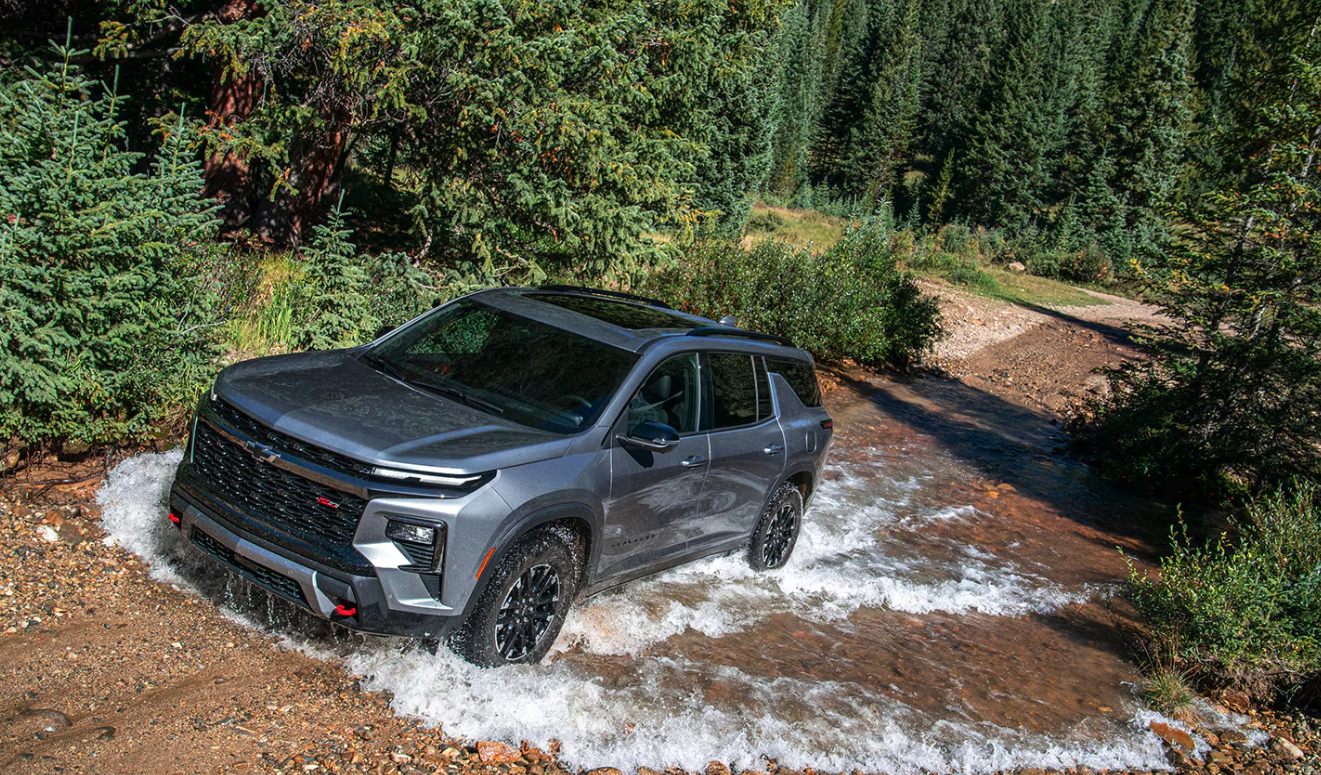
If you are shopping for a three-row SUV near Bartlett, the 2026 Chevrolet Traverse stands out because it gives families the space, screen size, safety tech, and real cargo flexibility that many midsize crossovers promise but do not always deliver in daily use. The official Chevrolet numbers back that up with seating for up to eight, best-in-class maximum cargo volume of 98 cubic feet, a standard 17.7-inch touchscreen, an 11-inch Driver Information Center, a turbocharged 2.5L engine making 328 horsepower and 326 lb-ft of torque, and standard towing capacity of up to 5,000 pounds with included trailering equipment. At Dobbs Brothers Chevrolet of Bartlett, that matters because local buyers are often balancing school runs, Highway 64 traffic, Memphis commutes, sports gear, and weekend travel in one vehicle.
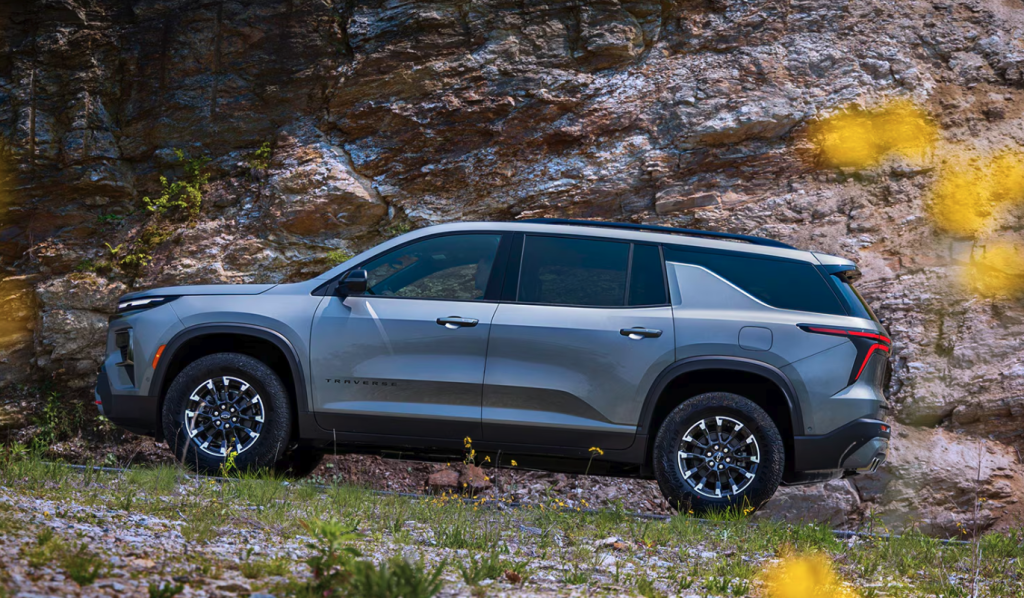
A lot of competitor articles stop at broad claims about room, style, and family comfort. The stronger question is how the Traverse actually solves the pressure points a Bartlett family feels every week: how easy it is to reach the third row, whether the cabin technology is simple instead of distracting, how the safety systems work in traffic, and which trim makes the most sense for your budget. That is where the 2026 Traverse earns its case. Chevrolet currently lists four verified trims for 2026, LT, Z71, High Country, and RS, so this article uses the live trim set rather than older or speculative naming.
At Dobbs Brothers Chevrolet of Bartlett, we also look at the Traverse through a local ownership lens, not just a brochure lens. Our dealership at 7850 HWY 64 serves Bartlett, Memphis, Germantown, Collierville, Arlington, and Lakeland, and our team supports shoppers with financing tools, specials, test-drive scheduling, trade appraisal, and Chevrolet Certified Service support after the sale. For a family SUV, that local support matters almost as much as the spec sheet, because the right vehicle should stay easy to live with long after the first drive home.
Table of Contents
- What Makes the 2026 Traverse Stand Out
- Three Row Seating and Family Friendly Features
- Test Drive the 2026 Traverse at Dobbs Brothers Chevrolet
- 2026 Chevrolet Traverse FAQs for Bartlett SUV Shoppers
What Makes the 2026 Traverse Stand Out
Key Takeaway: The 2026 Chevrolet Traverse stands out because it combines real three-row family space with strong turbo torque, big-screen technology, verified towing muscle, and a trim lineup that gives buyers a clear choice between value, rugged style, and premium comfort.
The strongest competitor articles usually mention the same baseline talking points: bold redesign, roomy interior, large touchscreen, and family appeal. That baseline is valid, but it still leaves out why the Traverse feels more resolved than many three-row SUVs in daily life. Chevrolet did not just make the vehicle look tougher. The brand paired that look with a powertrain that delivers 328 horsepower and 326 lb-ft of torque through an eight-speed automatic, while also preserving everyday family priorities like available eight-passenger seating, flexible second-row choices, and a very large cargo hold. Even review outlets that criticize the Traverse for not being especially sporty still give it credit for passenger room, class-leading cargo, and useful tech. That is the right frame for a family SUV near Bartlett. This vehicle is not trying to be a track machine. It is trying to move people, gear, and plans with less compromise.
Another difference is how Chevrolet has positioned the trim walk. LT is the practical family value choice. Z71 adds the rugged hardware and software features many buyers associate with the more adventurous look they want. High Country leans premium. RS adds blacked-out visual attitude and a more street-focused identity.
Turbo Power, Chassis Tuning, and Daily Drivability
The 2026 Traverse uses a turbocharged 2.5-liter engine across the lineup, and the key number for family buyers is not just horsepower. It is torque. Chevrolet rates the SUV at 326 lb-ft, which is what helps the Traverse feel more useful when merging onto I-40, carrying a full cabin, or pulling away from a stop with passengers and cargo onboard. For many Bartlett-area drivers, that low-end shove matters more than a flashy zero-to-sixty claim. It means less strain during ramp acceleration, less need to bury the throttle in city traffic, and more confidence when your SUV is loaded for a road trip or sports weekend. Chevrolet also rates the Traverse for a standard 5,000 pounds of towing capacity with included trailering equipment, which is a meaningful number for families hauling small trailers, utility loads, or recreational gear.
Chevrolet pairs that engine with an eight-speed automatic transmission, and that matters because family SUVs live in a wide band of driving situations. They idle through school pickup lines, cruise suburban arterials, handle rougher pavement, and then spend real time on the highway. The transmission needs to respond cleanly without hunting for gears or making the vehicle feel busy. Chevrolet’s own capability summary also points to improved performance and greater efficiency versus the previous V6 generation, which is exactly the kind of engineering tradeoff most family buyers actually want. The old formula of “bigger engine equals better SUV” is not always true anymore. In this case, Chevrolet is leaning into strong usable torque, modern turbo efficiency, and packaging advantages rather than nostalgia for six cylinders.
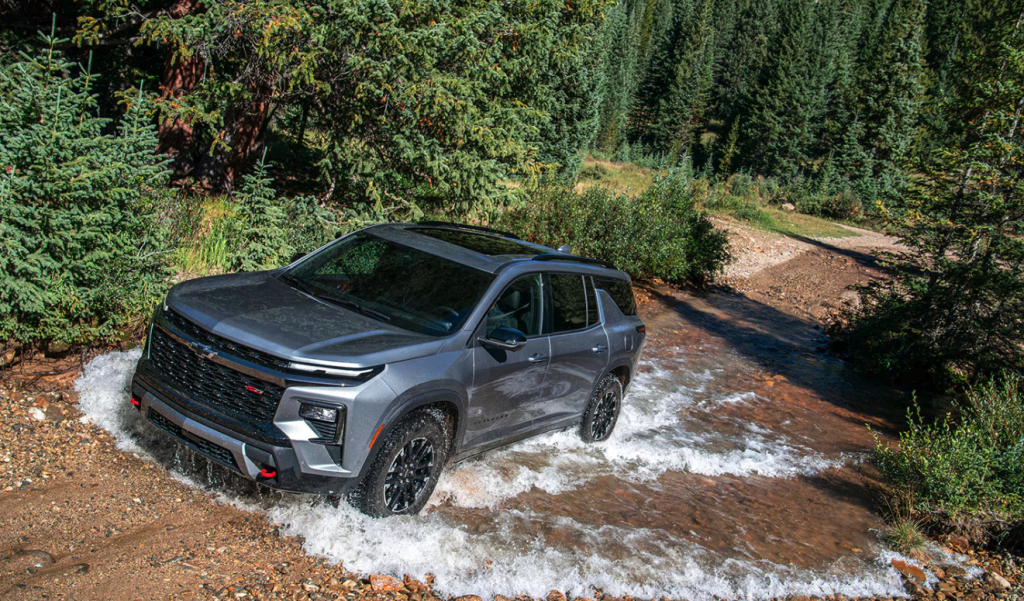
The Z71 trim adds more specialized hardware for buyers who want a tougher setup without moving into a body-on-frame SUV. Chevrolet lists Terrain Mode, Hill Descent Control, an advanced twin-clutch AWD system, off-road suspension, skid protection, and all-terrain tires on Z71. That does not turn the Traverse into a rock crawler, but it does give buyers in Tennessee a more capable route for uneven roads, campground access, muddy shoulders, and light-trail family travel. For many shoppers, that is the smarter middle ground. You get more capability than a standard pavement-first crossover without committing to the size, fuel appetite, or pricing of a Tahoe or Suburban.
A few engineering points matter most for shoppers comparing the Traverse to the rest of the Chevrolet SUV family:
- The Traverse gives you more true passenger and cargo flexibility than Equinox while staying easier to live with than Tahoe or Suburban for many suburban garages and school parking lots.
- Z71 gives rugged capability inside the unibody midsize class, which helps buyers who want more than appearance but do not need full-size truck-based hardware.
- The turbo four is not a downgrade if your priority is torque delivery, family packaging, and overall usability rather than old-school cylinder count alone.
Cabin Technology That Works for Families
One of the biggest reasons the Traverse deserves more attention than many competitor summaries give it is the cabin interface. Chevrolet makes the 17.7-inch diagonal touchscreen standard, along with an 11-inch Driver Information Center, and that changes the ownership experience more than many buyers first realize. A large screen is not just a style statement. It affects route guidance readability, camera visibility, media control, and how quickly a driver can find the function they need without too much menu diving. Chevrolet also includes Google built-in compatibility for Google Assistant, Google Maps, and Google Play. For families who rely on live traffic routing, hands-free voice prompts, and connected navigation, that is a practical advantage, not just a luxury talking point.
This is also one of the areas where the Traverse can age better into the next few years than some rivals that still feel caught between analog and digital layouts. The strongest family vehicles are not the ones with the most features on paper. They are the ones whose features keep feeling intuitive over time. A large, clean display area, a separate digital driver information layout, and integrated Google-based navigation reduce the learning curve for the daily driver and make handoff to a spouse or other family member easier. That matters for a household vehicle. It also helps resale confidence, because a modern buyer looking at a used 2026 Traverse in 2028 is much less likely to feel like the cabin already belongs to a previous tech era. That long-view ownership angle is rarely covered well in ranking articles, but it is part of real value.
Chevrolet also adds meaningful convenience details around the cabin. The AutoSense Power Liftgate is designed to recognize your presence and open without the usual awkward foot-kick routine. Available seating for up to eight gives the Traverse more flexibility than many three-row crossovers that quietly steer buyers toward captain’s chairs and lower seat counts. Smart Slide seating and one-touch fold functions on higher trims also make third-row access easier, which matters a lot if your SUV carries children, grandparents, or a mix of both. On RS and High Country, the power-folding second- and third-row arrangements add even more everyday convenience when you are switching between passenger duty and cargo duty.
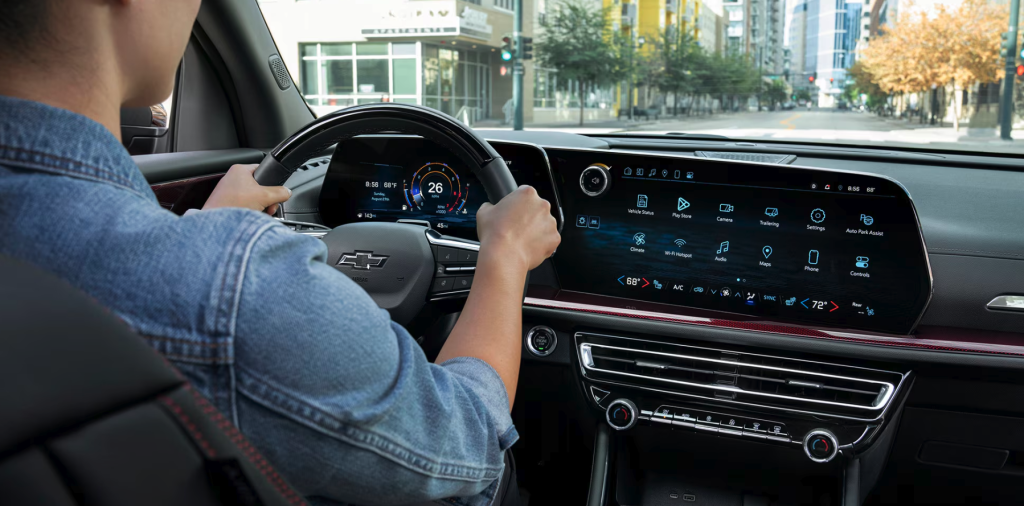
The most useful family tech advantages can be summarized simply:
- Big displays improve camera use, map visibility, and confidence in unfamiliar traffic.
- Google built-in makes navigation and voice commands feel more natural for drivers who already live in the Google ecosystem.
- One-touch seating and liftgate tech reduce small daily annoyances, and those annoyances are exactly what shape long-term satisfaction in a family SUV.
How the Traverse Safety Systems Add Real Confidence
Chevrolet says the 2026 Traverse includes Chevy Safety Assist and more than 20 standard safety and driver assistance features, plus additional available systems such as Rear Pedestrian Alert, Adaptive Cruise Control, Side Bicyclist Alert, and Intersection Automatic Emergency Braking. The core point here is that the Traverse is not relying on a single flashy feature to create its safety story. It uses a layered approach. Chevy Safety Assist itself includes six major systems, such as Automatic Emergency Braking, Front Pedestrian Braking, Lane Keep Assist with Lane Departure Warning, Following Distance Indicator, Forward Collision Alert, and IntelliBeam automatic high beams. For family buyers, that layered structure matters more than marketing jargon because it means the SUV is watching several risk zones at once.
The real value of modern safety tech is not perfection. It is support. Intersection Automatic Emergency Braking can help in one of the most stressful suburban risk zones, where cross-traffic conflicts happen quickly. Rear Pedestrian Alert matters in parking lots, neighborhood driveways, and crowded after-school environments. Side Bicyclist Alert is especially relevant as more mixed-use traffic environments put bikes, pedestrians, and vehicles closer together. Lane Keep Assist helps with momentary drift, not as a substitute for attention, but as a backup layer when the road or the day gets noisy. These systems do not replace a careful driver. They reduce the chance that one brief lapse becomes a bigger event. That is a meaningful difference for the family vehicle that handles your busiest miles.
Available Super Cruise also adds a premium technology angle for buyers stepping into RS or High Country, where Chevrolet includes it through the Enhanced Driving Package. Chevrolet says Super Cruise can operate on more than 585,000 miles of compatible roads in the U.S. and Canada. That is especially relevant for households that spend a lot of time on highway travel. It is not an invitation to disengage. It is a driver assistance technology designed to reduce fatigue in the right conditions. Review outlets have paid a lot of attention to the feature because it helps move the Traverse upward in perceived sophistication, but the more important point for shoppers is simpler: if your family does a lot of regional driving, it can make the long-haul part of ownership feel less draining.
Three Row Seating and Family Friendly Features
Key Takeaway: The 2026 Traverse wins the family-utility argument because it pairs adult-usable space, real cargo volume, flexible seating choices, and sensible trim differences in a way that makes everyday ownership easier, not just more impressive on paper.
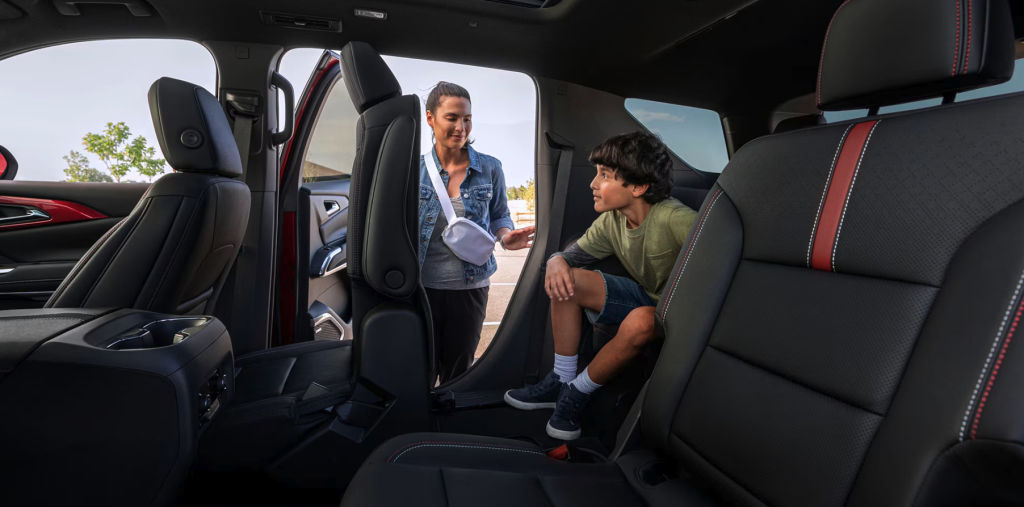
Family shoppers rarely buy a three-row SUV because they want a third row in the abstract. They buy one because their life is becoming more complicated. More kids. More gear. More carpools. More road trips. More occasions where a two-row SUV starts to feel tight before the day even begins. The Traverse answers that growth phase with available seating for up to eight, 98 cubic feet of maximum cargo volume, Smart Slide access, and folding flexibility that lets one vehicle handle passenger movement and cargo movement without drama. Competitor articles usually mention those features in isolation. The stronger way to understand them is as a packaging system. Chevrolet has built the Traverse around the idea that family use changes by the hour. Morning school duty is not the same as Costco duty, and that is not the same as a weekend tournament trip. This SUV is at its best when it has to switch roles fast.
That is also where the Traverse makes a stronger case than many midsize rivals. Cargo volume behind the first row is one thing, but the path from entry to seat folding to load floor usability matters just as much. If the third row is hard to access or the fold operation is clumsy, the SUV loses value in real family life. Chevrolet has addressed that with Smart Slide functionality and, on RS and High Country, one-touch and power-fold seat functions that reduce the friction of constant reconfiguration. The result is a vehicle that feels more honest about how families actually use space. It is not just about being big. It is about being easy to rearrange.

Space, Seating Flexibility, and Cargo Utility
Chevrolet gives the Traverse a wheelbase of 121 inches and overall length of 204.5 inches, which helps explain why it can deliver real second-row and third-row usability without jumping into full-size SUV territory. The official dimension set also lists second-row leg room at 41.4 inches and front leg room at 44.3 inches. Those are the kinds of numbers that translate into real comfort for taller passengers and less compromise when front-seat occupants need to move back. For parents, that can also mean easier child-seat placement and less front-seat intrusion. A lot of midsize three-row SUVs technically have a third row, but the question is whether people want to use it. The Traverse has a better argument there because its size and seating geometry support frequent use rather than occasional emergency use.
Cargo utility is where the Traverse often separates itself in the segment. Chevrolet lists best-in-class maximum cargo volume at 98 cubic feet, and multiple review sources still call out class-leading cargo room as one of the Traverse’s strongest assets. That matters more than styling hype because cargo room is one of the last things families can fake. If a stroller, folding wagon, groceries, sports bags, and overnight luggage all need to coexist, the vehicle either works or it does not. Buyers who do not want to jump to a full-size Tahoe or Suburban often land on the Traverse because it closes more of that practical gap than many midsize rivals. Inside the Chevrolet lineup, that is an important point. The Equinox is easier to park and cheaper to buy, but it is not meant to solve the same packaging problem. The Tahoe and Suburban offer more towing and presence, but not every Bartlett family wants their family SUV to feel that large every day. The Traverse lives in the middle on purpose, and it is a very smart middle.
For daily family utility, these are the biggest packaging wins:
- Available eight-passenger seating gives more flexibility for carpools and growing families.
- Smart Slide and one-touch fold features reduce the hassle of reaching the third row.
- 98 cubic feet of cargo room gives the Traverse one of the strongest “one vehicle for everything” cases in the midsize class.
Traverse RS and Z71 Trim Highlights
For many Bartlett shoppers, the toughest trim question is not “Should I buy a Traverse?” It is “Which Traverse fits my family best?” The answer starts with LT for value, but the two trims that tend to pull the most attention are Z71 and RS. Z71 is the better fit for buyers who want more than appearance. Chevrolet gives it Terrain Mode, Hill Descent Control, advanced twin-clutch AWD, off-road suspension, skid protection, and all-terrain tires. If your family likes campground access roads, rough weather confidence, or a more rugged feel without moving into a truck-based SUV, Z71 is the honest capability choice. It is also the right correction to older content that references an “Active” trim. Chevrolet’s verified 2026 lineup uses Z71 as the adventure-oriented Traverse.
RS is the better fit for buyers who want the Traverse to feel more premium and more assertive on the street. Chevrolet gives RS blackout exterior details, RS badging, a flat-bottom steering wheel, red décor, 22-inch black-painted aluminum wheels, and a three-year OnStar One Super Cruise plan. It is the trim for buyers who want family function without giving up a more athletic visual identity. That matters in this segment because many three-row SUVs still force buyers to choose between “practical” and “interesting.” The RS makes a more stylish case while keeping the same basic family strengths that define the Traverse as a whole.
High Country belongs in the conversation too, especially for shoppers who care more about premium convenience than rugged character or blackout styling. Chevrolet adds one-touch second-row fold, power-folding second- and third-row seating, chrome elements, distinctive badging, and 22-inch wheels. Within the Chevrolet family, it also provides a step-up route before a buyer feels pressured to move into Tahoe or Suburban territory. Then, if you cross-shop the wider market, the Traverse still holds a strong value argument. Competitor reviews continue to compare it with the Kia Telluride, Hyundai Palisade, and Toyota Grand Highlander, but the Traverse keeps drawing attention for cargo room, screen presence, and strong family utility. In other words, Chevrolet is not trying to out-luxury every rival. It is building one of the most complete family-use tools in the segment.
Detailed 2026 Traverse Technical Comparison Table
| Specification | Traverse LT | Traverse Z71 | Traverse High Country | Traverse RS |
|---|---|---|---|---|
| Starting MSRP | $40,800 | $48,900 | $55,100 | $55,400 |
| Engine | 2.5L Turbo | 2.5L Turbo | 2.5L Turbo | 2.5L Turbo |
| Horsepower | 328 hp | 328 hp | 328 hp | 328 hp |
| Torque | 326 lb-ft | 326 lb-ft | 326 lb-ft | 326 lb-ft |
| Transmission | 8-speed automatic | 8-speed automatic | 8-speed automatic | 8-speed automatic |
| Seating | 7 standard, 8 available | 7 | 7 | 7 |
| Touchscreen | 17.7-inch | 17.7-inch | 17.7-inch | 17.7-inch |
| Driver Display | 11-inch | 11-inch | 11-inch | 11-inch |
| Towing Capacity | Up to 5,000 lbs | Up to 5,000 lbs | Up to 5,000 lbs | Up to 5,000 lbs |
| Key Utility Edge | Value and family packaging | Rugged capability | Premium convenience | Sporty style and premium tech |
| Standout Feature | Smart Slide, AutoSense liftgate | Twin-clutch AWD, Terrain Mode | Power-folding seats, premium trim | Super Cruise plan, blackout design |
Test Drive the 2026 Traverse at Dobbs Brothers Chevrolet
Key Takeaway: The best way to judge the 2026 Traverse near Bartlett is to test it in the same kind of family driving you actually do, then back that experience with local dealership support, financing options, and Chevrolet Certified Service after the sale.
At Dobbs Brothers Chevrolet of Bartlett, we think local context matters. A three-row SUV that feels great on an empty media route can feel very different on the roads real families use every day. Bartlett buyers deal with school traffic, retail corridors, Highway 64 pace changes, trips toward Memphis, and the kind of stop-and-go movement where visibility, seating access, throttle response, and parking-lot confidence all matter. The Traverse is strong in exactly those areas. It gives a high driving position, easy outward visibility, a large screen for camera and navigation support, and a cabin layout that can absorb both people and clutter without feeling overwhelmed. Even critical third-party reviews that point out some ride or interior-material weaknesses still agree on the vehicle’s core strength: passenger and cargo space remain major assets. That makes the Traverse a smart test-drive candidate for families whose current SUV already feels one size too small.
Why the Traverse Fits Life in Bartlett
Bartlett is exactly the kind of market where the Traverse makes sense. Many buyers here want room for multiple passengers, but they do not necessarily want to commit to a full-size SUV footprint every day. That is where the Traverse’s midsize profile becomes a real advantage. It gives you more flexibility than smaller Chevrolet SUVs such as Equinox, while staying easier to slot into suburban routines than Tahoe or Suburban for households that are not towing heavy loads or carrying very large crews all the time. Inside the Chevrolet lineup, that makes the Traverse one of the most balanced answers for growing families. Against outside competitors, it remains compelling because cargo room, screen tech, and trim variety are all legitimate strengths rather than afterthoughts.
Our dealership is also set up to make the buying process feel practical instead of stressful. Dobbs Brothers Chevrolet of Bartlett serves Bartlett, Memphis, Germantown, Collierville, Arlington, Lakeland, and surrounding communities. We provide shopping tools, specials, financing support, test-drive scheduling, trade appraisal, and a service department with Chevrolet Certified Service experts. That means the Traverse conversation does not end at feature content. It extends into ownership support, maintenance planning, and the kind of long-term relationship family buyers usually want from a local dealership.
If you want to judge the Traverse the right way, visit Dobbs Brothers Chevrolet of Bartlett and bring the people and gear that shape your weekly routine. Sit in all three rows. Fold the seats the way you would on a grocery run, sports trip, or airport pickup. Test how the 17.7-inch screen feels from the driver seat instead of guessing from photos. Then take the route that actually matters to your family around Bartlett, not just a short loop around the block.
You can also start from our website if you want to narrow your choice before arriving at the store. Check current specials, value your trade, review financing tools, and schedule your test drive at the time that fits your week best. Then visit us at 7850 HWY 64 in Bartlett and compare LT, Z71, High Country, and RS with your own eyes. That process is often faster and more accurate than trying to decide from scattered third-party reviews alone. It also lets you connect the Traverse features to real inventory and real next steps.
A smart local test drive should focus on a few specific points:
- Check third-row access with the second-row setup your family actually prefers.
- Load the cargo area mentally with the items you really carry, not generic luggage.
- Compare LT, Z71, and RS based on use case first, then appearance second.
- Ask about Chevrolet specials, trade value, financing, and service support at the same appointment so the vehicle decision and ownership decision stay aligned.
2026 Chevrolet Traverse FAQs for Bartlett SUV Shoppers
Key Takeaway: Most buyers choosing the Traverse are trying to answer three big questions: does it have enough room, does it have enough capability, and which trim actually fits their family life best.
Does the 2026 Chevrolet Traverse have enough room for a growing family?
Yes, the 2026 Chevrolet Traverse has the kind of room that makes it a serious option for growing families, not just a three-row SUV in name only. Chevrolet lists available seating for up to eight passengers, 98 cubic feet of maximum cargo room, and a second row with 41.4 inches of leg room. That gives the Traverse a better case for regular family use than many midsize crossovers whose third row feels occasional. If your household needs space for school runs, road trips, sports equipment, and extra passengers without moving into a full-size SUV, the Traverse is one of the strongest Chevrolet answers near Bartlett.
How much can the 2026 Traverse tow, and is it enough for family use?
The 2026 Traverse can tow up to 5,000 pounds with included trailering equipment, and for many families that is a very useful number. It is enough for many small trailers, utility loads, and recreational setups while still keeping the vehicle in the midsize three-row class. Chevrolet pairs that rating with a 2.5L turbo engine producing 328 horsepower and 326 lb-ft of torque, which supports confident acceleration and load carrying. If you need much more towing, you may want to compare Tahoe or Suburban inside the Chevrolet lineup, but for many Bartlett-area families the Traverse hits the sweet spot.
Which 2026 Traverse trim is best for families near Bartlett?
The best trim depends on how your family uses the SUV. LT is the best value point for many households because it gives you the main Traverse strengths without pushing the price too high. Z71 is best for buyers who want rugged traction hardware and a more adventurous setup. RS is best for buyers who want the strongest style statement with premium tech presence. High Country is best for comfort-first families who want more convenience and upscale touches. The smartest move is to compare the trims in person at Dobbs Brothers Chevrolet of Bartlett and match them to your real driving habits.
The 2026 Chevrolet Traverse is one of the most complete family SUVs Chevrolet builds today because it combines real three-row usefulness, strong turbo torque, big-screen cabin technology, modern safety support, and a trim lineup that makes sense for different kinds of households. For Bartlett drivers who want more room than a compact SUV can offer, but do not need to move into a full-size SUV every day, the Traverse lands in a very smart place. Visit Dobbs Brothers Chevrolet of Bartlett at 7850 HWY 64, compare LT, Z71, High Country, and RS in person, and let our team help you line up the right trim, trade value, financing path, and service plan for the miles ahead.
