



Blog / Bartlett, TN Chevrolet Dealer

Blog

All Bartlett, TN Chevrolet Dealer New Chevrolet vehicles in Bartlett, TN Bartlett, TN Chevrolet Service Dobbs Brothers Chevrolet Service
Trailblazer ACTIV vs RS for Bartlett Drivers

Trailblazer ACTIV vs RS for Bartlett Drivers

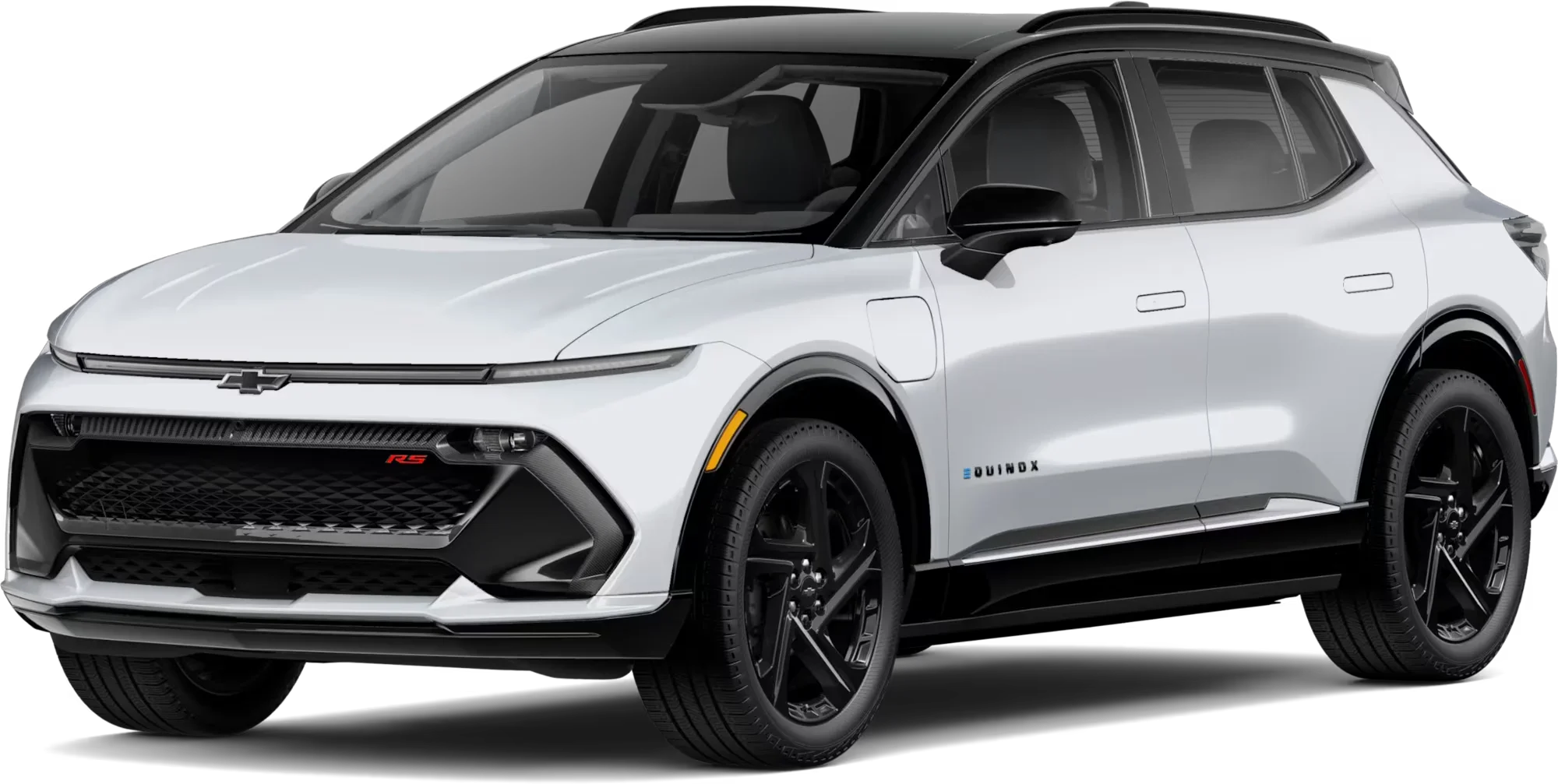
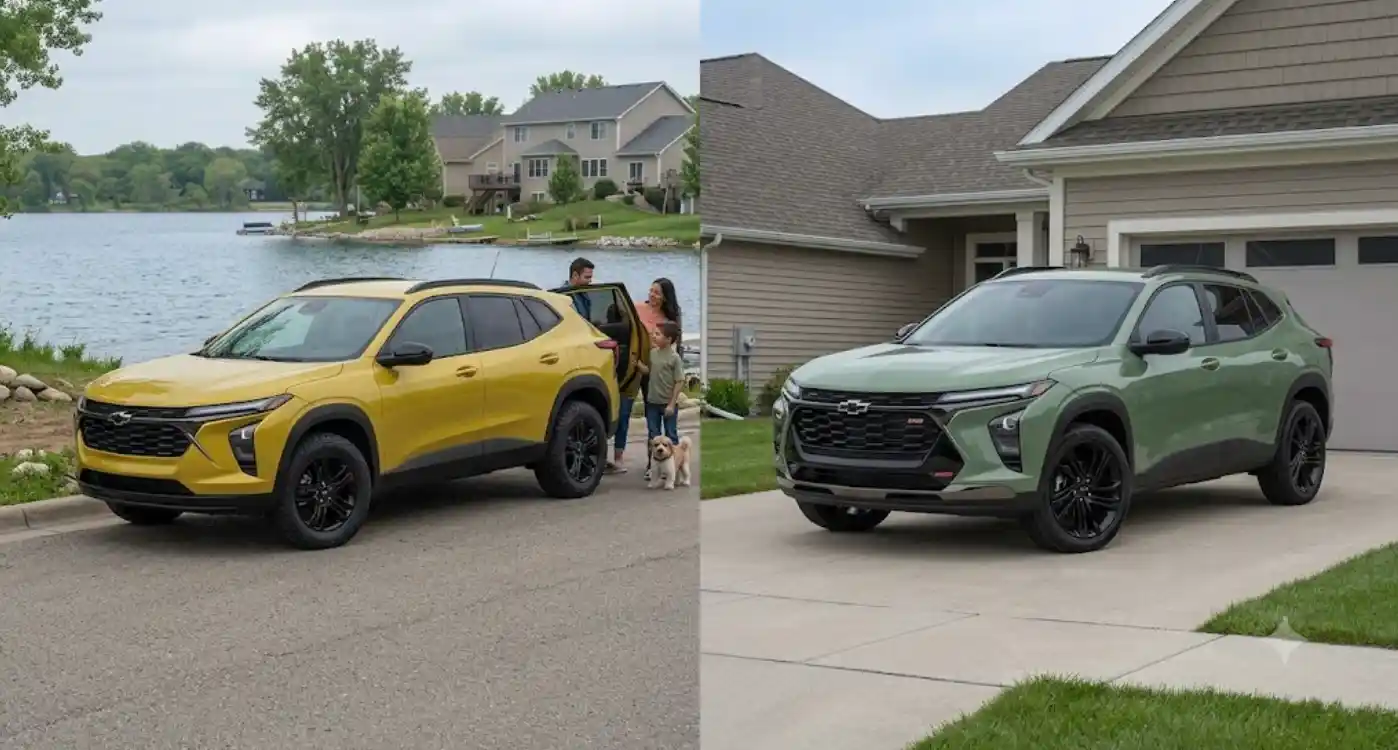
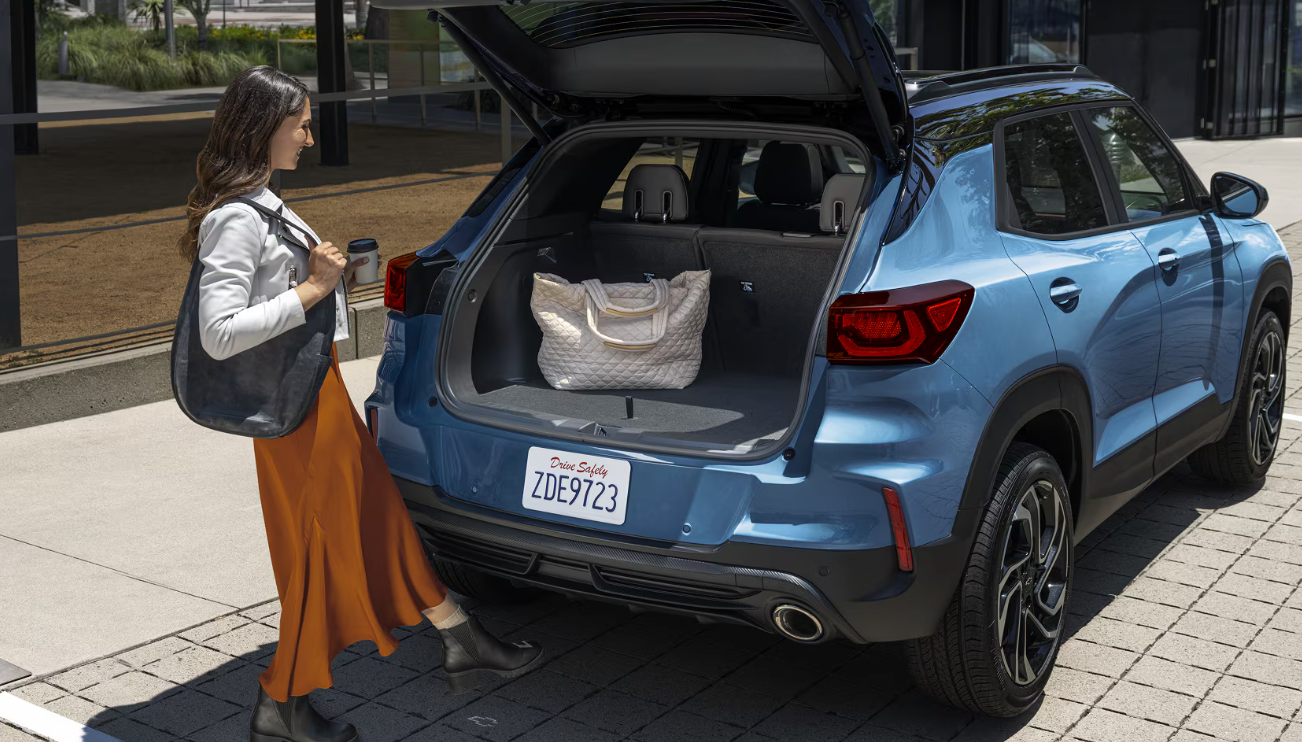
The 2026 Chevrolet Trailblazer ACTIV and RS use the same 1.3L ECOTEC Turbo engine, producing 155 horsepower and 174 lb-ft of torque, and both can be configured with available all-wheel drive. The difference is not that RS is the faster Trailblazer. Chevrolet positions ACTIV around 17-inch wheels, rough-road-oriented hardware and a functional skid plate, while RS emphasizes 19-inch wheels, a heated flat-bottom steering wheel and sport-focused exterior and interior details. For Bartlett drivers, that makes the trim choice more practical than it first appears. ACTIV makes sense when the smaller wheel package, outdoor-oriented design and Chevrolet's off-road suspension tuning align with how you expect to use the SUV. RS makes sense when you prefer its larger wheels and sport styling but still want the same compact Trailblazer size, turbo engine, available AWD and everyday cargo flexibility. There is also another decision that can matter just as much as the badge on the liftgate: front-wheel drive versus all-wheel drive. Both ACTIV and RS are available with AWD, and Chevrolet pairs AWD Trailblazer models with the 1.3L turbo and a 9-speed automatic transmission. If traction, wet-weather driving or drivetrain feel are central to your decision, compare that choice before focusing only on ACTIV versus RS. Trailblazer ACTIV vs RS: ACTIV and RS are the two upper trims in the 2026 Chevrolet Trailblazer lineup. Both feature the 1.3L ECOTEC Turbo engine and available AWD, but Chevrolet highlights ACTIV with 17-inch wheels, off-road suspension tuning and a functional skid plate, while RS emphasizes 19-inch wheels, a heated flat-bottom steering wheel, RS badging and Red interior accents. 2026 Chevrolet Trailblazer ACTIV vs RS Guide Trailblazer ACTIV vs RS: Core Differences Trailblazer ACTIV Features Trailblazer RS Features Engine, AWD, and Safety 17-Inch vs 19-Inch Wheels FWD vs AWD ACTIV vs RS Comparison Table Daily Driving Around Bartlett and Memphis Cargo and Technology Which Trailblazer Trim Fits Your Routine? Ownership Reality Check What to Compare on a Test Drive Key Takeaways Trailblazer ACTIV vs RS FAQ Trailblazer ACTIV vs RS: The Core Differences ACTIV and RS sit at the upper end of the 2026 Trailblazer lineup, above LS and LT. Chevrolet currently lists both from the same starting MSRP before destination, taxes, fees and optional equipment, which makes the comparison unusually clean. You are not automatically paying more simply because one trim is positioned as rugged and the other as sporty. Both also move to the 1.3L ECOTEC Turbo rather than the Trailblazer's base 1.2L turbo engine. That means the basic performance foundation is shared. Neither trim exists as the high-horsepower version of the other. The distinction appears in the details you interact with every day. ACTIV uses 17-inch High Gloss Black machined-aluminum wheels and Chevrolet specifically calls out off-road suspension tuning and a functional skid plate. RS uses 19-inch High Gloss Black machined-aluminum wheels and adds a heated, wrapped flat-bottom steering wheel, RS badging and Red interior accents. Trailblazer ACTIV Features Chevrolet presents ACTIV as the Trailblazer for buyers who want an outdoor-oriented version of the compact SUV. Its 17-inch wheels are visually smaller than the RS wheels, but that leaves more room for tire sidewall within a similar overall tire diameter. Chevrolet's own comparison material also identifies sport-terrain tires as part of the ACTIV formula. The trim's other important hardware is less visible. Chevrolet specifically lists off-road suspension tuning and a functional skid plate for ACTIV. Those features are relevant for rougher access roads, uneven surfaces and the type of outdoor use where a lower front underside can encounter loose terrain or debris. That does not turn Trailblazer ACTIV into a Colorado ZR2 or a traditional low-range 4WD vehicle. Trailblazer remains a compact crossover with available AWD. The point of ACTIV is to move the Trailblazer toward rough-road versatility without changing what type of vehicle it fundamentally is. Styling follows the same theme. ACTIV receives a Black mesh grille with Titanium chrome accents and a dual-outlet exhaust with trapezoidal polished tips. A two-tone roof is also part of the broader ACTIV and RS design story depending on configuration and color selection. Trailblazer RS Features RS approaches the same Trailblazer foundation from a different direction. Its most obvious exterior distinction is the set of 19-inch High Gloss Black machined-aluminum wheels. Chevrolet pairs those with an RS-specific grille treatment and badging for a more street-focused visual identity. Inside, RS adds Red accents and a heated, wrapped flat-bottom steering wheel. That steering wheel is one of the details that can matter more in person than it does in a specification table because it changes an interface you touch on every trip. The important correction for shoppers is that RS does not mean a stronger engine. Both RS and ACTIV use the 1.3L turbo. If you choose RS, you are choosing its wheel, cabin and design treatment rather than buying an additional performance tier. This is also why a test drive matters. A buyer can prefer the RS look in photographs and still prefer the ACTIV wheel package in daily use, or the opposite. Unlike a comparison where one trim provides a major increase in horsepower, this decision is more tactile and visual. Engine, AWD, and Safety ACTIV and RS use Chevrolet's 1.3L ECOTEC turbocharged three-cylinder engine with 155 horsepower and 174 lb-ft of torque. Both offer front-wheel drive and available all-wheel drive. Chevrolet confirms that every AWD Trailblazer for 2026 uses the 1.3L turbo paired with a 9-speed automatic transmission. Front-wheel-drive ACTIV and RS configurations use the 1.3L engine with a continuously variable transmission. Both also share Trailblazer's standard Chevy Safety Assist suite. Chevrolet lists Forward Collision Alert, Automatic Emergency Braking, Front Pedestrian Braking, Lane Keep Assist with Lane Departure Warning, Following Distance Indicator and IntelliBeam. Additional available driver-assistance features include Adaptive Cruise Control, Lane Change Alert with Side Blind Zone Alert, Rear Cross Traffic Alert and Rear Park Assist. These systems are designed to assist an attentive driver under certain conditions. They do not replace safe driving, and weather, visibility and road conditions can affect performance. 17-Inch vs 19-Inch Wheels Matter More Than They Look One of the clearest physical differences between ACTIV and RS is wheel diameter. ACTIV uses 17-inch wheels, while RS moves to 19-inch wheels. Because the overall tire package still has to fit within the same Trailblazer architecture, that change affects how much of the wheel-and-tire combination is aluminum wheel versus tire sidewall. That difference helps explain the trims' personalities. Chevrolet pairs the 17-inch ACTIV setup with sport-terrain tires, off-road suspension tuning and a functional skid plate, while its RS design emphasizes the visual impact of 19-inch wheels and sport styling. The larger wheel is not evidence of more engine performance, and the smaller wheel is not evidence that ACTIV is a dedicated rock-crawling SUV. Each setup supports a different use and appearance priority. For a shopper, wheel size also has ownership implications. Tire dimensions affect replacement choices, and larger wheels can change the selection and pricing of compatible tires. Before choosing either trim solely for appearance, it is worth looking at the actual tire size on the vehicle you are considering and checking what replacement options are available. Why ACTIV Uses a Smaller Wheel Package More tire sidewall can be useful on uneven surfaces because the tire itself has more room between the wheel rim and the road. That does not guarantee a softer ride in every situation because suspension tuning, tire construction and pressure also matter, but it is one reason rough-road-oriented vehicles often avoid extremely large wheels. For Bartlett-area drivers who occasionally travel onto gravel parking areas, uneven access roads or rougher outdoor routes, the ACTIV combination makes logical sense. Its wheel package is being used as part of a broader hardware strategy rather than simply as a styling change. The functional skid plate supports that same idea. It provides an additional layer of protection in an area where loose stones, uneven surfaces or debris may be more relevant than they are during normal highway use. Why RS Uses 19-Inch Wheels The RS wheel package has a different purpose. Nineteen-inch wheels fill more of the wheel opening and visually reinforce the trim's sporty exterior theme. For drivers who spend nearly all of their time on maintained pavement, that appearance may matter more than having the ACTIV-specific rough-road treatment. Wheel preference is subjective, so it is not useful to call one inherently better. What matters is avoiding the assumption that 19 inches means “higher performance” or that 17 inches means “less expensive version.” Chevrolet starts both upper trims at the same level and differentiates them around intended personality. When comparing the vehicles in person, check the tire sidewall, tread pattern and replacement tire specifications rather than looking only at the wheel design. FWD vs AWD May Be the Bigger Trailblazer Decision ACTIV versus RS gets most of the attention because the badges are visible. Drivetrain can have a larger effect on how the vehicle is configured. Both upper trims are available with front-wheel drive or all-wheel drive. Chevrolet confirms that AWD Trailblazers receive the 1.3L turbo and a 9-speed automatic. That means the AWD decision changes more than which wheels receive engine torque. It also changes the transmission compared with front-wheel-drive 1.3L configurations. When Front-Wheel Drive Makes Sense FWD is the simpler choice for a driver whose normal use is pavement commuting, errands and highway travel. Chevrolet lists the 1.3L Turbo FWD Trailblazer at up to an EPA-estimated 31 MPG combined, with 29 MPG city and 33 MPG highway figures highlighted on its current fuel-economy page. If you are shopping ACTIV mainly because you prefer its styling and wheel package, you do not automatically have to add AWD. Likewise, an RS buyer who likes the sport look can stay with FWD when all-wheel traction is not a priority. That matters because trim and drivetrain are two separate decisions. “ACTIV” should not be used as shorthand for AWD, and “RS” should not be used as shorthand for FWD. When AWD Makes Sense AWD can help distribute power to additional wheels when the system detects or anticipates traction needs. For West Tennessee drivers, that can be useful during heavy rain, on loose surfaces, on some gravel routes or during the limited winter conditions where traction becomes less predictable. It does not improve every aspect of bad-weather driving. AWD does not shorten stopping distance simply because more wheels can receive power, and it does not prevent hydroplaning. Tires, tread depth, tire pressure, vehicle speed and driver inputs remain critical. If wet-weather traction is your primary concern, compare an ACTIV AWD and RS AWD rather than assuming trim styling answers the drivetrain question. Both can provide the same AWD availability. Bartlett Rain and Everyday Traction Heavy rain is a more realistic local reason to think about AWD than pretending every Bartlett Trailblazer owner needs an off-road vehicle. Standing water and reduced visibility call for lower speeds and good tires regardless of drivetrain. Available AWD can add traction support when accelerating on a wet or loose surface, but the driver's priorities should still include tire condition and safe speed. Chevy Safety Assist also does not compensate for worn tires or poor visibility. Drivetrain reminder: ACTIV and RS both offer available AWD. Choose AWD based on your traction and drivetrain needs, not because one trim name sounds more rugged than the other. 2026 Trailblazer ACTIV vs RS Comparison Feature Trailblazer ACTIV Trailblazer RS Engine 1.3L ECOTEC Turbo 1.3L ECOTEC Turbo Output 155 hp / 174 lb-ft 155 hp / 174 lb-ft FWD Available Available AWD Available Available Wheels 17-inch High Gloss Black machined aluminum 19-inch High Gloss Black machined aluminum Chevrolet Trim Highlight Off-road suspension tuning and functional skid plate Sport styling, RS badging and flat-bottom steering wheel Exterior Character Outdoor and rugged-oriented Sport-oriented 1.3L FWD Fuel Economy Up to 31 MPG combined Up to 31 MPG combined with applicable FWD configuration Maximum Cargo Architecture Shared Trailblazer layout Shared Trailblazer layout Best Decision Question Will I use its rough-road-focused hardware? Do I prefer its larger wheels and sport design? The comparison shows why there is no need to force a universal winner. The engine, available AWD, passenger capacity, infotainment and basic cargo architecture are not the deciding factors. Wheel package, design preference and how much value you place on Chevrolet's ACTIV hardware carry more weight. Daily Driving Around Bartlett and Memphis Trailblazer is 174 inches long, which keeps both ACTIV and RS relatively easy to manage compared with larger Chevrolet SUVs. Because the body dimensions are shared, choosing RS does not give you a harder-to-park vehicle and choosing ACTIV does not make the basic Trailblazer footprint larger. That makes this a useful comparison for someone commuting between Bartlett and Memphis who wants small-SUV practicality without jumping to Equinox, Traverse or a full-size SUV. Parking and Commuting For parking lots, apartment areas, school pickup and normal errands, ACTIV and RS behave within the same compact-SUV footprint. The bigger difference you may notice is the wheel-and-tire setup rather than vehicle dimensions. If most of your mileage is smooth pavement, RS may align better with the reason you are buying the top trim in the first place. Its appearance package is easy to appreciate every day even if the vehicle never leaves asphalt. If your daily routes include rough pavement, broken surfaces, gravel entrances or frequent outdoor access, ACTIV's hardware has a more direct functional purpose. Rain and Weather Use Neither trim gets an automatic wet-weather advantage simply from the badge. Drivetrain and tires matter more. If rain performance is a major priority, compare AWD configurations and inspect the exact tires equipped on each vehicle. The same logic applies in winter. West Tennessee does not require the type of winter setup associated with mountain regions, but temperature swings and occasional frozen surfaces can still make traction relevant. AWD can help with acceleration traction under some conditions, but careful speed and appropriate tires remain more important than the trim name. Occasional Gravel and Outdoor Routes This is where ACTIV begins to separate itself conceptually. Chevrolet specifically designed the trim around off-road suspension tuning, a functional skid plate and sport-terrain tires. That does not mean it should be treated like a purpose-built off-road truck. Trailblazer has available AWD rather than traditional low-range 4WD and Chevrolet lists maximum towing at up to 1,000 pounds. Its role is still that of a compact crossover. For maintained gravel, campsites, trailhead access and other light rough-road use, ACTIV's equipment makes sense. If your plans involve repeated severe trails, large obstacles or serious towing, a Colorado or another Chevrolet platform may better match the job. Cargo, Cabin Flexibility, and Technology ACTIV and RS share one of Trailblazer's more useful packaging tricks: the fold-flat front passenger seat. Chevrolet says this allows up to 8.5 feet of maximum cargo length for long objects when the seating is configured appropriately. Trailblazer also seats up to five and provides 54.4 cubic feet of maximum cargo volume. Because those basic dimensions do not change simply by choosing ACTIV or RS, cargo should rarely determine the trim decision. Long Cargo Matters Differently Than Total Cargo Maximum volume tells you how much total space exists when seats are folded, but the 8.5-foot cargo-length figure answers another question. It can help with long boxed items, certain home-improvement supplies or recreational equipment that would otherwise be awkward in a small SUV. If that flexibility is one of the reasons you are choosing Trailblazer over Trax, you retain it in either upper trim. Shared Infotainment The 2026 Trailblazer comes standard with an 11-inch HD color touchscreen and an 8-inch Driver Information Center. Wireless Apple CarPlay and wireless Android Auto compatibility are standard. Wireless phone charging and a Bose audio system are available depending on equipment and packages. Because these features can overlap between ACTIV and RS, check the window sticker of the individual vehicle rather than assuming trim alone identifies every technology feature. Shared Safety Foundation Both trims receive Chevy Safety Assist as part of the Trailblazer's standard safety package. Available driver-assistance equipment can expand the technology set, but ACTIV is not the “safer trim” simply because it has a rugged name and RS is not a performance model that deletes core assistance features. Safety technology should be viewed as a shared Trailblazer foundation, then verified by exact vehicle equipment. Which Trailblazer Trim Fits Your Routine? A useful trim choice starts with what you will actually notice after the excitement of buying a new SUV wears off. ACTIV's extra value comes from equipment aimed at rougher surfaces. RS's value comes from styling and cabin details that are present on every commute. Both share the same 155-hp engine and can be ordered with the same basic drivetrain choice. Choose ACTIV when you can identify a real reason for its 17-inch wheel package, off-road suspension tuning, sport-terrain tires or functional skid plate. Choose RS when your Trailblazer will live mainly on pavement and the 19-inch wheels, RS appearance and flat-bottom steering wheel are the features you will appreciate more often. If traction is the real issue, compare AWD versus FWD before making ACTIV versus RS the deciding factor. ACTIV Makes More Sense If... You prefer the 17-inch wheel and sport-terrain tire approach. Your normal use includes occasional gravel, uneven access roads or rougher outdoor routes. Chevrolet's off-road suspension tuning is relevant to how you plan to use the SUV. A functional skid plate has more value to you than a larger wheel design. You prefer the ACTIV exterior treatment over the sport-focused RS appearance. RS Makes More Sense If... Most of your driving is on maintained streets and highways. You prefer the appearance of the 19-inch wheel package. The flat-bottom heated steering wheel and Red interior accents appeal to you. You want the Trailblazer's 1.3L Turbo and available AWD without choosing the ACTIV design theme. Sport-inspired styling is something you will value every day. Either Trim Can Make Sense If... Your biggest priority is available AWD. You want the 1.3L Turbo rather than the base Trailblazer powertrain. Compact exterior dimensions are more important than trim personality. You need five seats and Trailblazer's flexible cargo-length capability. You value standard Chevy Safety Assist and the 11-inch touchscreen. View Current Chevrolet Inventory Ownership Reality Check: ACTIV Is Not a Colorado ZR2 The word “ACTIV” and Chevrolet's off-road suspension description can make it tempting to overstate what the trim is designed to do. It is important to keep the vehicle in context. Trailblazer is a compact crossover. AWD is available, not a traditional low-range four-wheel-drive system. Chevrolet lists maximum towing at up to 1,000 pounds, and the vehicle's dimensions and architecture remain focused on compact-SUV driving. That does not make the ACTIV hardware meaningless. It means the hardware should be judged against the Trailblazer's intended use. For gravel access, rough pavement, campsite roads, trailheads and similar conditions, the wheel-and-tire package, skid plate and suspension tuning may be exactly the amount of added capability you want. If your definition of off-road use involves large rocks, deep ruts, significant underbody contact or repeated difficult terrain, compare Colorado, particularly Trail Boss and ZR2, rather than asking a Trailblazer ACTIV to solve a truck problem. Do Not Buy ACTIV Only Because It Sounds More Capable If your Trailblazer will spend almost every mile on smooth pavement and you prefer the RS design, there is little reason to choose ACTIV only because its equipment list sounds more adventurous. Conversely, if you genuinely prefer the smaller wheel setup and rough-road hardware, RS should not be assumed to be the higher trim simply because its styling looks sportier. Do Not Buy RS Expecting More Horsepower RS uses the same 155-horsepower 1.3L Turbo as ACTIV. Its sporty appearance does not represent an engine upgrade. If acceleration or substantial performance is your main goal, the Trailblazer trim decision is not where Chevrolet creates that distinction. RS is a design and equipment choice within the Trailblazer rather than a separate performance powertrain. Think About Replacement Tires Before the Purchase The 17-inch versus 19-inch difference lasts longer than the first test drive. When the original tires eventually need replacement, wheel diameter and tire specification affect which products fit the vehicle. Check the exact tire size and compare available replacement options before choosing. This is particularly useful if you expect high annual mileage or know you prefer a certain type of all-season or terrain-oriented tire. What to Compare on a Trailblazer ACTIV vs RS Test Drive The most useful test drive is one designed to isolate the actual differences. If possible, compare vehicles with the same drivetrain. An ACTIV AWD versus an RS FWD can make it difficult to tell whether you are reacting to the trim, transmission or drivetrain. 1. Compare the Wheel and Tire Feel Drive over the same normal road surfaces in both vehicles. Pay attention to tire noise, impact feel over pavement seams and how each setup responds to the roads you actually use. Do not decide based on a single pothole or one parking-lot loop. Tire pressure and individual vehicle condition can influence what you feel. 2. Compare FWD and AWD Separately If you are interested in AWD, make sure you experience an AWD Trailblazer rather than assuming it feels identical to FWD. Chevrolet pairs AWD models with the 9-speed automatic, which means the drivetrain choice includes a transmission difference. If FWD meets your needs, compare FWD versions of ACTIV and RS so the trim hardware remains the primary variable. 3. Sit With the Interior Details RS's flat-bottom steering wheel and Red accents may matter more after 30 minutes than they do in photographs. ACTIV's cabin has a different visual theme. Make sure you prefer the interior you will actually look at every day rather than choosing entirely from exterior photos. 4. Check Long-Cargo Flexibility Fold the front passenger seat and rear seating as permitted and look at the resulting load path. If the Trailblazer's 8.5-foot maximum cargo-length capability is important to you, make sure the configuration works for the type of items you expect to transport. 5. Verify the Exact Equipment Packages and individual options can change what is installed on a specific vehicle. Check the window sticker for Adaptive Cruise Control, Bose audio, wireless charging, panoramic roof and other features rather than assuming every ACTIV or every RS is configured identically. 6. Compare Tire Replacement Options Before making the final decision, note the exact tire size on each vehicle. A quick comparison of replacement choices can reveal an ownership difference that is easy to overlook while shopping. Dobbs Brothers Chevrolet's live inventory can be used to compare current Trailblazer trims and configurations. Inventory changes, so verify the exact drivetrain, packages and equipment on the vehicle you plan to test drive. Key Takeaways 2026 Trailblazer ACTIV and RS both use the 1.3L ECOTEC Turbo with 155 horsepower and 174 lb-ft of torque. Both trims offer front-wheel drive and available all-wheel drive. Chevrolet highlights ACTIV with 17-inch wheels, off-road suspension tuning, sport-terrain tires and a functional skid plate. RS emphasizes 19-inch wheels, sport styling, RS badging and a heated flat-bottom steering wheel. AWD Trailblazers use the 1.3L Turbo with a 9-speed automatic, so drivetrain can be as important as trim choice. ACTIV is rough-road oriented, but Trailblazer remains a compact crossover rather than a dedicated low-range 4WD off-road vehicle. Trailblazer ACTIV vs RS FAQ Does the 2026 Trailblazer RS have more horsepower than ACTIV? No. Chevrolet equips both Trailblazer ACTIV and RS with the 1.3L ECOTEC Turbo engine producing 155 horsepower and 174 lb-ft of torque. RS is differentiated primarily by its 19-inch wheels, sport styling, flat-bottom heated steering wheel and interior accents rather than additional engine output. Does the 2026 Trailblazer ACTIV come standard with AWD? No. All-wheel drive is available on Trailblazer ACTIV rather than automatically required by the trim. RS also offers available AWD. Chevrolet confirms that 2026 AWD Trailblazer models use the 1.3L Turbo with a 9-speed automatic transmission. What is different about the Trailblazer ACTIV suspension? Chevrolet specifically describes Trailblazer ACTIV as having suspension tuning for off-road use and pairs it with a functional skid plate, 17-inch wheels and sport-terrain tires. The setup is aimed at adding rough-road versatility within the Trailblazer compact-crossover platform, not turning it into a dedicated 4WD off-road truck. Which gets better fuel economy, Trailblazer ACTIV or RS? Fuel economy depends more on drivetrain configuration than on choosing the ACTIV or RS badge. Chevrolet lists the 1.3L Turbo Trailblazer with FWD at up to an EPA-estimated 31 MPG combined. If comparing AWD versions, check the EPA information for the exact configuration because AWD changes the drivetrain and can affect fuel economy. Compare Trailblazer ACTIV and RS in Bartlett The Trailblazer ACTIV versus RS decision becomes easier once you stop looking for a performance winner. Both trims use the same 1.3L Turbo, both offer AWD, both keep Trailblazer's five-seat cabin and flexible cargo layout, and both include the same basic Chevy Safety Assist foundation. ACTIV is the more logical choice when its 17-inch wheel setup, sport-terrain tires, off-road suspension tuning and skid plate fit your real driving. RS makes more sense when the 19-inch wheels, flat-bottom steering wheel and sport-focused appearance are features you will enjoy on your normal paved commute. Current Dobbs Brothers Chevrolet inventory changes as vehicles arrive and sell, so use the live inventory page to compare available Trailblazer trims, drivetrains and equipment before planning a test drive. View Current Chevrolet Inventory Related Chevrolet Insights & Updates Small SUV Comparison 2026 Chevrolet Trax vs Trailblazer: Which SUV Fits Your Bartlett Lifestyle Compare Chevrolet's two smallest SUVs by cargo flexibility, available AWD, fuel economy and everyday Bartlett driving needs. Read More Trax Trim Comparison 2026 Chevrolet Trax ACTIV vs 2RS in Bartlett See how the ACTIV and RS idea changes on the Trax, where both trims share a different front-wheel-drive powertrain and equipment strategy. Read More Equinox Trim Comparison 2026 Chevrolet Equinox ACTIV vs RS in Bartlett Compare ACTIV and RS on the larger Equinox if you want more room or are considering the next Chevrolet SUV size up. Read More Fuel Economy Guide Most Fuel Efficient 2026 Chevrolet Models for Bartlett TN Drivers See how Trailblazer fits into Chevrolet's broader efficiency lineup for commuting, family driving and longer trips. Read More
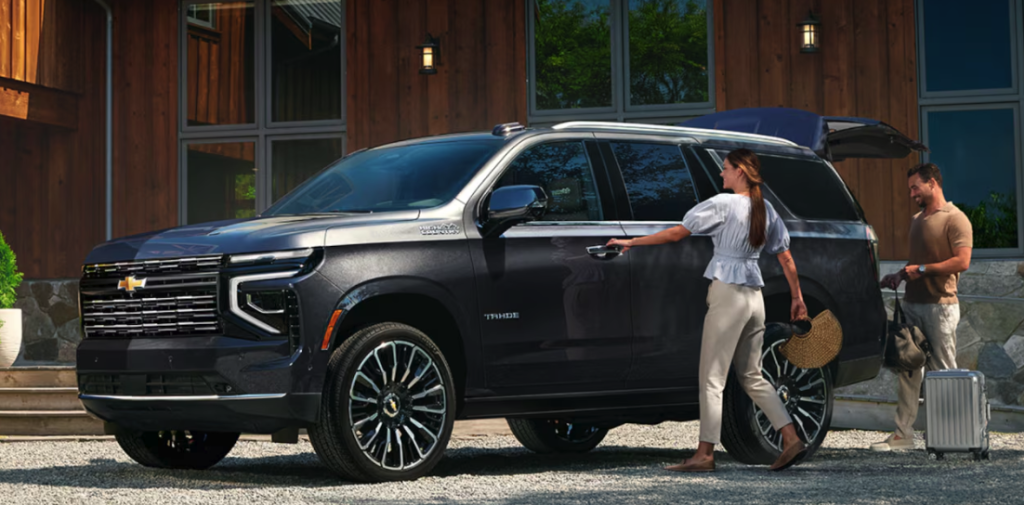
Tahoe vs Suburban for Bartlett Families

Tahoe vs Suburban for Bartlett Families

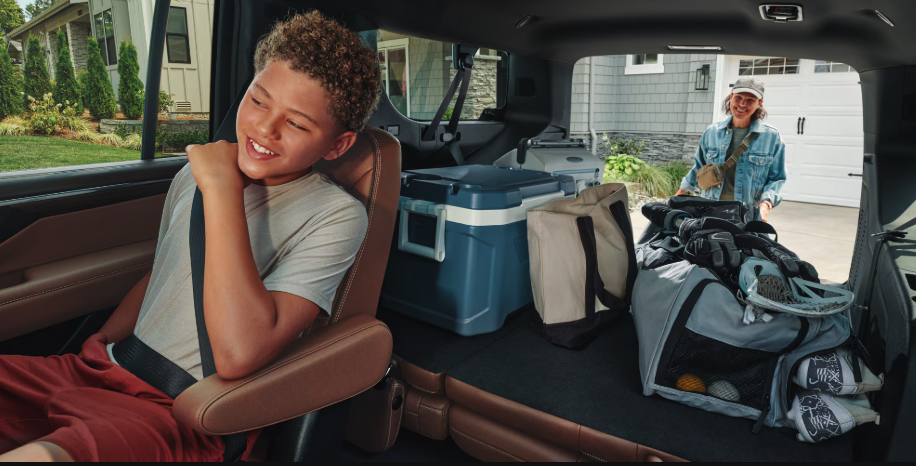
The Chevrolet Tahoe and Suburban can carry essentially the same number of people, offer the same three engine choices, and share much of the same technology. The main difference is space. The 2027 Tahoe is 211.3 inches long with up to 122.7 cubic feet of maximum cargo volume, while the 2027 Suburban stretches to 226.3 inches and provides up to 144.5 cubic feet. For a Bartlett family, the deciding question is not simply whether you want the bigger SUV. It is how often you need all three rows of seats and a large cargo area at the same time. Tahoe leaves 25.5 cubic feet behind its third row, while Suburban provides 41.5 cubic feet, a substantial difference when passengers, suitcases, sports bags, strollers, coolers, or pet gear all need to travel together. If that extra space would be used regularly, Suburban has a clear purpose. If your third row is used only occasionally or your normal family trips do not fill the cargo area, Tahoe delivers much of the same full-size Chevrolet SUV experience in a body that is 15 inches shorter. Chevrolet Tahoe vs Suburban: Tahoe and Suburban are closely related full-size, three-row Chevrolet SUVs with similar seating configurations, powertrains, technology, and trailering features. Suburban extends the body length primarily to create substantially more cargo room, especially behind the third row, while Tahoe keeps the full-size SUV format in a shorter overall footprint. Table of Contents Tahoe and Suburban Basics Seating and Cargo Engine Options Safety and Technology Which Full-Size Chevy SUV Fits Your Family? Tahoe vs Suburban Comparison Table Towing, Parking, and Family Travel The Space Question That Matters Most Memphis-Area Family SUV Needs What to Check on a Tahoe vs Suburban Test Drive Ownership Reality Check Key Takeaways Tahoe vs Suburban FAQ Tahoe and Suburban Basics Tahoe and Suburban occupy the full-size end of Chevrolet's SUV lineup. Both offer three rows, body-on-frame construction, rear-wheel-drive and four-wheel-drive configurations depending on model and equipment, three available engine choices, and many of the same comfort and driver-assistance technologies. That shared foundation is why a Tahoe-versus-Suburban decision should not start with features that both can provide. A family can equip either SUV with similar power, similar seating layouts, large Chevrolet touchscreen technology, and many of the same trim choices. The more useful distinction begins with physical dimensions. Chevrolet lists the 2027 Tahoe at 211.3 inches long. The 2027 Suburban is 226.3 inches long, giving the Suburban an additional 15 inches of overall length. That added length goes primarily toward interior packaging and cargo capacity. It does not turn Suburban into a higher-passenger-count version of Tahoe. Both can be configured for up to nine occupants in appropriate LS seating configurations. Seating and Cargo Both SUVs have eight standard seats in their base configurations, with seven- and nine-seat layouts available depending on model and seating selection. This is one of the most important facts in the comparison because it changes the way the Suburban should be viewed. Suburban's main family advantage is not an additional row or a higher maximum passenger count. Its advantage is how much more cargo space remains when you are already using those passenger seats. The Tahoe provides 25.5 cubic feet of cargo space behind the third row, 72.5 cubic feet behind the second row, and up to 122.7 cubic feet with the rear seating areas folded. Suburban increases those figures to 41.5 cubic feet behind the third row, 93.8 cubic feet behind the second row, and 144.5 cubic feet maximum. The difference behind the third row is particularly useful. Suburban gives you about 16 cubic feet more cargo room while preserving all three rows for passengers. That is a much more relevant family metric than maximum cargo volume if your third row normally stays occupied. Engine Options Tahoe and Suburban offer the same three core engine choices for 2027, so engine selection does not usually determine which body size you need. 5.3L EcoTec3 V8: 355 horsepower and 383 lb-ft of torque. 6.2L EcoTec3 V8: 420 horsepower and 460 lb-ft of torque. 3.0L Duramax Turbo-Diesel: 305 horsepower and 495 lb-ft of torque. The 5.3L V8 is standard on most models other than High Country. The 6.2L V8 is standard on High Country and available on specified upper trims, while the Duramax diesel is available across several LT-and-above configurations. That shared engine menu makes the comparison cleaner. If you like the torque characteristics of the Duramax or the output of the 6.2L V8, you do not need to choose Suburban simply to get that powertrain. The more meaningful decision is still how much vehicle length and cargo capacity you need. Safety and Technology Both SUVs use Chevrolet's large 17.7-inch center touchscreen and current connected-technology ecosystem. Depending on trim and equipment, features can include Google built-in, wireless smartphone connectivity, available camera views, Head-Up Display technology, and other convenience systems. Available Super Cruise is offered on specified Tahoe and Suburban models. Chevrolet also offers Super Cruise functionality that can account for trailering on compatible roads and properly equipped vehicles. Super Cruise remains an advanced driver-assistance technology, not autonomous driving. The driver must remain attentive and ready to take control, and availability depends on the exact model, equipment, compatible roads, and connected-service requirements. Both Tahoe and Suburban also provide suites of standard safety and driver-assistance features. Because their technology is broadly similar, safety-feature lists should not be the main reason to choose the longer body. Which Full-Size Chevy SUV Fits Your Family? The fastest way to narrow the choice is to imagine the vehicle on your busiest realistic family day rather than your easiest one. If five people use the SUV most of the time and the third row mainly handles occasional friends or relatives, Tahoe's 25.5 cubic feet behind row three may be enough. Folding part or all of the rear seating expands the available cargo room significantly when you need it. If six, seven, or eight occupants travel frequently and their luggage needs to remain behind them, Suburban starts solving a problem that Tahoe cannot solve simply by folding a seat. That is where the extra 15 inches of overall vehicle length becomes valuable rather than just making the SUV physically bigger. 2027 Tahoe vs Suburban Comparison Table Feature 2027 Tahoe 2027 Suburban Overall Length 211.3 in. 226.3 in. Length Difference Baseline 15 in. longer Standard Seating 8 8 Available Seating 7 or up to 9 depending on configuration 7 or up to 9 depending on configuration Cargo Behind 3rd Row 25.5 cu. ft. 41.5 cu. ft. Cargo Behind 2nd Row 72.5 cu. ft. 93.8 cu. ft. Maximum Cargo 122.7 cu. ft. 144.5 cu. ft. 5.3L V8 355 hp / 383 lb-ft 355 hp / 383 lb-ft 6.2L V8 420 hp / 460 lb-ft 420 hp / 460 lb-ft 3.0L Duramax 305 hp / 495 lb-ft 305 hp / 495 lb-ft Primary Family Advantage Full-size capability in a shorter footprint Much more cargo space with all rows in use The numbers show why simply describing Suburban as "the bigger Tahoe" misses the practical decision. Passenger capacity and engine options overlap heavily. The additional length primarily buys cargo volume, and its biggest benefit appears when the third row remains occupied. Towing, Parking, and Family Travel Both Tahoe and Suburban are available with substantial trailering capability, but towing is configuration-specific. Engine, drivetrain, axle ratio, equipment packages, payload, passengers, cargo, hitch load, and trailer setup all affect the actual rating of a particular vehicle. Chevrolet currently lists Tahoe at up to 8,400 pounds of maximum available towing when properly equipped. For Suburban, Chevrolet's current 2027 product page contains inconsistent published maximum figures between its main trailering section and FAQ, so the exact vehicle and current Chevrolet trailering documentation should be checked rather than relying on a single generic maximum. That is a useful reminder not to assume that the physically larger SUV automatically tows more. Cargo capacity and trailering capacity are different measurements, and additional passengers or luggage can consume available payload even before trailer tongue weight is added. Trailering reminder: Maximum advertised towing capacity is not the rating for every Tahoe or Suburban. Confirm the exact vehicle configuration, certification labels, payload, trailering equipment, Owner's Manual, and loaded trailer weight before towing. For a broader look at Chevrolet trailering considerations, see the Chevrolet Towing Capacity Guide for Bartlett Drivers. The Space Question That Matters Most The strongest Tahoe-versus-Suburban question is not "How many people do you have?" Both SUVs can handle large passenger counts. The better question is: How often do you need the third row and a large cargo area at the same time? When the third row stays folded for most of the year, Tahoe already offers extensive cargo flexibility. If you normally travel with four or five people, it may be easy to create additional cargo room by folding one section of the rear seating. That changes once every seat has a job. If grandparents, children, teammates, friends, or extended family regularly occupy the third row, folding seats is no longer an available solution. At that point, Suburban's 41.5 cubic feet behind row three becomes a real functional difference rather than just a larger specification. When Tahoe Is Likely the Better Fit Your third row is useful but not occupied on every trip. Most normal drives involve four to six people. You want full-size SUV passenger space and capability without choosing Chevrolet's longest SUV body. Parking, garage length, neighborhood maneuvering, or daily errands matter frequently. You can fold part of the third row when luggage or sports gear expands. When Suburban Is Likely the Better Fit Your third row is occupied regularly. You frequently travel with six to eight people plus their luggage. You carry sports bags, coolers, strollers, pet equipment, or vacation gear while all seating rows remain in use. Long-distance family travel creates more cargo pressure than local maneuverability does. You already know that 25.5 cubic feet behind the Tahoe's third row would regularly feel limiting. Suburban is easiest to justify when the extra space solves a repeatable packaging problem. Tahoe is easier to justify when you want nearly the same passenger and powertrain experience without carrying 15 additional inches of vehicle everywhere you go. Memphis-Area Family SUV Needs Bartlett and Greater Memphis driving can make both sides of this decision noticeable. Highway 64 errands, parking lots, school pickup, and normal suburban streets reward an SUV that is easy to place and maneuver. Longer I-40 trips, vacations, towing weekends, and multi-family outings make passenger-plus-cargo space more important. School Runs and Everyday Errands For daily school drop-off, groceries, commuting, and local appointments, the Tahoe's shorter length can be the more relevant specification. Both vehicles are full-size SUVs, so neither is compact, but a 15-inch difference can matter when pulling into tighter parking spaces or working around the dimensions of a home garage. A household with two or three children does not automatically need Suburban. If the third row is mainly there for carpools or occasional guests, Tahoe can offer significant flexibility without making maximum cargo space a permanent requirement. Sports, Activities, and Carpools Sports schedules can change the equation quickly because equipment uses space even when the passenger count stays the same. A third row full of teammates plus bags, folding chairs, coolers, or other equipment creates a different packaging problem from simply transporting seven people. This is where comparing cargo behind the third row matters more than comparing seating capacity. Both SUVs can carry the people. Suburban gives their equipment more dedicated space without asking someone to give up a seat. Road Trips On longer trips, every passenger tends to bring something. Suitcases, backpacks, snacks, coolers, pillows, pet gear, and other items quickly fill the area behind the third row. A family that feels comfortable in Tahoe during local driving may discover that the cargo area becomes the limiting factor during vacation travel. Suburban's advantage is strongest in exactly that situation. The vehicle does not need to become a two-row SUV just to create useful luggage capacity. If you are comparing Chevrolet SUVs beyond these two full-size models, the Chevrolet family SUV guide also covers Equinox, Traverse, Tahoe, and Suburban for different household sizes. Boats, Campers, and Family Gear Households that tow should evaluate two separate space questions: what the trailer weighs when loaded and what must still fit inside the SUV. Passenger weight, cargo, accessories, and tongue weight all affect vehicle capacity. A Suburban may make the cabin easier to pack for a towing trip, but extra cargo room does not replace configuration-specific trailering limits. A Tahoe may have enough cabin capacity for a smaller family while offering the same basic engine choices. View Current Chevrolet Inventory What to Check on a Tahoe vs Suburban Test Drive A useful Tahoe-versus-Suburban comparison should include more than driving each SUV around the block. Because so much of the difference is packaging, spend part of the comparison parked. Park Both SUVs Try a normal parking space rather than judging dimensions from the showroom. Pay attention to how much room remains at the front and rear, how easy it is to judge the corners, and whether the additional Suburban length changes your comfort level. Use the Third Row Have the people who will actually use the third row get in and out. Do not evaluate it only from the driver's seat. If children, teenagers, or adults will regularly sit there, check access with the second-row configuration you intend to buy. Look Behind the Third Row This may be the single most useful step. Keep all seats upright and inspect the cargo area as though the vehicle were packed for the trip that causes the most stress in your current SUV. If possible, think in actual objects: stroller, sports bags, suitcases, cooler, pet crate, musical instruments, or whatever your household really carries. Maximum cargo volume with every seat folded does not answer that question. Check Your Garage and Driveway Vehicle length on a specification sheet becomes much more meaningful when compared with your parking environment. Suburban is 15 inches longer than Tahoe, so check whether that changes garage-door clearance, storage access, walking room, or driveway placement. Compare the Same Type of Trim Try not to compare a heavily equipped Suburban against a basic Tahoe and conclude the difference comes from vehicle size. Similar trims make it easier to isolate the actual body-size decision from leather, suspension, wheel, technology, or appearance differences. Ownership Reality Check: Are You Buying Space You Will Use? Suburban's extra room is valuable because it exists without asking passengers to surrender seats. That makes it a strong tool for families whose busiest trips regularly combine people and gear. But unused space still travels with you every day. If your normal routine involves four people, moderate luggage, occasional third-row use, and frequent local driving, Tahoe may provide a better match between full-size capability and everyday footprint. You still have three rows, up to 122.7 cubic feet of maximum cargo room, the same broad engine menu, and many of the same technology choices. If your family already knows what happens when every row is occupied and everyone brings luggage, Suburban's 41.5 cubic feet behind the third row addresses the problem directly. It is not simply a luxury of having more room. In that use case, it can keep the third row functional instead of turning every trip into a decision about which seat must be folded. Do Not Choose by Passenger Count Alone A family of five could need Suburban if every trip includes large sports equipment, pets, or frequent extended-family travel. A family of seven could still be comfortable in Tahoe if the third row is used mostly for short local drives without large amounts of cargo. The better measure is the combination of passengers and cargo during the trips you take repeatedly. Do Not Assume Bigger Means Better for Towing Tahoe and Suburban towing capability depends on configuration. Bigger cargo capacity does not automatically mean a higher trailer rating. If towing is central to the purchase, confirm the exact vehicle rather than using SUV size as a shortcut. Do Not Ignore the 15-Inch Difference Fifteen inches may sound modest until the SUV is in a garage or parking space. It may also feel completely worthwhile when six passengers and their bags fit without compromise. That is why an in-person comparison is more useful than deciding from maximum-cargo numbers alone. Key Takeaways The 2027 Tahoe and Suburban offer similar seating choices and the same three core engine options. Tahoe is 211.3 inches long, while Suburban is 226.3 inches long, a 15-inch difference. Tahoe provides 25.5 cu. ft. behind the third row; Suburban provides 41.5 cu. ft. Suburban's strongest advantage appears when all three rows remain occupied and the family still needs substantial luggage or gear space. Tahoe gives families full-size Chevrolet SUV capability in a shorter overall footprint. Trailering capacity is configuration-specific and should be verified for the exact vehicle rather than inferred from vehicle size. Tahoe vs Suburban FAQ How much bigger is a 2027 Suburban than a Tahoe? Chevrolet lists the 2027 Tahoe at 211.3 inches long and the 2027 Suburban at 226.3 inches long. That makes Suburban 15 inches longer overall. The additional length contributes to its larger cargo area, particularly behind the third row. Does a Suburban seat more people than a Tahoe? Not necessarily. Both 2027 SUVs have eight standard seats and can be configured with seven seats or up to nine depending on the selected seating configuration. Suburban's primary advantage is additional cargo space rather than an extra passenger row. Which has more cargo space behind the third row? The 2027 Tahoe provides 25.5 cubic feet behind the third row, while the 2027 Suburban provides 41.5 cubic feet. That roughly 16-cubic-foot difference is especially useful for families that regularly keep the third row occupied while carrying luggage, sports equipment, strollers, coolers, or other gear. Can a Tahoe tow more than a Suburban? Towing depends on the exact engine, drivetrain, trailering equipment, axle configuration, payload, passengers, cargo, and other vehicle details. Chevrolet lists Tahoe at up to 8,400 pounds when properly equipped. Chevrolet's current 2027 Suburban page contains conflicting published maximum figures, so confirm the specific Suburban's current Chevrolet trailering documentation and vehicle labels before making a towing decision. Compare Tahoe and Suburban in Bartlett Tahoe and Suburban make the most sense for different versions of the same full-size SUV need. Tahoe gives you three-row flexibility, large cargo capacity, substantial available towing, and the same core powertrain choices in a shorter package. Suburban adds length where families often feel the pressure most: the cargo area behind occupied seats. When you compare them, bring the real requirements with you. Think about who uses the third row, what normally travels behind it, where the vehicle will park, and whether towing is part of the plan. Current inventory and model availability can change, so review live Dobbs Brothers Chevrolet inventory before planning a specific test drive. View Current Chevrolet Inventory Related Chevrolet Insights & Updates Family SUV Guide Best 2026 Chevrolet SUVs for Child Safety and Family Travel in Bartlett Compare Equinox, Traverse, Tahoe, and Suburban for family space, three-row needs, cargo flexibility, and daily driving. Read More SUV Comparison 2026 Chevrolet Equinox vs Traverse: Which SUV Fits Your Bartlett Family See how Chevrolet's compact and three-row SUV choices compare if Tahoe or Suburban may be more vehicle than your household needs. Read More Towing Guide 2026 Chevrolet Towing Capacity Guide for Bartlett Drivers Review configuration-specific Chevrolet towing considerations for Tahoe, Suburban, trucks, and other current models. Read More Chevrolet SUV Guide Which 2026 Chevrolet SUV Is Right for You in Bartlett TN Compare Chevrolet SUV sizes and family-use cases before deciding whether a full-size Tahoe or Suburban is the right step. Read More

Colorado ZR2 vs ZR2 Bison for Bartlett Drivers

Colorado ZR2 vs ZR2 Bison for Bartlett Drivers

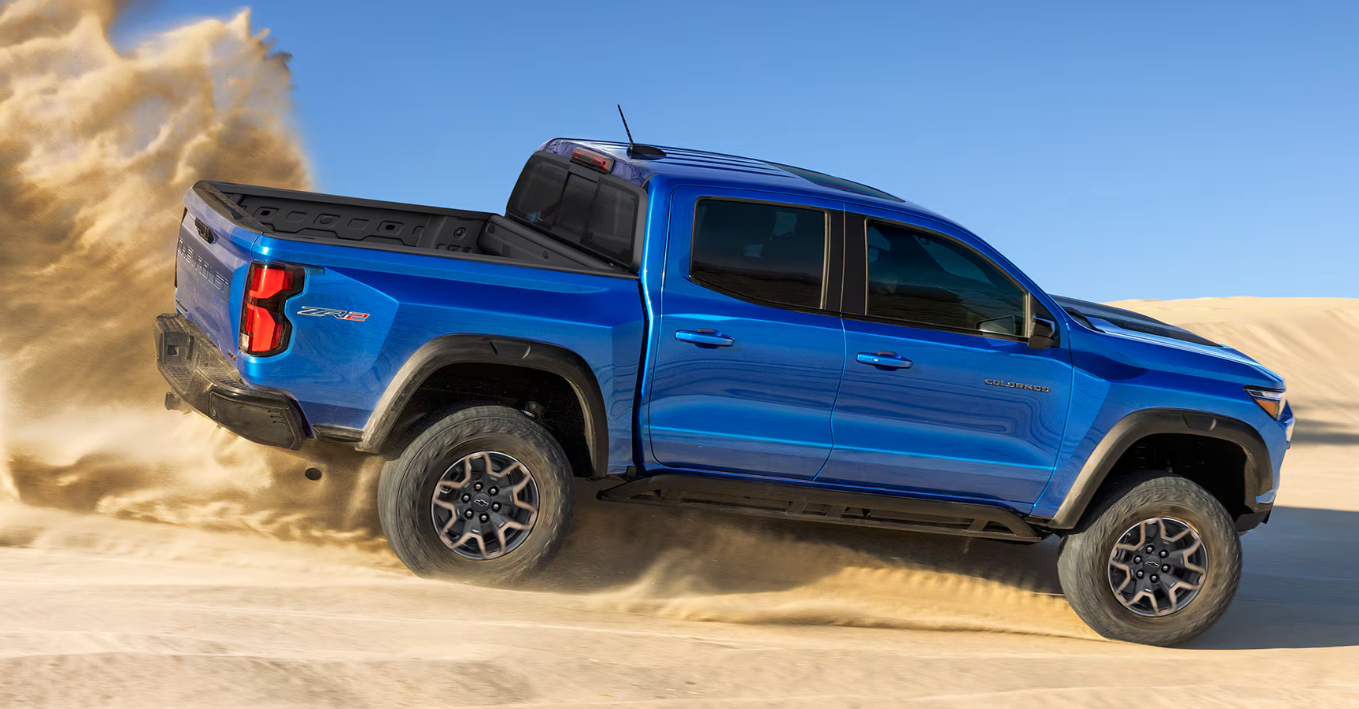
The 2026 Chevrolet Colorado ZR2 and Colorado ZR2 Bison use the same core 2.7L TurboMax powertrain with 310 horsepower and 430 lb-ft of torque, so choosing Bison is not about buying more engine. The regular ZR2 already brings serious off-road hardware with 33-inch mud-terrain tires, a 3-inch factory lift and Multimatic DSSV dampers, while the Bison Edition adds 35-inch mud-terrain tires, front and rear jounce-control dampers, 12.2 inches of ground clearance and additional AEV-developed protection. For a Bartlett driver, that makes the real decision fairly clear: choose the standard ZR2 if you want substantial factory off-road capability without maximizing every terrain-focused specification, and look harder at Bison if larger obstacles, underbody contact, clearance and repeated demanding off-road use are actually part of the plan. The Bison's extra equipment is meaningful, but it is specialized equipment rather than an automatic upgrade every Colorado buyer needs. That distinction matters because these are not two trucks separated mainly by horsepower or interior luxury. They start with the same strong ZR2 foundation, then the Bison Edition extends how far that foundation can go when the terrain becomes more demanding. What is the Colorado ZR2 Bison? The Colorado ZR2 is Chevrolet's specialized off-road Colorado trim, while the ZR2 Bison is an available edition developed with American Expedition Vehicles, or AEV. Bison builds on ZR2 with larger 35-inch mud-terrain tires, additional suspension-control hardware, 12.2 inches of ground clearance, AEV equipment and five boron-steel skid plates. Table of Contents Colorado Off-Road Trim Basics ZR2 Hardware What ZR2 Bison Adds Engine, Suspension, and Tires Which Colorado Off-Road Setup Fits Your Use? ZR2 vs ZR2 Bison Comparison Daily Driving and Trail Use Bartlett Midsize Truck Context Ownership Tradeoff Insight Off-Road Ownership and Service Considerations Key Takeaways Colorado ZR2 vs ZR2 Bison FAQ Colorado Off-Road Trim Basics Colorado's off-road lineup can look complicated if you start with badges instead of hardware. Trail Boss introduces a factory lift, all-terrain tires and off-road-oriented equipment. Z71 adds its own mix of trail capability and everyday design. ZR2 then moves into more specialized territory with larger mud-terrain tires, a taller lift, Multimatic DSSV dampers, additional drive modes and substantial underbody protection. Bison begins after that point. It is not the basic ticket into Colorado off-road capability, and it is not required to get the ZR2's core suspension or TurboMax output. Instead, Chevrolet and AEV take the ZR2 platform and add equipment aimed at increasing clearance, impact protection and control in more demanding terrain. If you are still deciding whether you need a ZR2 at all, the 2026 Chevrolet Colorado Trim Levels guide is the better place to start. The ZR2-versus-Bison question makes the most sense once you already know your use case justifies the top end of Colorado's off-road lineup. ZR2 Hardware The regular 2026 Colorado ZR2 is already far removed from a standard street-oriented midsize truck. Chevrolet equips it with the 2.7L TurboMax engine producing 310 horsepower and 430 lb-ft of torque, an enhanced 8-speed transmission, 17-inch wheels with 33-inch mud-terrain tires and a 3-inch factory-installed lift. The suspension is one of the ZR2's defining features. Multimatic DSSV dampers are designed to provide more controlled damping across a wider range of conditions than a conventional shock setup. The truck also receives five selectable drive modes and an off-road performance display. ZR2 hardware includes full skid plates and rocker protection, while Chevrolet also offers underbody-camera technology that can provide a view of terrain beneath the truck. For trail driving where the driver's direct line of sight cannot show what is immediately under the front of the vehicle, that extra visual information can be genuinely useful. Chevrolet also identifies selectable locking differentials and Baja mode as part of the broader ZR2 off-road formula. Baja mode is calibrated to adjust power delivery, stability control and traction behavior for sandy terrain. None of that depends on ordering Bison. Important point: A standard Colorado ZR2 is already a highly specialized off-road truck. The Bison Edition should be evaluated as an extension of ZR2 capability, not as the point where real off-road equipment begins. What ZR2 Bison Adds The Bison Edition is where Chevrolet and American Expedition Vehicles push the ZR2 farther toward demanding terrain. The most visible change is tire size: Bison moves from the ZR2's 33-inch mud-terrain tires to 35-inch OD mud-terrain tires mounted on AEV 17-inch beadlock-capable wheels. Those larger tires contribute to the Bison's 12.2 inches of ground clearance. More clearance can matter when a truck needs to pass over rocks, ruts, ledges or uneven terrain without putting the chassis and underbody as close to the obstacle. Bison also adds front and rear jounce-control dampers. These are not a replacement for the ZR2's core DSSV suspension. Instead, they provide additional control as the suspension approaches the limits of its travel during harder impacts or compression events. Protection is another major part of the package. Chevrolet lists five boron-steel skid plates for Colorado ZR2 Bison along with heavy-duty AEV front and rear stamped-steel bumpers. Those additions make far more sense for a driver who expects genuine underbody contact risk than for someone whose truck will spend nearly all of its time on pavement. That is the useful way to think about Bison equipment: it is designed around what happens when terrain becomes more severe, not around making the truck faster in a straight line. Engine, Suspension, and Tires The ZR2 and ZR2 Bison do not separate themselves through engine output. Both start with Colorado's 2.7L TurboMax foundation, rated by Chevrolet at 310 horsepower and 430 lb-ft of torque. The meaningful differences are underneath and around that powertrain: tire diameter, clearance, impact protection and additional suspension-control hardware. Standard ZR2 already gives you 33-inch mud-terrain tires, a 3-inch factory lift, Multimatic DSSV dampers, full skid protection and selectable off-road systems. Bison moves to 35-inch mud-terrain tires, adds front and rear jounce-control dampers, reaches 12.2 inches of ground clearance and adds AEV-developed armor and hardware. In practical terms, the upgrade is about increasing the truck's margin when obstacles become larger and suspension impacts become more severe, not about producing more horsepower. Tire size deserves more attention than it usually gets in a quick trim comparison. A larger mud-terrain tire can help increase clearance and provide a larger footprint for demanding off-road work, but it also makes the truck more specialized. Tire replacement cost, road noise, steering feel and everyday ride characteristics can matter more when most mileage still happens on pavement. That does not make the 35-inch setup a negative. It simply means the extra capability has a purpose, and the owner should have a use for that purpose. Which Colorado Off-Road Setup Fits Your Use? The simplest way to choose between ZR2 and Bison is to stop asking which one has the longest equipment list and start asking where the truck will actually go. If off-road use means dirt roads, rough access roads, muddy property, trailheads, camping routes and occasional technical sections, a regular ZR2 already provides a deep set of factory hardware. Its 33-inch MT tires, 3-inch lift, DSSV dampers, skid protection, locking-differential capability and drive modes give the driver much more than an appearance-oriented off-road package. If your terrain regularly involves larger rocks, deeper ruts, abrupt ledges, higher risk of underbody contact or repeated suspension compression, the Bison additions become easier to justify. The 35-inch tires, increased clearance, jounce-control dampers and AEV armor address those specific problems directly. 2026 Colorado ZR2 vs ZR2 Bison Comparison Table Feature Colorado ZR2 Colorado ZR2 Bison Engine 2.7L TurboMax 2.7L TurboMax foundation Output 310 hp / 430 lb-ft Same core ZR2 output Transmission Enhanced 8-speed automatic Enhanced 8-speed automatic Tires 33-inch MT tires 35-inch OD MT tires Primary Dampers Multimatic DSSV ZR2 suspension plus front and rear jounce-control dampers Factory Lift 3-inch factory-installed lift More specialized Bison stance and 12.2-inch ground clearance Underbody Protection Full skid plates and rocker protection Five boron-steel skid plates plus AEV hardware Wheels 17-inch wheels AEV 17-inch beadlock-capable wheels Bumpers ZR2 off-road configuration Heavy-duty AEV front and rear stamped-steel bumpers Best Decision Logic Serious off-road capability plus broader mixed-use ownership More clearance and protection for repeated demanding terrain The comparison makes the buying logic clearer. Bison does not replace a weak ZR2 setup with a strong one. It takes an already capable ZR2 and adds hardware aimed at the situations where tire diameter, clearance, impact control and armor are likely to be tested more often. Daily Driving and Trail Use A truck's most extreme capability can be exciting, but ownership still happens mile by mile. If your Colorado will spend Monday through Friday commuting around Bartlett or Memphis before heading off pavement on weekends, it is worth thinking about how much specialization you want during the other 90 percent of your driving. The regular ZR2 already uses mud-terrain tires and a lifted suspension, so it is not trying to imitate an ordinary Colorado LT. Still, the Bison's 35-inch tires, additional height and more extreme hardware move another step toward trail-first priorities. That can matter in parking lots, garages and everyday loading. Larger tires and additional ride height can make entry and cargo access feel different, especially for passengers who are not expecting a lifted truck. A more specialized mud-terrain tire may also produce different noise and road feel than an all-terrain or conventional street tire. Those tradeoffs become much easier to accept when the truck regularly encounters terrain that benefits from 12.2 inches of clearance and additional underbody protection. If those situations are rare, standard ZR2 may give you the better balance simply because so much serious off-road equipment is already included. When Standard ZR2 Makes More Sense You want serious factory off-road suspension without maximizing tire size. You use the truck for regular commuting as well as weekend trails. Your off-road routes are demanding enough to justify ZR2 but do not routinely create underbody-clearance problems. You value DSSV dampers, locking-differential capability and Baja mode but do not specifically need Bison's AEV equipment. You want to keep the truck closer to the normal ZR2 footprint and tire setup. When ZR2 Bison Makes More Sense Your routes regularly involve rocks, deep ruts, ledges or terrain where extra clearance matters. Underbody contact and impact protection are genuine concerns. You specifically want 35-inch mud-terrain tires in a factory-integrated setup. You expect to use the added jounce-control hardware rather than simply liking that it is included. You want AEV-developed bumpers, wheels and protection without creating an equivalent aftermarket build yourself. The strongest reason to choose Bison is not that it sits above ZR2. It is that you can point to specific terrain where its extra hardware solves a problem. If the 35-inch tires, 12.2 inches of ground clearance, jounce-control dampers and additional AEV protection address conditions you expect to encounter repeatedly, Bison has a clear purpose. If you cannot identify where those differences will matter, the standard ZR2 already provides an unusually deep factory off-road package. View Current Chevrolet Inventory Bartlett Midsize Truck Context A Colorado has one practical advantage before trim choice even enters the conversation: its midsize footprint. Chevrolet lists the 2026 Colorado at 214 inches long. That keeps it meaningfully different from stepping into a full-size Silverado simply because you want real truck capability. For Bartlett and Greater Memphis driving, that size can make a difference in parking, neighborhood streets and ordinary daily use. The ZR2 and Bison preserve the Colorado's basic midsize format while adding equipment that changes height, tire dimensions and off-road behavior rather than stretching the truck into a full-size platform. Memphis Parking, Weekend Trails, and Light Work For a driver using Highway 64, I-40 or local streets during the week, the regular ZR2 may already sit at the aggressive end of what is useful for normal pavement. It still gives you the truck bed, TurboMax torque and off-road systems when the weekend changes the route. Bison becomes more compelling when those weekends involve more than maintained gravel, dirt roads or muddy access points. Extra clearance and armor have their greatest value when there is a realistic chance of the truck's underbody or bumpers meeting the terrain. The same reasoning applies to light work use. If the Colorado occasionally carries tools or supplies and spends most of its time on roads and jobsites, choosing Bison solely because it is the highest-spec off-road version may add equipment that never gets used. If work access routinely involves badly rutted property or rough terrain, the calculation changes. What About Towing? This is an area where the Colorado's headline number can be misleading if it is applied to every configuration. Chevrolet advertises up to 7,700 pounds of maximum available towing for the broader 2026 Colorado lineup, but its official 2026 Trailering Chart separately lists the 4WD ZR2 at up to 6,000 pounds with the specified configuration. That means ZR2 should not be chosen simply because it sits high in the lineup if maximum towing is the main priority. Off-road specialization and maximum trailer rating are different goals. Chevrolet's current 2026 trailering chart does not provide a separate Bison-specific row in the published table we reviewed. For that reason, a Bison shopper should confirm the exact vehicle's certification labels, Owner's Manual and current Chevrolet trailering documentation rather than assuming the regular ZR2 figure automatically applies to every Bison configuration. Towing reminder: Maximum trailer weight is configuration-specific. Passengers, cargo, accessories and trailer tongue weight also consume available vehicle capacity. Always confirm the exact truck and trailer setup before towing. For a broader look at how Colorado fits within Chevrolet's towing lineup, see our 2026 Chevrolet Towing Capacity Guide for Bartlett Drivers. Ownership Tradeoff Insight Off-road trucks make the most sense when you buy hardware for conditions rather than hierarchy. The fact that Bison extends ZR2 capability does not mean every ZR2 buyer should move up to Bison. In many cases, the regular ZR2 is already the specialized choice compared with the rest of the Colorado lineup. Start with the obstacle rather than the equipment list. If Ground Clearance Is the Problem Bison's 12.2 inches of ground clearance and 35-inch tires are directly relevant when breakover clearance and underbody distance are limiting factors. If your trails repeatedly put the center or underside of the truck close to rocks and ledges, that is tangible capability rather than specification-sheet decoration. If Suspension Compression Is the Problem The Bison's front and rear jounce-control dampers add another layer of control for harder suspension events. That becomes much more relevant for repeated demanding off-road use than for a truck that spends most of its life on pavement and maintained dirt roads. If Underbody Protection Is the Problem The Bison's five boron-steel skid plates and AEV-developed bumper hardware make sense when contact risk is part of the environment. The standard ZR2 is not unprotected, however. Chevrolet already gives it full skid plates and rocker protection. That distinction is exactly why the decision should not become "protected versus unprotected." It is better described as serious factory protection versus an even more specialized AEV-developed protection package. If Horsepower Is the Problem Bison is not the answer, because horsepower is not the difference. Both versions use the same TurboMax-based ZR2 powertrain. A buyer looking for a stronger engine does not gain one simply by choosing Bison. If Daily Driving Is the Main Job Then it is worth asking whether you need ZR2 at all before comparing it with Bison. Z71 or Trail Boss may provide enough rough-road ability with less specialization, depending on what you actually expect the truck to do. Dobbs Brothers Chevrolet already has a broader Colorado Off-Road Features and Trail Boss guide that explains that lower part of the off-road trim ladder. This comparison starts where that decision ends. Off-Road Ownership and Service Considerations A ZR2 or Bison may arrive from the factory ready for demanding terrain, but factory hardware does not eliminate the need for inspection and maintenance after hard use. Off-road driving can expose tires, wheels, steering, suspension components and underbody protection to forces they may rarely see during ordinary road driving. Tires and Tire Pressure Both versions use mud-terrain tires, with Bison moving up to 35-inch OD tires. Check pressure according to Chevrolet's vehicle-specific guidance for normal driving rather than choosing a pressure based on appearance or advice intended for another truck. After rough terrain, inspect the tires for cuts, punctures, sidewall damage or objects trapped in the tread. A large aggressive tire is still vulnerable to damage from sharp rocks and debris. Alignment and Steering A hard impact with a rut, rock or obstacle can affect alignment or steering components. If the truck begins pulling, the steering wheel no longer sits normally on a straight road, or tire wear becomes uneven, an inspection can help determine whether something changed. Skid Plates and Underbody Protection Skid plates are designed to provide protection, but contact marks should not simply be ignored because armor is present. After significant impacts, check for deformation, loosened mounting hardware or anything that could interfere with another component. This is particularly relevant to Bison because one of the primary reasons to buy the edition is increased underbody protection. Using that protection as intended also means checking it after the type of terrain that puts it to work. Mud and Debris Mud can collect around wheels, suspension components, brakes and underbody areas. Cleaning the truck after heavy off-road use helps make visual inspection easier and removes material that could remain packed around components. These are general ownership considerations rather than a remote diagnosis. If your Colorado has taken a substantial impact, developed a warning message, changed its steering behavior or shows visible damage, have the specific vehicle inspected. Safety and Driver Assistance on the 2026 Colorado Chevrolet lists Chevy Safety Assist as standard on the 2026 Colorado. The suite includes Forward Collision Alert, Automatic Emergency Braking, Front Pedestrian Braking, Lane Keep Assist with Lane Departure Warning, Following Distance Indicator and IntelliBeam automatic high beams. These systems are designed to assist the driver under certain conditions. They do not make the ZR2 or Bison autonomous, and off-road hardware does not change the driver's responsibility to choose a safe speed and route for the surface. Chevrolet also notes that weather, visibility and road conditions can affect driver-assistance performance. That limitation is especially relevant when driving in mud, dust, heavy rain or other conditions that may affect sensors and cameras. Key Takeaways The 2026 Colorado ZR2 and ZR2 Bison share the same core 2.7L TurboMax output of 310 horsepower and 430 lb-ft of torque. Standard ZR2 already includes 33-inch mud-terrain tires, a 3-inch factory lift, Multimatic DSSV dampers, off-road drive modes and substantial underbody protection. ZR2 Bison adds 35-inch OD mud-terrain tires, 12.2 inches of ground clearance, front and rear jounce-control dampers, AEV hardware and five boron-steel skid plates. Bison makes the strongest case when extra clearance, impact control and underbody protection solve problems you expect to encounter regularly. Chevrolet's 2026 trailering chart lists ZR2 at up to 6,000 pounds in the specified 4WD configuration, below the Colorado lineup's 7,700-pound headline maximum. If most of your driving is pavement with occasional off-road use, standard ZR2 may already provide more than enough specialized equipment. Colorado ZR2 vs ZR2 Bison FAQ Is the 2026 Colorado ZR2 Bison more powerful than the regular ZR2? No. Both use the same core 2.7L TurboMax powertrain rated at 310 horsepower and 430 lb-ft of torque. Bison's advantage comes from its 35-inch tires, additional suspension-control hardware, ground clearance, AEV components and underbody protection rather than additional engine output. What does the Bison Edition add to the Colorado ZR2? Chevrolet lists 35-inch OD mud-terrain tires, front and rear jounce-control dampers, 12.2 inches of ground clearance and five boron-steel skid plates. Chevrolet's ZR2-family information also identifies heavy-duty AEV front and rear stamped-steel bumpers and AEV 17-inch beadlock-capable wheels. Is the Colorado ZR2 or ZR2 Bison better for daily driving? The answer depends on how much of your ownership is built around demanding off-road terrain. Standard ZR2 already provides extensive trail hardware and may be the more balanced choice when the truck also sees substantial commuting and pavement use. Bison becomes easier to justify when its larger tires, added clearance and protection are likely to be used regularly. How much can a 2026 Chevrolet Colorado ZR2 tow? Chevrolet's official 2026 trailering chart lists the 4WD Colorado ZR2 with the 2.7L TurboMax at up to 6,000 pounds of maximum trailer weight and an 11,600-pound GCWR for the listed configuration. The chart does not provide a separate Bison-specific row, so confirm the exact truck's certification labels, Owner's Manual and current Chevrolet documentation before towing. Compare Colorado ZR2 Options in Bartlett If you already know you want a Colorado with serious factory off-road hardware, the next decision is not simply how high you can go in the lineup. Compare the terrain you expect to drive with the equipment each setup adds. A regular ZR2 already provides the core suspension, tires, protection and off-road systems many owners are looking for. Bison makes sense when you can put its extra clearance, 35-inch tires, jounce-control dampers and AEV protection to work. Current trim and vehicle availability can change, so check the live new-vehicle inventory at Dobbs Brothers Chevrolet before planning a specific test drive. View Current Chevrolet Inventory Related Chevrolet Insights & Updates Colorado Off-Road Guide 2026 Chevrolet Colorado Off Road Features and Trail Boss Compare Trail Boss, Z71 and ZR2 hardware before deciding how much factory off-road capability you need. Read More Colorado Trim Guide 2026 Chevrolet Colorado Trim Levels Explained Near Bartlett, TN See how WT, Custom, LT, Trail Boss, Z71 and ZR2 fit different truck-shopping priorities. Read More Towing Guide 2026 Chevrolet Towing Capacity Guide for Bartlett Drivers Compare configuration-specific towing considerations across Chevrolet trucks and SUVs before matching a vehicle to a trailer. Read More Truck & SUV Guide Best 2026 Chevrolet Trucks and SUVs for Spring Adventures Near Bartlett Explore Chevrolet vehicles for outdoor travel, cargo, towing and weekend trips around West Tennessee and beyond. Read More

Chevy Truck Accessories in Bartlett

Chevy Truck Accessories in Bartlett

Truck accessories are most useful when they solve a problem you actually have. For a Chevrolet Silverado or Colorado owner, that may mean protecting the bed, keeping tools or cargo organized, covering the bed from weather and view, adding easier cab access, protecting the interior, or making sure the truck has the correct equipment for a specific trailering setup. The important part is that a product described broadly as a "Chevy truck accessory" is not automatically compatible with every Chevrolet pickup. Model year, truck model, bed length, body configuration, trim, and existing equipment can all matter. Starting with the job you want the accessory to do, then confirming exact vehicle fitment, is a better approach than buying from a generic list of popular truck upgrades. At Dobbs Brothers Chevrolet in Bartlett, truck owners can submit their year, make, model, trim, VIN, and requested part through the Chevrolet Parts Request form. That gives the parts team the vehicle information needed to help review availability, fitment, and next steps before you order. What are Chevrolet truck accessories? Chevrolet truck accessories are vehicle-specific products that can add protection, cargo management, trailering support, convenience, or personalization to trucks such as the Silverado and Colorado. Compatibility can depend on the exact model year, body configuration, bed length, trim, and equipment already installed on the truck. In This Article Popular Chevy Truck Accessories Bed Protection and Covers Towing and Work Add-Ons Interior and All-Weather Protection Choosing Accessories by Truck Use Bartlett Parts Counter Context Fitment, Warranty, and Installation Help Ownership Reality Check Key Takeaways Chevy Truck Accessories FAQ Popular Chevy Truck Accessories The useful way to divide truck accessories is by function, not by how dramatic they look in a catalog. Bed protection makes sense if the cargo box regularly carries tools, equipment, landscaping supplies, building materials, camping gear, or other items that can scrape or stain the surface. A tonneau cover changes how exposed cargo is to weather and view. Floor liners protect an area that sees constant contact with mud, rain, work boots, and everyday debris. Other accessories solve more specialized problems. Assist steps can make cab access easier. Cargo-management equipment can help keep loose items from moving around the bed. Trailering products may support a particular towing configuration, but they need to be matched to the truck and trailer rather than treated as an automatic upgrade to the vehicle's rated capacity. That difference matters for Silverado 1500, Silverado HD, and Colorado owners because Chevrolet's pickup lineup covers very different sizes and configurations. A useful accessory decision starts by asking what the truck does during a normal week. Bed Protection and Covers A pickup bed is one of the areas most likely to benefit from an accessory because it is deliberately exposed to cargo, weather, dirt, and movement. Chevrolet offers vehicle-specific bed-protection products, and some applications are explicitly separated by bed configuration. For example, Chevrolet lists certain Silverado 1500 bed liners specifically for short-bed models rather than describing them as universal Silverado products. That is a useful reminder that the phrase "fits Silverado" may not provide enough information to order correctly. Even within the same model family, bed dimensions and body configurations can change which product is appropriate. Bed Liner vs. Bed Mat A bed liner is the more comprehensive protection choice when you want coverage across a larger portion of the bed. A bed mat is generally a simpler approach focused on the bed floor. Which one makes more sense depends on what you carry and which areas of the bed receive the most contact. If the truck regularly carries bulky or dirty equipment, broader bed protection may have more value. If the main concern is reducing direct contact between cargo and the bed floor, a mat may solve the problem without adding as much material around the sides of the bed. Neither answer is automatically better. The useful question is what needs protection and how often you remove, clean, or rearrange equipment. Hard vs. Soft Tonneau Covers Tonneau covers add another decision. A soft roll-up design can be attractive when quick bed access and easy opening are priorities. A hard cover may appeal to an owner who places more emphasis on a rigid barrier over the cargo area. Folding, rolling, and other designs can also change how much of the bed remains accessible when the cover is open. Before choosing one, think about what normally goes into the truck bed. A cover that works well over luggage, tools, or grocery cargo may become inconvenient if tall equipment regularly extends above the bed rails. Bed length and compatible mounting points matter as well. Fitment note: Bed accessories should be matched to the exact truck rather than ordered by model name alone. Model year, bed length, body configuration, and existing bed equipment can affect compatibility. Towing and Work Add-Ons Truck owners often look at trailering equipment at the same time they shop for bed and work accessories. Depending on the vehicle and intended setup, that category can include hitch-related equipment, wiring products, trailering components, and other hardware designed for use with a particular Chevrolet configuration. This is also the category where it is most important to separate accessory fitment from vehicle capability. Installing a hitch, wiring component, or another trailering accessory does not by itself increase the maximum towing capacity Chevrolet assigns to the truck. The actual rating depends on the specific vehicle configuration and can be affected by engine, drivetrain, axle ratio, cab and bed configuration, trailering package, payload, passengers, cargo, and other equipment. Use the vehicle certification labels, Owner's Manual, and applicable Chevrolet trailering information to confirm the limits of the exact truck. Payload matters too. Passengers, tools, cargo, accessories, and trailer tongue weight all use part of the truck's available payload. That is why a towing setup should not be evaluated only by comparing the trailer's dry weight with a headline maximum-towing number. If towing is an important part of how you use your truck, our 2026 Chevrolet Towing Capacity Guide for Bartlett Drivers provides more context on configuration-specific Chevrolet towing limits. Work Accessories and Cargo Management For a truck that carries tools or supplies, organization can be more valuable than simply adding more equipment. Tie-down solutions, bed storage, cargo dividers, and compatible storage systems can help create a predictable place for the items you use most often. The best setup depends on what must remain accessible. If you need nearly the full bed for large materials several times a week, a permanent storage solution that occupies significant bed space can work against you. If smaller tools are the primary load, dedicated organization can reduce the need to move multiple containers every time you need one item. Assist steps and running boards can also be functional work accessories rather than appearance upgrades. They may make repeated cab entry easier, particularly on taller truck configurations. The right choice should still be checked for exact vehicle compatibility and any interaction with existing equipment. Interior and All-Weather Protection Not every worthwhile truck accessory belongs outside the cab. Chevrolet offers floor mats and floor liners engineered for specific vehicle applications. Floor liners typically use taller edges and more molded coverage than a conventional flat mat, making them useful for dirt, rainwater, mud, and other debris brought into the truck on shoes. That can be especially practical for a truck that switches between work duty and everyday transportation. A Silverado or Colorado may spend part of the week carrying equipment and the rest transporting family members, groceries, sports gear, or commuting supplies. Protecting the footwells can be one of the simplest ownership upgrades because the accessory is used virtually every time someone enters the truck. Interior storage accessories can make sense for the same reason. The goal should be to make frequently used items easier to secure and retrieve, not simply to fill every available storage area with an accessory. Choosing Accessories by Truck Use A useful accessory plan starts with your normal use case and then works backward. A contractor, frequent trailer owner, daily commuter, and weekend outdoor driver may own the same model of truck but need completely different equipment. Truck Use Accessories to Consider Main Question Before Buying Contractor or Work Truck Bed protection, cargo management, assist steps, floor protection Which tools and materials need to stay accessible every day? Frequent Hauling Bed liner or mat, tie-down equipment, tonneau cover Do you need an open bed often, or more covered cargo space? Trailer Owner Compatible trailering equipment and wiring What equipment is specified for the exact truck and trailer combination? Weekend and Outdoor Use Bed cover, floor protection, cargo organization What needs weather protection, security, or quick access? Daily Driver Floor liners, storage, steps, practical bed protection Will the accessory improve something you deal with every day? Contractors A work truck benefits most from accessories that protect surfaces or make tools and supplies easier to manage. Start by looking at what occupies the bed on an ordinary workday. If long or bulky materials are common, preserving open bed space may matter more than installing a large permanent storage system. If smaller tools and parts dominate the load, organization may have greater value. Interior protection can also be a sensible early purchase because work boots, dirt, rain, and repeated entry can put more wear on the cabin than occasional recreational use. Haulers and Trailer Owners If the truck frequently moves cargo in the bed, focus first on the surfaces and equipment directly involved in that task. Bed protection and secure tie-down points may matter before appearance accessories. For towing, begin with the truck's actual trailering configuration. Then identify the compatible hardware required by that setup. Do not work backward by buying a hitch component first and assuming the vehicle can safely handle whatever trailer fits it. Weekend and Outdoor Drivers A truck used for camping, home projects, recreation, or occasional trail use may benefit more from flexibility. A bed cover can make it easier to keep everyday cargo covered while still allowing the bed to open for larger gear. Floor protection is useful when wet or dirty equipment ends up inside the cab, and removable storage can preserve bed space when it is not needed. If your Colorado is also used off pavement, it can be useful to understand what hardware is already on the truck before adding more. Our 2026 Chevrolet Colorado Off Road Features and Trail Boss guide explains how Chevrolet's factory off-road equipment changes across the Colorado lineup. Request Chevrolet Truck Accessories Bartlett Parts Counter Context If you already know exactly which part or accessory you need, ordering can be straightforward. If you are still deciding, collecting the truck's information before you shop can save time and reduce the risk of choosing a product intended for a different configuration. Dobbs Brothers Chevrolet's Parts Request form asks for the vehicle year, make, model, trim, VIN when available, and the requested part or accessory. Those fields are useful because accessory compatibility can be more specific than a product name suggests. For example, two Silverado 1500 owners can have the same model year but different bed lengths or equipment. Two Colorado owners can have different trims and factory hardware. Even when both shoppers want the same general type of accessory, the appropriate part number or installation procedure may not be identical. Fitment, Warranty, and Installation Help Exact fitment is one reason to check an accessory before ordering rather than relying entirely on a marketplace description. Chevrolet's own accessory catalog identifies specific vehicle applications for many products, and Dobbs' parts-request process gives the team the vehicle details needed to review the request. Warranty treatment can also vary depending on the accessory and how it is purchased or installed. Chevrolet states that Chevrolet Accessories installed by an authorized GM dealer receive parts-and-labor coverage for the applicable warranty period, while accessories purchased over the counter or not requiring installation can have different parts-only coverage. GM Licensed or other associated accessories may instead be covered by the specific accessory manufacturer's warranty. Exact coverage should be confirmed for the product you are considering. If an accessory requires installation, Dobbs Brothers Chevrolet also provides a Chevrolet service department where you can coordinate service or installation needs. Not every accessory requires dealer installation, so the appropriate next step depends on the product. Parts Counter Insight: Fitment Matters More Than the Accessory Name One of the easiest mistakes in truck-accessory shopping is stopping at the model name. "Silverado bed liner," "Colorado floor liner," or "Chevy tonneau cover" describes the accessory category, but it may not describe the exact application. Chevrolet's accessory catalog provides a practical example. Certain Silverado 1500 bed liners are listed specifically for short-bed configurations, with compatible model years and body styles identified separately. This is why year, model, trim, body configuration, bed size, and VIN information can matter before ordering. The same logic applies when adding equipment to a newer truck that already has factory options. A product can be designed for the correct vehicle family but still interact with existing bed equipment, mounting points, cargo systems, electrical connections, or other installed accessories. Ownership Reality Check: Buy for the Problem You Have Truck accessories can add real usefulness, but buying everything at once is rarely necessary. Some needs are obvious from the first week of ownership. Others only become clear after you have used the truck for work, towing, home projects, recreation, or daily commuting. Accessories That Often Make Sense to Evaluate Early Floor protection: useful immediately when dirt, rain, mud, or work shoes are part of daily use. Bed protection: worth considering early if the truck bed will routinely carry equipment or materials. Basic cargo management: useful when loose items need predictable tie-down or storage points. Steps or access equipment: worth evaluating when cab or bed access is inconvenient in normal use. Accessories Worth Choosing After You Know Your Routine Tonneau-cover style: wait until you know how often you need full-height or full-bed access. Large storage systems: make sure permanent storage will not occupy space you regularly need for cargo. Specialized trailering equipment: match it to the exact truck and trailer configuration. Specialized recreation accessories: choose them around the gear you actually transport rather than an imagined future use. This approach also helps avoid accessory conflicts. A bed rack, tonneau cover, storage box, liner, cargo rail, and other bed equipment may each be useful on its own, but that does not guarantee every combination works together. Planning the complete setup first can be smarter than adding parts one at a time. Do Accessories Change What Your Truck Can Do? Some accessories make a truck easier to use, protect it, or provide the hardware needed for a specific job. They do not rewrite the vehicle's factory ratings. A towing accessory does not override Chevrolet's trailering, payload, axle, or Gross Combined Weight Rating limits. Likewise, adding aggressive-looking exterior equipment does not convert a street-oriented truck into a factory off-road configuration. Start with the capability built into the truck, then use compatible accessories to support the way you use that capability. If you are still choosing a truck rather than accessorizing one you already own, the 2026 Silverado 1500 Trim Levels guide can help you understand which factory equipment comes with different Silverado configurations before you decide what needs to be added afterward. Key Takeaways Choose truck accessories according to how you actually use your Silverado, Silverado HD, or Colorado rather than buying from a generic upgrade list. Bed length, body configuration, model year, trim, VIN, and existing equipment can all matter for accessory fitment. Bed liners, mats, covers, floor protection, cargo management, steps, and trailering equipment solve different ownership problems. Installing trailering hardware does not increase the truck's factory towing or payload ratings. Accessory warranty coverage can vary by product and whether an authorized GM dealer installs it. Dobbs Brothers Chevrolet's Parts Request form lets you provide the vehicle details needed to review accessory fitment, availability, and next steps. Chevy Truck Accessories FAQ How do I know if a Chevy accessory fits my Silverado or Colorado? Check the exact vehicle application rather than relying only on the model name. Model year, truck model, trim, body style, bed length, and existing equipment can affect compatibility. Providing the VIN can also help identify the exact vehicle configuration. Dobbs Brothers Chevrolet's Parts Request form accepts year, make, model, trim, VIN, and the requested part so the parts team can review the request. Should I choose a bed liner, bed mat, or tonneau cover? They solve different problems. A liner provides broader bed protection, while a bed mat focuses primarily on the bed floor. A tonneau cover provides coverage over the cargo area and can help keep items less exposed to weather and view. Some owners use more than one type, but compatibility between accessories should be checked before combining them. Are Chevrolet accessories covered by a warranty? Coverage depends on the product and installation situation. Chevrolet states that qualifying Chevrolet Accessories installed by an authorized GM dealer receive applicable parts-and-labor coverage, while over-the-counter or non-installed accessories can have different parts-only coverage. Licensed or associated accessories may be covered by the individual accessory manufacturer instead of GM. Confirm the warranty for the exact product before purchase. Can adding a towing accessory increase my Chevy truck's towing capacity? No accessory by itself increases the truck's factory-rated towing capacity. Maximum trailering depends on the exact Chevrolet configuration and required equipment. Payload, passengers, cargo, trailer tongue weight, drivetrain, engine, axle ratio, trailering package, and other factors can affect the usable limit. Always verify the specific truck's labels, Owner's Manual, and Chevrolet trailering guidance. Get Help Choosing the Right Chevrolet Truck Accessory The useful accessory is the one that fits the truck and solves the problem you actually have. If you know what you need, submit the truck information and requested item through the Dobbs Brothers Chevrolet Parts Request form. If you are unsure, including the year, model, trim, VIN, and a description of how you plan to use the accessory gives the parts team more information to review fitment and next steps. You can also review current service and parts specials before ordering or scheduling installation. Offers and availability can change, so check the current page for details. Order Chevrolet Parts & Accessories Browse Current Inventory Related Chevrolet Insights & Updates Colorado Guide 2026 Chevrolet Colorado Off Road Features and Trail Boss See how Trail Boss, Z71, ZR2, and other Colorado configurations differ before deciding which accessories make sense for your truck. Read More Towing Guide 2026 Chevrolet Towing Capacity Guide for Bartlett Drivers Compare Chevrolet truck and SUV trailering ratings and learn why exact configuration matters before setting up a trailer. Read More Heavy Duty Trucks 2026 Chevrolet Silverado HD: Heavy Duty Power Near Bartlett TN Review Silverado HD gas and Duramax capability for drivers whose work and trailering needs go beyond a light-duty pickup. Read More Silverado Trim Guide 2026 Chevrolet Silverado 1500 Trim Levels Explained Near Bartlett TN Compare Silverado factory equipment and configurations before deciding which features should come on the truck and which accessories to add later. Read More

2026 Chevrolet Equinox ACTIV vs RS in Bartlett

2026 Chevrolet Equinox ACTIV vs RS in Bartlett

For Bartlett drivers comparing the 2026 Chevrolet Equinox ACTIV against the Equinox RS, the short answer is this: both share the same 1.5-liter turbocharged engine and 175 horsepower, so the real difference comes down to styling and standard drivetrain rather than raw performance. The ACTIV brings standard all-wheel drive, a raised suspension, and all-terrain tires for a more rugged stance, while the RS leans into a sportier look with darker exterior trim and a lower, firmer ride. At Dobbs Brothers Chevrolet, we help Bartlett and Cordova commuters weigh these two trims every week, and the decision usually comes down to daily driving conditions rather than horsepower. For a Cordova commuter who deals with wet or uneven pavement on the daily drive into Memphis, we often point toward the ACTIV and its standard all-wheel drive. For a Germantown driver who wants a sharper look and doesn't need standard AWD, the RS tends to be the better value. We carry both trims in our Bartlett showroom, and in this guide, we walk through the styling and equipment differences, compare specs side by side, and match specific driver profiles to the Equinox trim that fits their daily routine, so you can request current availability already knowing which configuration makes sense for your driving. Definition: The Chevrolet Equinox ACTIV and RS are two upper trim levels of the compact Equinox SUV, built around different personalities rather than different capability tiers. The ACTIV emphasizes rugged, all-weather utility with standard all-wheel drive, while the RS emphasizes sport-inspired styling and technology. For drivers in Bartlett and the greater Memphis area, each trim offers a different daily-driving benefit depending on road conditions and personal style preference. In This Guide Equinox Trim Differences ACTIV Design and Utility RS Style and Tech Engine, Safety, and Cabin Basics ACTIV or RS Buyer Fit ACTIV vs RS Comparison Table Commuting, Family, and Weekend Use Bartlett and Cordova Ownership Context Daily Parking, Weather, and Cargo Needs Local Dealer Insight Ownership Reality Check Key Takeaways FAQ Equinox Trim Differences The ACTIV and RS share the same engine and core technology, so the decision comes down to standard drivetrain, ride height, and styling personality. ACTIV Design and Utility The 2026 Chevrolet Equinox ACTIV is built around all-weather confidence. It comes with standard all-wheel drive rather than making it an option, along with a suspension raised roughly two inches over the LT and RS for better ground clearance. We carry this trim specifically for Bartlett and Cordova customers who deal with wet roads, gravel driveways, or uneven pavement on a regular basis. Standard all-wheel drive, not optional like on the RS Raised suspension for improved ground clearance All-terrain tires designed for light off-pavement use Unique exterior badging and roof rails Rugged-styled interior trim accents For a Cordova commuter driving through construction zones or rougher secondary roads on the way into Memphis, the ACTIV's raised stance and all-terrain tires add a real margin of comfort over standard road tires. Based on our experience at Dobbs Brothers Chevrolet, ACTIV buyers tend to be drivers who value functional confidence over outright styling, though the ACTIV still looks distinct with its roof rails and unique trim. Browse Equinox ACTIV Inventory RS Style and Tech The 2026 Chevrolet Equinox RS shares the ACTIV's 175-horsepower turbocharged engine, but it shifts the trim's focus toward sport-inspired styling rather than off-pavement capability. Our sales team walks customers through the RS's darker exterior trim, unique wheels, and sport body kit every week, and it's a popular pick for drivers who want a more aggressive look without stepping up to a different vehicle class. All-wheel drive remains optional on the RS rather than standard, which typically keeps its base price a bit more approachable for drivers who don't need it every day. For a Germantown driver whose daily commute stays mostly on paved roads and highways, the RS delivers the styling upgrade without paying for standard AWD you may not use. We find that RS buyers tend to prioritize how the vehicle looks in the driveway and drives on pavement, while still getting the same core technology and safety features as every other Equinox trim. Engine, Safety, and Cabin Basics Beyond the styling and drivetrain differences, both the ACTIV and RS share the same core Equinox foundation. Every 2026 Equinox comes with Chevy Safety Assist as standard equipment, which bundles automatic emergency braking, lane keep assist, and forward collision alert regardless of trim. Both trims also come with an 11.3-inch touchscreen, wireless Apple CarPlay and Android Auto, heated front seats, and a heated steering wheel as standard equipment. What we see here in Bartlett is that customers cross-shopping the ACTIV and RS are often surprised that neither trim gives up daily-use technology to get its distinct look. The 1.5-liter turbocharged engine producing 175 horsepower is identical across both trims, so acceleration and daily drivability feel the same whether you're in an ACTIV or an RS. The real-world difference shows up in ride height, tire type, and how the suspension responds to Bartlett's rougher side streets and Cordova's construction-heavy commuter routes. Feature Equinox ACTIV Equinox RS Engine 1.5L turbo, 175 hp 1.5L turbo, 175 hp Drivetrain AWD (standard) AWD (optional) Suspension / Ride Height Raised, off-road tuned Standard, sport-tuned Tires All-terrain Standard performance Touchscreen 11.3-inch standard 11.3-inch standard Styling Focus Rugged, adventure-ready Sport, blacked-out accents Best For All-weather confidence, rougher roads, standard AWD Sportier look, pavement-focused driving, lower cost of entry Based on Chevrolet official website. Confirm current pricing and availability with our sales team, as figures can shift by model year and configuration. ACTIV or RS Buyer Fit Choosing between the ACTIV and RS comes down to how much you value standard all-wheel drive versus a sportier, pavement-focused ride. ACTIV vs RS Comparison Table When Bartlett and Cordova drivers come in undecided between these two trims, we walk through a simple decision matrix built around daily driving conditions rather than styling preference alone. Scenario Equinox ACTIV Equinox RS Daily commute on wet or uneven roads Best suited, standard AWD and all-terrain tires Capable with optional AWD Sportier daily-driver look Rugged styling, not sport-focused Best suited, blacked-out sport styling Lower cost of entry Standard AWD adds to base cost Slightly more approachable without AWD Gravel driveways or rural roads Best suited, raised suspension Adequate on pavement, less ideal off it Highway commuting into Memphis Comfortable, all-weather confidence Comfortable, sportier ride feel Family errands and daily cargo Similar cargo room to RS Similar cargo room to ACTIV Best For Drivers who want standard all-weather capability Drivers who want sport styling without standard AWD Based on Chevrolet official website. For most Bartlett and Cordova drivers, we recommend the ACTIV when wet roads, rougher pavement, or occasional gravel driving are part of your regular routine, because standard all-wheel drive and all-terrain tires add real confidence the RS doesn't match without the optional AWD upgrade. If your driving stays mostly on smooth pavement and you want a sportier look, the RS delivers that without paying for capability you may not use daily. See Current New Chevy Specials Commuting, Family, and Weekend Use Here's how we match specific driver profiles to an Equinox trim inside our Bartlett showroom: For Cordova commuters who deal with construction zones and uneven pavement on the drive into Memphis, we recommend the ACTIV because standard AWD and all-terrain tires handle rough transitions more confidently than standard tires. For Germantown drivers who want a sportier look for daily errands and weekend drives, we recommend the RS because the darker trim and unique wheels deliver the styling upgrade without the added cost of standard AWD. For Collierville families who split time between smooth neighborhood streets and occasional gravel roads near local parks, we recommend the ACTIV for the added ground clearance and all-weather traction. If you're still deciding, use this quick check: If your daily drive includes wet, rough, or unpaved sections, we recommend the ACTIV. If your priority is sportier styling on mostly paved roads, we recommend the RS. If you're still unsure, our team can pull both trims from our Bartlett inventory so you can compare them side by side. If you're weighing the Equinox ACTIV against the RS, we genuinely think the fastest way to decide is sitting in both trims back to back at our Bartlett showroom. We keep a rotating selection of ACTIV and RS builds in stock, so you can compare the ride height, the tires, and the styling details in person rather than guessing from a spec sheet. Our sales team can also walk you through current new Chevy specials, since incentives on these two trims shift throughout the month. If your daily commute includes rougher roads around Cordova or Bartlett, bring up your specific route and we'll help you figure out whether standard AWD is worth it for your situation. We've helped drivers throughout Bartlett, Cordova, and Germantown make this exact comparison for years, and we're happy to talk through your daily routine before you ever sit in a vehicle. You can request current availability anytime through our Equinox model research page, or call us directly at 901-451-6720 to set up a time to compare both trims the same day. We want you confident in your choice, not just satisfied with it. Request Equinox ACTIV or RS Availability Bartlett and Cordova Ownership Context Bartlett's neighborhood streets and Cordova's commuter routes into Memphis create real, daily differences between how the ACTIV and RS feel to drive. Daily Parking, Weather, and Cargo Needs Bartlett and Cordova sit close enough to Memphis that a lot of our customers split their daily driving between quiet neighborhood streets and busier commuter routes with more construction and uneven pavement. That mix matters when you're choosing between the ACTIV and RS. During West Tennessee's wetter months, we've seen firsthand how the ACTIV's standard all-wheel drive and all-terrain tires keep traction more consistent on slick roads than the RS's standard tires, especially for Cordova commuters navigating construction zones on the way into Memphis. Daily parking is another area where the two trims feel similar rather than different, since both share the same compact Equinox footprint regardless of trim. Cargo room is also essentially identical between the ACTIV and RS, so neither trim gives up practical space to get its distinct styling. Because our dealership sits directly on Hwy 64 in Bartlett, we're positioned to let customers test both trims on the exact mix of roads they'll be driving every day, not a closed course that doesn't reflect real Bartlett and Cordova conditions. Local Condition ACTIV Advantage RS Advantage Wet or rainy commutes into Memphis Standard AWD improves traction Adequate with optional AWD Construction zones on Cordova commuter routes Raised suspension handles uneven pavement Standard ride height, less ground clearance Neighborhood street parking in Bartlett Similar footprint to RS Similar footprint to ACTIV Daily cargo for errands and groceries Comparable cargo room to RS Comparable cargo room to ACTIV Smooth highway commuting Comfortable, slightly firmer off-road tires Comfortable, sportier tuned ride Occasional gravel roads near Collierville parks Better suited, all-terrain tires Less ideal, standard tires We've watched a lot of Bartlett and Cordova drivers narrow this exact decision down to their actual daily commute rather than which trim looks better in photos. If you're ready to see how either trim handles your specific route, we'd rather show you than tell you. Stop by our showroom at 7850 Hwy 64 for a test drive that includes a stretch of your actual commute pattern, not just a parking lot loop. While you're here, ask our team about GM Rewards, which lets you earn points on service visits and parts purchases that can go toward your next Equinox or your current one's maintenance. We also work with drivers throughout Germantown and Collierville who prefer to schedule ahead, so feel free to browse our current Equinox inventory at dobbsbrotherschevy.com before you come in. Whether you end up in an ACTIV or an RS, we want the process to feel like talking to neighbors who happen to know a lot about Chevrolets, not a sales pitch. Schedule Your Equinox Test Drive Local Dealer Insight Being a Bartlett-based dealership lets us match Equinox trims to real Cordova and Memphis-area commuting patterns, not just showroom impressions. We're not guessing at how these two trims hold up around here, we're driving the same roads our customers drive every day. Our position on Hwy 64 means we regularly see how the ACTIV's standard AWD performs during Cordova's rush-hour construction detours and how the RS holds its sportier ride feel on smoother Bartlett neighborhood streets. That local vantage point shapes how we advise drivers when they come in undecided between these two trims. We also track which trim our own customer base tends to stick with over time. Cordova commuters who deal with regular construction and uneven pavement consistently tell us the ACTIV's all-terrain tires and standard AWD earn their keep, while Bartlett and Germantown drivers whose routes stay mostly on smooth roads tell us they appreciate the RS's styling without ever missing the ACTIV's off-pavement hardware. We share these patterns with new shoppers so the decision is grounded in how our own customers actually use these vehicles. Meet Our Bartlett Sales Team Ownership Reality Check The price gap between the ACTIV and RS is close enough that daily driving conditions, not sticker price, should usually drive the decision. Beyond the upfront price, we get a lot of ownership-cost questions from Bartlett and Cordova drivers comparing these two trims. The ACTIV's all-terrain tires typically wear differently than the RS's standard tires, and depending on how much rough-road driving you do, you may find yourself rotating or replacing them on a slightly different schedule. Our service team recommends checking tire wear at every oil change interval regardless of trim, since Memphis-area heat and stop-and-go traffic both accelerate wear on any tire type. Insurance costs are usually close between the two trims since they share the same engine and safety equipment, though the ACTIV's standard AWD can occasionally push comprehensive coverage costs up slightly compared to a base RS without AWD. Maintenance intervals are identical across both trims because they share the same 1.5-liter turbocharged engine, so oil changes, filter replacements, and factory-scheduled maintenance follow the same Chevrolet-recommended schedule either way. Where the two trims can diverge is resale value in a market like ours: Cordova and Memphis-area buyers shopping the used market sometimes place a premium on ACTIV trims because standard AWD is less common to find used at this price point, while RS trims often attract buyers who specifically want the sport styling and are comfortable without standard AWD. We recommend factoring your typical driving conditions, not just the purchase price, into which trim holds its value better for your situation. Get Pre-Approved for Your Equinox Key Takeaways The Equinox ACTIV and RS share the same 175-horsepower, 1.5-liter turbocharged engine. The ACTIV comes with standard all-wheel drive, a raised suspension, and all-terrain tires. The RS offers sportier styling with all-wheel drive available as an option rather than standard. Both trims include an 11.3-inch touchscreen and Chevy Safety Assist as standard equipment. For Cordova commuters dealing with rough or wet roads, we recommend the ACTIV. For drivers who want sport styling on mostly paved roads, we recommend the RS. Frequently Asked Questions What's the real difference between the Equinox ACTIV and RS? The core difference is drivetrain and styling rather than performance. The 2026 Equinox ACTIV comes with standard all-wheel drive, a raised suspension, and all-terrain tires for a more rugged, all-weather-ready setup. The RS shares the same 175-horsepower engine but focuses on sport-inspired styling, with all-wheel drive offered as an option instead of standard equipment. Based on what our sales team sees in Bartlett, the choice usually comes down to how much of your daily driving happens on rough or wet roads versus smooth pavement. Does the Equinox ACTIV have standard all-wheel drive? Yes. Unlike the RS, which offers all-wheel drive as an optional upgrade, the Equinox ACTIV comes with all-wheel drive as standard equipment across the trim. This is one of the main reasons we recommend the ACTIV for Cordova and Bartlett commuters who deal with wet or uneven roads on a regular basis, since it removes the AWD decision entirely rather than leaving it as an add-on choice. Is the Equinox RS just a styling package, or does it drive differently? The RS is primarily a styling and equipment trim rather than a performance upgrade, since it shares the same 1.5-liter turbocharged engine and 175 horsepower as the ACTIV. What changes is the exterior look, with darker trim, unique wheels, and a sport body kit, along with a standard ride height rather than the ACTIV's raised suspension. Drivers looking for the sportiest available look on the Equinox tend to gravitate toward the RS specifically for this styling difference. Which Equinox trim is better for Memphis-area rain and construction zones? For Cordova and Bartlett commutes that regularly involve wet roads or construction-related uneven pavement, we typically recommend the ACTIV. Its standard all-wheel drive and all-terrain tires handle these conditions more confidently than the RS's standard tire setup, particularly during West Tennessee's wetter months. Related Articles Keep reading more Chevrolet model comparisons, service guides, and ownership tips from Dobbs Brothers Chevrolet. SUV Guide 2026 Chevrolet Equinox vs Traverse: Which SUV Fits Your Bartlett Family See how the compact Equinox compares to the three-row Traverse for Bartlett-area families. Read More Trim Guide 2026 Chevrolet Trax ACTIV vs 2RS in Bartlett See how ACTIV and RS styling compare on the smaller Trax lineup. Read More Technology Guide 2026 Chevrolet Equinox Features and Technology Near Bartlett, TN A closer look at the tech and safety features standard across the Equinox lineup. Read More Back-to-School Guide 2026 Chevy SUVs for Back-to-School Season: Which Fits Your Bartlett Family? Compare the Trax, Equinox, Traverse, and Tahoe for school-year family routines. Read More

traverse z71 vs high country

Traverse Z71 vs High Country for Bartlett Families

For Bartlett families comparing the 2026 Chevrolet Traverse Z71 against the 2026 Chevrolet Traverse High Country, the short answer is this: the Z71 is built for grip, ground clearance, and rougher roads, while the High Country is built for comfort, technology, and a more upscale cabin. Both trims share the same 2.5-liter turbocharged engine, 328 horsepower, 326 lb-ft of torque, and 8-speed automatic transmission, so the real difference comes down to how and where you drive. At Dobbs Brothers Chevrolet, we help Bartlett, Memphis, and Germantown families weigh these two flagship Traverse trims every week, and the choice usually comes down to lifestyle rather than raw capability. For a Collierville family that spends weekends hauling a camper to Pickwick Lake or navigating gravel access roads near Shelby Farms, we typically point toward the Z71 and its Twin-Clutch AWD system. For an Arlington or Lakeland family that wants Super Cruise, massaging front seats, and a Bose premium sound system for long highway drives, the High Country tends to be the better fit. We carry both trims in our Bartlett showroom, and we know how each one drives on the roads our customers use every day, from the Hwy 64 corridor to I-40 access points around Memphis. In this guide, we walk through the trim-level differences, compare specs side by side, and match specific driver profiles to the Traverse that fits their needs, so you can walk into our dealership already knowing which configuration makes sense for your family and your budget. Definition: The Chevrolet Traverse Z71 and High Country are two top trim levels of the three-row Traverse SUV, built around different priorities: off-road capability versus premium comfort. The Z71 adds traction and ground clearance hardware, while the High Country adds advanced technology and upscale materials. For drivers in Bartlett and the greater Memphis area, each trim offers different practical benefits depending on terrain, towing needs, and seasonal weather. In This Guide Traverse Trim Positioning Z71 Capability High Country Comfort Engine, Seating, and Safety Which Traverse Trim Fits Z71 vs High Country Comparison Table Family Cargo and Weekend Use Memphis-Area Family Driving School Runs, Sports Gear, and Road Trips Local Dealer Insight Ownership Reality Check Key Takeaways FAQ Traverse Trim Positioning The Z71 trades nothing in engine power but adds off-road hardware and standard Twin-Clutch AWD, while the High Country keeps the standard ride and adds premium technology and comfort features. Z71 Capability The 2026 Chevrolet Traverse Z71 starts with the same 2.5-liter turbocharged engine as every other Traverse trim, producing 328 horsepower and 326 lb-ft of torque through an 8-speed automatic transmission. What sets the Z71 apart is standard Twin-Clutch AWD, a system that can send torque side to side across the rear axle instead of just splitting it front to rear. We carry this trim starting in our Bartlett inventory specifically for customers who need real traction, not just an AWD badge. Along with the Twin-Clutch system, the Z71 adds: Terrain Mode, which recalibrates the 8-speed transmission to hold lower gears longer for low-speed traction Hill Descent Control for controlled downhill travel on uneven grades Off-road-tuned suspension with additional ride height A skid plate that protects the turbocharged engine's oil pan from debris All-terrain tires and Z71-specific exterior badging For a weekend adventurer hauling kayaks or camping gear to Pickwick Lake or navigating gravel roads near Shelby Farms, the Z71's off-road hardware makes a real difference in how confident the SUV feels off pavement. Based on our experience at Dobbs Brothers Chevrolet, the Z71 also holds up well through West Tennessee's wetter months, since the Twin-Clutch AWD system responds faster to slippery pavement than a standard front-biased AWD setup. We do want to set expectations correctly: the Z71 is built for gravel, wet grass, light trail access, and confident all-weather driving rather than technical trail work. Browse Traverse Z71 Inventory High Country Comfort The 2026 Chevrolet Traverse High Country shares the Z71's 328-horsepower turbocharged engine, but it shifts the trim's priorities toward comfort and technology rather than terrain capability. Our sales team walks customers through the High Country's cabin upgrades every week, and the two features that get the most attention are Super Cruise, Chevrolet's hands-free highway driving system, and massaging front seats, a rare feature in this vehicle class. The High Country also adds a premium Bose sound system, additional leather trim, and unique 20-inch wheels that separate it visually from the rest of the lineup. For a family that spends more time on I-40 or Hwy 64 than on gravel roads, these features change the day-to-day experience of owning a Traverse more than any off-road hardware would. We find that High Country buyers tend to be families upgrading from a smaller Chevy SUV, like the Equinox, who want more space without giving up the tech features they are used to. All-wheel drive remains optional rather than standard on the High Country, so if all-weather traction matters as much as comfort, we recommend speaking with our team about adding it to your build. Engine, Seating, and Safety Beyond the headline differences, both the Z71 and High Country share the same core Traverse architecture underneath. Every 2026 Traverse comes with Chevy Safety Assist as standard equipment, which bundles automatic emergency braking, lane keep assist with lane departure warning, and forward collision alert regardless of trim. Seating configuration is where shoppers sometimes get surprised: the LT trim offers a flexible 7- or 8-passenger layout, but the Z71 and High Country are both configured with second-row captain's chairs, which brings seating to 7 passengers with more legroom and easier third-row access for kids and gear. What we see here in Bartlett is that families cross-shopping the Traverse against the three-row Chevy Blazer are usually surprised by how much more cargo room the Traverse offers behind the third row. Both the Z71 and High Country are available with an optional towing package that brings maximum towing capacity up to 5,000 pounds when properly equipped, which covers most small campers, jet ski trailers, and utility trailers that Memphis-area families haul to area lakes. The 17.7-inch infotainment touchscreen and wireless Apple CarPlay are standard across both trims, so neither buyer gives up daily-use technology by choosing one over the other. Feature Traverse Z71 Traverse High Country Engine 2.5L turbo, 328 hp / 326 lb-ft 2.5L turbo, 328 hp / 326 lb-ft AWD System Twin-Clutch AWD (standard) Available AWD (optional) Ride Height / Suspension Off-road-tuned, raised Standard Traverse tuning Seating 7-passenger, captain's chairs 7-passenger, captain's chairs Signature Tech Terrain Mode, Hill Descent Control Super Cruise, massaging front seats Max Towing (properly equipped) Up to 5,000 lbs Up to 5,000 lbs Best For Off-road access, all-weather traction, gravel and trail driving Highway comfort, premium tech, upscale cabin Based on Chevrolet official website. Which Traverse Trim Fits Choosing between the Z71 and High Country comes down to where you drive most, not which trim is objectively better. Z71 vs High Country Comparison Table When Bartlett families ask us directly which Traverse trim to choose, we start with a side-by-side look at how each one handles daily use versus weekend use. Below is our decision matrix comparing the Z71 and High Country, plus how the more budget-friendly LT trim fits into the conversation for context. Scenario Traverse Z71 Traverse High Country Traverse LT Daily commuting on Hwy 64/I-40 Comfortable, extra traction margin Most comfortable, quietest cabin Comfortable, fewer premium features Towing a camper or boat Confident with trailering package Equally capable with trailering package Available, less standard equipment Unpaved roads or gravel driveways Best suited, Twin-Clutch AWD plus skid plate Adequate with optional AWD Not ideal without AWD Long highway road trips Comfortable Best suited, Super Cruise reduces fatigue Comfortable Budget-conscious 3-row shopping Mid-range pricing Highest-priced Traverse trim Most affordable entry point Family with young kids Captain's chairs ease car seat access Captain's chairs ease car seat access 8-passenger option available Best For Families who mix pavement and unpaved roads Families who prioritize comfort and tech on long drives Families who want maximum value and passenger flexibility Based on Chevrolet official website. For most Bartlett families cross-shopping these two trims, we recommend the Traverse Z71 when unpaved roads, boat ramps, or camper towing are a regular part of your routine, because the standard Twin-Clutch AWD and off-road hardware add real capability the High Country does not match. If your driving is mostly highway and neighborhood streets, the High Country's comfort and technology package delivers more everyday value. See Current Chevrolet Special Offers Family Cargo and Weekend Use To make the decision easier, here's how we match specific driver profiles to a Traverse trim inside our Bartlett showroom: For Germantown families who tow a travel trailer to Pickwick Lake most summers, we recommend the Traverse Z71 because the standard Twin-Clutch AWD and trailering package handle boat-launch inclines and wet grass better than a standard AWD setup. For Collierville parents who spend more time on I-40 commuting to Memphis than on unpaved roads, we recommend the Traverse High Country because Super Cruise and the massaging front seats make long daily drives noticeably less tiring. For Arlington families cross-shopping the Traverse against a three-row Tahoe or Suburban, we recommend the Traverse High Country because it delivers a similar premium feel in a more efficient, easier-to-park footprint. If you're still not sure, use this quick check: If your weekends usually include gravel roads, boat ramps, or camping gear, we recommend the Z71. If your priority is the smoothest highway ride and the most advanced technology available on the Traverse, we recommend the High Country. If you're still deciding, our team can pull both trims from our Bartlett inventory so you can compare them back to back. If you're weighing the Traverse Z71 against the High Country, we genuinely think the best next step is sitting in both trims back to back at our Bartlett showroom. We keep a rotating selection of Z71 and High Country builds in stock, so you can compare the ride height, the captain's chairs, and the tech packages in person rather than guessing from a spec sheet. Our sales team can also walk you through current Chevrolet Special Offers on the Traverse lineup, since incentives on these two trims shift throughout the year. If towing capacity is part of your decision, bring your camper or trailer specs with you and we'll help you match the right trailering package to your setup. We've helped Bartlett, Memphis, and Germantown families make this exact comparison for years, and we're happy to talk through your specific driving habits before you ever sit in a vehicle. You can browse our live Traverse inventory anytime at our Traverse model research page, or call us directly at 901-451-6720 to set up a specific time to test drive both trims the same day. We want you to leave our lot confident in your choice, not just satisfied with it. Compare Traverse Z71 and High Country Memphis-Area Family Driving Bartlett and Memphis-area driving conditions, from storm-season rain to Hwy 64 traffic, make the Z71 and High Country perform differently in ways a spec sheet alone won't show. School Runs, Sports Gear, and Road Trips Bartlett sits right along the Hwy 64 corridor, which means most of our customers split their driving between suburban streets, highway commutes into Memphis, and the occasional gravel road out toward Lakeland or Arlington. That mix matters when you're choosing between the Z71 and High Country. During West Tennessee's storm season, heavy rain can turn neighborhood streets and construction-zone shortcuts slick fast, and we've seen firsthand how the Z71's Twin-Clutch AWD keeps traction more consistent than a standard AWD system in those conditions. For Collierville and Germantown drivers who deal with more standing water and debris on rural cut-throughs after storms, the Z71's raised ride height and skid plate add a real margin of confidence. On the other side, Memphis's summer heat puts more strain on climate and comfort systems than most drivers realize, and the High Country's additional cabin insulation and upgraded HVAC controls hold cooling performance better on long, stop-and-go Hwy 64 traffic during July and August. Because our dealership sits directly on Hwy 64 in Bartlett, we're positioned to let customers test both trims on the exact roads they'll be driving every day, not a closed course or a highway loop that doesn't reflect real Memphis-area conditions. Whether you're coming from Lakeland, Arlington, Collierville, or Germantown, our showroom is a short drive away, and we keep both trims ready for same-day test drives. Local Condition Z71 Advantage High Country Advantage Storm-season rain and standing water Twin-Clutch AWD improves traction Standard traction adequate on paved roads Gravel roads near Lakeland and Arlington Raised suspension, skid plate protection Not optimized for unpaved surfaces Hwy 64/I-40 stop-and-go summer traffic Comfortable, not the primary focus Enhanced cabin insulation and HVAC performance Boat ramps at Pickwick Lake or Herb Parsons Lake Better low-speed traction on wet grass and mud Adequate with optional AWD Long-distance Memphis commutes Solid, all-weather confidence Super Cruise reduces driver fatigue Neighborhood and school-zone driving in Bartlett Slightly firmer ride Smoother, quieter ride We've been part of the Bartlett community for years, and a lot of the families who buy a Traverse Z71 or High Country from us are repeat customers who first came in for a Silverado or an Equinox. If you're ready to see how either trim handles the roads you drive every day, we'd rather show you than tell you. Stop by our showroom at 7850 Hwy 64 for a test drive that actually includes a stretch of highway and a few side streets, not just a parking lot loop. While you're here, ask our team about GM Rewards, which lets you earn points on service visits and parts purchases that can go toward your next Traverse or your current one's maintenance. We also work with families throughout Germantown, Collierville, and Lakeland who prefer to schedule ahead, so feel free to browse our current Traverse inventory at dobbsbrotherschevy.com before you come in. Whether you end up in a Z71 or a High Country, we want the process to feel like talking to neighbors who happen to know a lot about Chevrolets, not a sales pitch. Schedule Your Traverse Test Drive Local Dealer Insight Being a Bartlett-based dealership on Hwy 64 lets us match Traverse trims to real driving routines, not just showroom impressions. We're not guessing at how these two trims perform around here, we're driving the same roads our customers drive every day. Our position on Hwy 64 means we regularly see how the Z71 handles the gravel cutoffs toward Lakeland and how the High Country holds up during Memphis rush hour on I-40. That local vantage point shapes how we advise Bartlett, Germantown, and Collierville families when they come in undecided between these two trims. We also track which trim tends to hold up best for our specific customer base over time. Families who tow trailers to Pickwick Lake or haul equipment for weekend projects consistently report back that the Z71's Twin-Clutch AWD earns its keep, while families whose driving stays mostly on pavement tell us the High Country's comfort features get used every single day rather than sitting unused. We share these patterns with new shoppers so the decision is grounded in how our own customers actually use these vehicles, not just factory marketing copy. Meet Our Bartlett Sales Team Ownership Reality Check The sticker price gap between the Z71 and High Country isn't the only cost difference worth considering, tires, resale, and typical use all factor in too. Beyond the upfront price, we get a lot of ownership-cost questions from Bartlett families comparing these two trims. The Z71's all-terrain tires typically wear differently than the High Country's standard road tires, and depending on how much unpaved driving you do, you may find yourself rotating or replacing them on a slightly different schedule. Our service team recommends checking tire wear at every oil change interval regardless of trim, since Memphis-area heat and stop-and-go traffic both accelerate wear. Insurance costs are usually close between the two trims since they share the same engine and safety equipment, though the High Country's higher price point and additional tech features can occasionally push comprehensive coverage costs up slightly. Maintenance intervals are identical across both trims because they share the same 2.5-liter turbocharged engine and 8-speed transmission, so oil changes, filter replacements, and factory-scheduled maintenance follow the same Chevrolet-recommended schedule either way. Where the two trims genuinely diverge is resale value in a market like ours: Bartlett and Memphis-area buyers shopping the used market tend to place a premium on Z71 trims because off-road-capable three-row SUVs are less common in local used inventory, while High Country trims often attract buyers moving up from a Blazer or Equinox who want a specific luxury feature set. We recommend factoring your typical driving conditions, not just the purchase price, into which trim holds its value better for your situation. Get Pre-Approved for Your Traverse Key Takeaways The Traverse Z71 and High Country share the same 328-horsepower turbocharged engine and 8-speed transmission. The Z71 adds standard Twin-Clutch AWD, Terrain Mode, and off-road hardware for unpaved roads and towing. The High Country adds Super Cruise, massaging front seats, and a Bose premium sound system for highway comfort. Both trims offer up to 5,000 pounds of towing capacity when properly equipped. For Bartlett families who regularly drive gravel roads or tow near local lakes, we recommend the Z71. For families who prioritize highway comfort and technology, we recommend the High Country. Frequently Asked Questions Which Traverse trim is better for towing, the Z71 or High Country? Both the 2026 Traverse Z71 and High Country offer the same maximum towing capacity of up to 5,000 pounds when equipped with the available trailering package, so towing capacity alone won't decide this for you. Where the two trims differ is confidence at the boat ramp or campsite. Based on what our service team sees in Bartlett, the Z71's standard Twin-Clutch AWD and off-road-tuned suspension make backing a trailer down a wet or unpaved ramp noticeably easier, which matters for families launching boats at Pickwick Lake or Herb Parsons Lake. If most of your towing happens on paved roads to a campground, either trim will get the job done. Does the Traverse High Country come with Super Cruise? Super Cruise is one of the signature features available on the 2026 Chevrolet Traverse High Country, and it's a major reason families choose this trim over the Z71. Super Cruise allows hands-free driving on compatible mapped highways, which our customers commuting into Memphis on I-40 tend to appreciate most during longer, repetitive drives. The system uses a driver-facing camera to confirm attention is on the road, so it's designed to reduce fatigue rather than remove the driver from the loop entirely. The Z71 does not offer Super Cruise, since its trim focus is off-road hardware rather than highway-assist technology. Is the Traverse Z71 good for Bartlett's rainy season? We get this question often heading into West Tennessee's wetter months, and the short answer is yes. The Traverse Z71's Twin-Clutch AWD system actively sends torque across the rear axle for better grip on wet or uneven pavement, which our technicians have found performs more consistently in heavy rain than a standard front-biased AWD setup. Add in the Z71's slightly raised ride height and all-terrain tires, and it handles flooded intersections, muddy shoulders, and slick neighborhood streets around Bartlett and Collierville with more margin than the standard Traverse trims. If storm-season driving is a real part of your year, we typically recommend the Z71 over the High Country. Can I add all-wheel drive to the High Country? Yes, all-wheel drive is available as an option on the Traverse High Country, it just isn't standard the way it is on the Z71. Our sales team can walk you through current AWD availability and pricing on in-stock High Country builds, since configuration can vary by specific vehicle. Related Articles Keep reading more Chevrolet model comparisons, service guides, and ownership tips from Dobbs Brothers Chevrolet. SUV Guide 2026 Chevrolet Equinox vs Traverse: Which SUV Fits Your Bartlett Family See how the compact Equinox compares to the three-row Traverse for Bartlett-area families. Read More Family Features Guide 2026 Chevrolet Traverse Features and Family Amenities near Bartlett, TN A closer look at the family-friendly technology and cargo features across the Traverse lineup. Read More Style Comparison 2026 Chevrolet Blazer vs Traverse: Style or Space in Bartlett TN Compare the sportier two-row Blazer against the family-focused three-row Traverse. Read More Back-to-School Guide 2026 Chevy SUVs for Back-to-School Season: Which Fits Your Bartlett Family? Compare the Trax, Equinox, Traverse, and Tahoe for school-year family routines. Read More

Back-to-School Chevy SUVs for Bartlett Families

Back-to-School Chevy SUVs for Bartlett Families

For Bartlett families gearing up for back-to-school season, the right Chevy SUV depends less on the badge and more on how many kids, how much gear, and how much daily driving you're managing. The 2026 Chevrolet lineup covers that range clearly: the Trax and Equinox handle daily carpool duty and new-driver budgets, while the Traverse and Tahoe step up for multi-kid households juggling sports practices, instrument cases, and weekend tournaments across Bartlett, Germantown, and Collierville. At Dobbs Brothers Chevrolet, we spend most of August talking to parents who need a straight answer fast, not a spec sheet. A family with two elementary-age kids and a daily carpool route has very different needs than a household adding a first-time teen driver to the insurance policy, and both look different again from a family hauling three kids and their sports bags across the Hwy 64 corridor every weeknight. We carry the full 2026 SUV lineup in our Bartlett showroom, so we see these exact conversations play out every back-to-school season. In this guide, we walk through how the Trax, Equinox, Traverse, and Tahoe stack up on seating, cargo, and safety technology, then match each one to the family situations we hear about most. By the end, you'll know which Chevy SUV fits your household's school-year routine, not just which one has the most features on paper. Definition: A back-to-school family SUV is a vehicle sized and equipped to handle daily school transportation, extracurricular gear, and carpool duties for households with school-age children. It typically prioritizes cargo flexibility, seating configuration, and driver-assistance technology suited to routine, high-frequency local driving. For families in Bartlett and the greater Memphis area, the right choice depends on household size, driving distance, and whether a new teen driver is part of the equation. In This Guide Family SUV Needs for School Season Seating and Cargo Safety and Teen Driver Technology Tech and Daily Convenience Matching Chevy SUVs to Families Trax, Equinox, Traverse, Tahoe Comparison School Runs and Weekend Schedules Bartlett and Germantown Family Driving Traffic, Sports Gear, and Errands Chevy Teen Driver Technology Explained for Bartlett Parents Matching a Chevy SUV to Your Family's School-Year Stage Key Takeaways FAQ Family SUV Needs for School Season Seating, cargo, and safety tech matter more during the school year than horsepower or styling, and the right amount of each depends entirely on your family's size and routine. Seating and Cargo We carry all four of these 2026 SUVs at our Bartlett showroom because school-age families rarely fit into one category. The Trax starts at $21,600 and seats five, with 25.6 cubic feet of cargo room behind the second row and up to 54.1 cubic feet with seats folded, enough for backpacks, cleats, and a weekend's worth of gear for a smaller household. The Equinox starts at $28,800, also seats five, and steps up to 63.5 cubic feet of maximum cargo volume with a larger 11.3-inch touchscreen for daily use. Trax: 5 seats, 25.6 cu ft behind row two (54.1 cu ft max), starting at $21,600 Equinox: 5 seats, up to 63.5 cu ft max cargo, starting at $28,800 Traverse: up to 8 seats, best-in-class 98 cu ft max cargo, starting at $40,800 Tahoe: 7 to 9 seats, 122.7 cu ft max cargo, starting at $60,700 For a Germantown family with three kids playing three different sports, we typically point toward the Traverse or Tahoe because the extra row and cargo volume mean fewer trips back home for forgotten equipment bags. For a Collierville household with one or two kids and a straightforward morning drop-off, the Trax or Equinox usually covers everything without paying for space you won't use. Compare Chevy SUV Model Research Safety and Teen Driver Technology Every 2026 Chevy SUV in this lineup, from the Trax to the Tahoe, comes with Chevy Safety Assist as standard equipment, which bundles automatic emergency braking, lane keep assist, and forward collision alert regardless of trim or price point. Our sales team walks new-driver families through this every August, because back-to-school season is also when a lot of households add a teenager to the insurance policy for the first time. Beyond the standard safety suite, Chevy's available Teen Driver technology lets parents set speed alerts, review driving reports, and limit certain features like volume caps until a young driver builds experience. We recommend this feature specifically for families whose teen is doing their own school drop-off or driving siblings to practice, since it gives parents real visibility without needing to ride along every time. Tech and Daily Convenience What we see here in Bartlett is that daily convenience features end up mattering more than horsepower for school-year driving. All four SUVs in this lineup come with a touchscreen and wireless Apple CarPlay and Android Auto as standard, which matters for families juggling calendar reminders, carpool group texts, and podcast time during long commutes. The Trax and Equinox use a smaller, more compact footprint that makes daily parking at school pickup lines easier, while the Traverse and Tahoe trade some of that maneuverability for interior room and passenger capacity. For a Lakeland family managing two different school pickup times and an after-school sports run, we recommend prioritizing a touchscreen size and cargo layout you can operate quickly and confidently, since back-to-school driving is almost always done under time pressure. Both the Equinox and Traverse offer wireless charging on upper trims, a small feature that saves real time during a rushed morning. Model Seating Max Cargo Starting MSRP Fuel Economy Towing (max) Trax 5 54.1 cu ft $21,600 28/32 mpg Not rated Equinox 5 63.5 cu ft $28,800 26/28 mpg Up to 1,500 lbs Traverse Up to 8 98 cu ft $40,800 19/24 mpg Up to 5,000 lbs Tahoe 7 to 9 122.7 cu ft $60,700 15/20 mpg Up to 8,400 lbs All models Standard Chevy Safety Assist Available Teen Driver technology on select trims Best For Trax/Equinox: smaller families and new drivers. Traverse/Tahoe: multi-kid, multi-sport households. Based on Chevrolet official website. Matching Chevy SUVs to Families The right SUV for back-to-school season comes down to how many kids you're hauling and how much gear travels with them, not which model looks the newest. Trax, Equinox, Traverse, Tahoe Comparison When Bartlett parents come in trying to decide between these four SUVs, we walk through a simple decision matrix based on family size, driving routine, and budget rather than starting with price alone. Family Scenario Trax Equinox Traverse Tahoe 1-2 kids, daily carpool Great fit Great fit More than needed More than needed New teen driver, tight budget Best value Good value Higher cost Highest cost 3+ kids in multiple sports Too tight Tight fit Great fit Great fit Carpool group with friends/teammates Not enough seats Not enough seats Good fit Best fit Towing a trailer for band or sports equipment Not rated Light duty only Good capacity Best capacity Easiest daily parking at school Best Very good Good Requires more space Best For Smaller families, new drivers, tight budgets Small-to-medium families wanting more cargo room Multi-kid, multi-sport families needing three rows Large families or carpool groups needing max capacity Based on Chevrolet official website. For most Bartlett families with one or two school-age kids, we recommend starting with the Trax or Equinox, since both cover daily carpool duty and new-driver budgets without unnecessary size. Once a household is managing three or more kids across different sports and schools, the Traverse and Tahoe start to make more sense because the extra row and cargo room cut down on the daily logistics headache. See Current New Chevy Specials School Runs and Weekend Schedules Here's how we match specific family situations to a Chevy SUV inside our Bartlett showroom: For a Collierville family with two elementary-age kids and a straightforward carpool route, we recommend the Equinox because the extra cargo room over the Trax handles backpacks, lunch coolers, and the occasional last-minute costume or project without feeling cramped. For a Germantown household adding a first-time teen driver this school year, we recommend the Trax paired with available Teen Driver technology, since it keeps monthly payments manageable while still giving parents visibility into driving habits. For an Arlington family running three kids to three different sports practices some evenings, we recommend the Traverse because the three-row seating and 98 cubic feet of cargo room mean one vehicle can handle the whole circuit instead of splitting into two cars. If you're still weighing your options, use this quick check: If your household has one or two kids and a tighter budget, we recommend the Trax or Equinox. If you're managing three or more kids across different activities, we recommend the Traverse. If you regularly carpool a full group of teammates or friends, we recommend the Tahoe. If you're trying to figure out which of these four SUVs fits your family's school-year routine, we'd rather show you all four side by side than have you guess from a spec sheet. We keep the Trax, Equinox, Traverse, and Tahoe in stock at our Bartlett showroom specifically so families can compare cargo room, seating, and daily drivability in one visit instead of shopping four separate dealerships. Bring the kids, bring the backpacks and sports bags you're actually hauling, and we'll help you see which vehicle handles your real routine, not just a showroom floor test drive. Our sales team can also walk you through current new Chevy specials, since back-to-school incentives shift throughout August. You can browse our full SUV lineup anytime at our new inventory page, or call us directly at 901-451-6720 to set up a time to compare two or three models the same afternoon. We want you driving away in the right size vehicle, not just any vehicle. Schedule a Multi-SUV Test Drive Bartlett and Germantown Family Driving Bartlett's school-run traffic and the after-school sports circuit across Germantown and Collierville make cargo room and seating capacity matter more than they do in a typical showroom conversation. Traffic, Sports Gear, and Errands Bartlett sits right along the Hwy 64 corridor, and most of our customers run a predictable loop during the school year: morning drop-off, a stop for errands, and an afternoon or evening sports run that often stretches into Germantown or Collierville. That loop is where the difference between a Trax and a Traverse actually shows up. A family running one school drop-off a day barely notices the Trax's smaller footprint, but a family adding a second stop for a sibling's practice, plus hauling a bag of cleats, a bat bag, and a cooler, feels the difference in cargo room almost immediately. Because our dealership sits directly on Hwy 64, we see these exact routines every August, and we can point you toward the model that fits your specific stretch of road and stop count rather than a generic recommendation. Whether your routine runs through Bartlett proper, out toward Lakeland and Arlington, or down into Germantown and Collierville for club sports, our team can walk through your actual weekly schedule and match it to the right SUV size. Weekly Routine Best-Fit Vehicle Size Why It Works Single school drop-off, Bartlett only Trax or Equinox Compact size, easy parking at pickup lines Two drop-offs plus after-school errands Equinox Added cargo room without extra bulk Sports commute into Germantown or Collierville Traverse Three rows plus room for equipment bags Carpooling teammates from multiple schools Tahoe Maximum seating and cargo for group hauling Weekend tournament travel toward Arlington/Lakeland Traverse or Tahoe Towing capacity and cargo for overnight gear Daily Hwy 64 stop-and-go traffic Any model, Chevy Safety Assist standard Automatic braking and lane assist across the lineup We've watched a lot of Bartlett families grow into a bigger SUV over the years, usually right around the time a second or third kid starts a new sport. If your household is at that point, we'd genuinely like to help you figure out the right next step before the season gets busy. Stop by our showroom at 7850 Hwy 64 and we'll walk your actual weekly schedule with you, morning drop-offs, sports commutes, and weekend errands included, to point you toward the right model. While you're here, ask about GM Rewards, since points earned on service visits and parts purchases can go toward your next oil change or your next vehicle. We work with families throughout Germantown, Collierville, Arlington, and Lakeland who prefer scheduling ahead, so feel free to browse our inventory at dobbsbrotherschevy.com before you come in. Whatever stage your family is at this school year, we want the visit to feel like talking to neighbors who happen to know Chevrolets well. Explore GM Rewards Benefits Chevy Teen Driver Technology Explained for Bartlett Parents Chevy Teen Driver technology gives parents real visibility into a new driver's habits without requiring them to ride along on every trip. Back-to-school season is often when Bartlett families add a first-time driver to the household lineup, and Chevy's available Teen Driver technology is built specifically for that transition. The system lets parents set a maximum speed alert, so the vehicle chimes and logs an alert if a preset limit is exceeded. It also generates a driving report that shows distance driven, maximum speed reached, and how often certain safety systems, like forward collision alerts or antilock braking, were triggered during a trip. We recommend Teen Driver technology most for families whose new driver is doing solo school runs or driving younger siblings to practice, since it replaces guesswork with an actual report parents can review together with their teen. The feature is available across multiple trims on the Trax, Equinox, Traverse, and Tahoe, so a family doesn't need to jump to the most expensive vehicle in the lineup to get this kind of oversight. Combined with Chevy Safety Assist's standard automatic emergency braking and lane keep assist, it gives a new driver a meaningful safety net during their first full school year behind the wheel. Get Pre-Approved for Your Next SUV Matching a Chevy SUV to Your Family's School-Year Stage Your family's current school-year stage, not just your budget, is usually the clearest signal for which Chevy SUV makes sense right now. We talk to enough Bartlett and Memphis-area families every August to notice how school-year stage predicts the right SUV more reliably than almost any other factor. A few signs point toward the Trax or Equinox: Your household has one or two school-age kids with a fairly predictable daily routine You're adding a first-time teen driver and want to manage monthly payments carefully Most of your driving stays within Bartlett and nearby neighborhoods You want strong fuel economy for daily commuting and school runs A few signs point toward the Traverse or Tahoe instead: You're managing three or more kids across different schools or activities Your weekly routine includes regular sports, band, or club commitments with heavy gear You occasionally carpool teammates, classmates, or extended family You need towing capacity for a trailer, camper, or larger equipment hauls For a Bartlett family we worked with recently, the decision came down almost entirely to a second child starting travel soccer the same season a older sibling began driving, which pushed them from an Equinox into a Traverse almost overnight. Matching the vehicle to where your family actually is this year, rather than where you were two years ago, tends to be the fastest way to land on the right choice. Get Your Trade-In Value Key Takeaways All four 2026 Chevy SUVs, Trax, Equinox, Traverse, and Tahoe, come with Chevy Safety Assist as standard equipment. The Trax starts at $21,600 and fits smaller families or first-time teen drivers on a budget. The Traverse offers best-in-class 98 cubic feet of max cargo room, ideal for multi-kid, multi-sport households. The Tahoe seats up to 9 passengers and offers up to 8,400 pounds of towing capacity for larger families. Chevy's available Teen Driver technology helps parents track speed and driving habits for new drivers. For most Bartlett families, school-year stage, not budget alone, is the clearest signal for which SUV fits best. Frequently Asked Questions Which Chevy SUV is best for a family with a new teen driver? The 2026 Chevrolet Trax and Equinox tend to be the best starting points for a family adding a first-time teen driver, since both offer Chevy Safety Assist as standard and available Teen Driver technology at a lower price point than the Traverse or Tahoe. We recommend Teen Driver technology specifically because it gives parents a speed alert and a driving report, so a new driver's first solo school runs come with real oversight rather than guesswork. If budget is the main concern, the Trax starting at $21,600 is typically the most affordable way to add this technology to your household. How much cargo space do I need for a multi-sport family? It depends on how many kids and activities you're managing at once. A family with one or two kids in a single sport usually does fine with the Equinox's 63.5 cubic feet of max cargo room. Once you're managing three or more kids across different sports, band, or club activities, we typically recommend the Traverse, which offers a best-in-class 98 cubic feet of max cargo volume, or the Tahoe at 122.7 cubic feet if you're also carpooling teammates regularly. Based on what we see in Bartlett, most families underestimate how quickly equipment bags add up once a second or third kid joins a sport. What is Chevy Teen Driver technology, and which SUVs offer it? Chevy Teen Driver technology is an available feature that lets parents set a maximum speed alert and review a driving report showing distance, top speed, and how often safety systems were triggered during a trip. It's available across select trims on the Trax, Equinox, Traverse, and Tahoe, so a family doesn't need to buy the most expensive SUV in the lineup to get this oversight. We recommend it most for households whose teen is doing solo school runs or driving siblings to practice during the school year. Is the Tahoe overkill for a school-year vehicle? Not necessarily. The Tahoe makes sense for larger families or households that regularly carpool teammates, classmates, or extended family, given its seating for up to 9 passengers and 122.7 cubic feet of max cargo room. For a family with one or two kids and a simple daily routine, it's likely more vehicle than you need, and the Trax or Equinox would be a better fit. Related Articles Keep reading more Chevrolet model comparisons, service guides, and ownership tips from Dobbs Brothers Chevrolet. SUV Guide Best 2026 Chevrolet SUVs for Child Safety and Family Travel in Bartlett A closer look at the safety technology that matters most for family travel. Read More SUV Comparison 2026 Chevrolet Equinox vs Traverse: Which SUV Fits Your Bartlett Family A deeper look at compact versus three-row space for growing families. Read More Trim Guide 2026 Chevrolet Trax ACTIV vs 2RS in Bartlett See how these two Trax trims compare for daily driving and style. Read More SUV Guide Which 2026 Chevrolet SUV Is Right for You in Bartlett TN A broader look at matching lifestyle and budget to the right Chevy SUV. Read More

2026 Silverado 1500 Engine Options in Bartlett

2026 Silverado 1500 Engine Options in Bartlett

If you are shopping the 2026 Chevrolet Silverado 1500 in Bartlett, the engine you choose matters more than the trim badge on the tailgate. The 2026 Silverado 1500 offers four distinct engines: the 2.7L TurboMax turbocharged four-cylinder, the 5.3L V8, the 6.2L V8, and the 3.0L Duramax turbo-diesel, and each one is built for a different kind of driver. Dobbs Brothers Chevrolet stocks all four configurations, and we walk buyers through this exact decision every week on our Bartlett showroom floor. For a contractor hauling tools and materials across Hwy 64 job sites, the TurboMax delivers strong low-end torque and the highest payload rating in the lineup without the fuel cost of a full V8. For a family towing a boat toward Arlington on weekends, the 6.2L V8 or the Duramax diesel offers more towing margin and confidence on the highway. We recommend starting with how you actually use the truck, not with the engine you assume you need. In this guide, we break down what each Silverado 1500 engine delivers, how Bartlett and Memphis-area driving conditions factor into that choice, and which configuration fits daily commuters, contractors, and weekend towers around West Tennessee. Whether you drive Hwy 64 into Memphis every morning, haul equipment between job sites in Collierville and Germantown, or tow a camper toward Lakeland on weekends, you will find a straight answer here rather than a generic spec sheet. First-time truck buyers often assume more cylinders always means a better truck, and that is not always true once you factor in payload, fuel cost, and how often you actually tow. By the end, you will know which Silverado powertrain matches your budget, your workload, and the roads you drive every day, and our sales team is ready to get you behind the wheel of any of them at our Bartlett showroom. Definition: Silverado 1500 engine options are the four powertrains offered on the 2026 Chevrolet Silverado 1500: the 2.7L TurboMax, the 5.3L V8, the 6.2L V8, and the 3.0L Duramax turbo-diesel. Each is tuned to balance horsepower, torque, towing, and fuel economy differently. For drivers in Bartlett and nearby Memphis and Germantown, the choice affects towing capacity, payload, and fuel cost in daily and work use. In This Article The Silverado 1500 Engine Lineup 2.7L TurboMax Fit 5.3L and 6.2L V8 Fit 3.0L Duramax Fit Choosing an Engine for Your Use Engine Comparison Table Towing, Commutes, and Job Sites Memphis Truck Ownership Context Fuel, Payload, Heat, and Highway Use Local Dealer Insight Service Floor Perspective Key Takeaways FAQ The Silverado 1500 Engine Lineup The 2026 Silverado 1500 offers four genuinely different engines, and the right one depends on how you tow, haul, and drive day to day, not on which has the biggest number. Before you decide between trims, it helps to see how these four engines stack up on paper. This table compares horsepower, torque, and trim availability across the lineup. Attribute 2.7L TurboMax 5.3L EcoTec3 V8 6.2L EcoTec3 V8 3.0L Duramax Turbo-Diesel Standard/Available Trims WT, Custom, Custom Trail Boss, LT, RST, LT Trail Boss Standard: LTZ, High Country. Available: WT, Custom Trail Boss, LT, RST, LT Trail Boss Available: RST, LT Trail Boss, LTZ, ZR2, High Country Standard: ZR2. Available: Custom Trail Boss, LT, RST, LT Trail Boss, LTZ, High Country Horsepower 310 hp 355 hp 420 hp 305 hp Torque 430 lb-ft 383 lb-ft 460 lb-ft 495 lb-ft Transmission 8-speed automatic 10-speed automatic 10-speed automatic 10-speed automatic Max Payload Up to 2,260 lbs (best-in-class) Varies by configuration Varies by configuration Varies by configuration Best For Daily driving and highest payload for bed weight Balanced daily driving with occasional towing Frequent towing and maximum gas power Heavy towing and highway fuel economy Based on Chevrolet official website. We carry every one of these configurations at our Bartlett dealership, and you can browse our current Silverado 1500 inventory or review full Silverado 1500 specs and trims before you visit. Browse Silverado 1500 Inventory 2.7L TurboMax Fit The 2.7L TurboMax is the engine most Bartlett buyers end up driving home, and for good reason. This turbocharged four-cylinder makes 310 horsepower and 430 lb-ft of torque, which lands right where you need it at low RPM instead of making you wait for a V8 to spool up through the gears. It pairs with an 8-speed automatic transmission and comes standard on the WT, Custom, Custom Trail Boss, LT, RST, and LT Trail Boss trims. We carry this trim starting with well-equipped Custom and LT configurations, and it is consistently the highest-volume engine we sell at our Bartlett store. What surprises most first-time buyers is the payload number. The TurboMax posts the highest maximum payload rating in the 2026 Silverado 1500 lineup at up to 2,260 lbs when properly equipped, which beats every V8 and the Duramax diesel on that specific measurement. That makes it the strongest choice if your priority is hauling weight in the bed rather than pulling weight behind a hitch. Key specifications our sales team highlights for this engine: 310 horsepower and 430 lb-ft of torque 8-speed automatic transmission with Active Fuel Management and Auto Stop/Start Highest available payload rating in the Silverado 1500 lineup Standard on six of the available trim levels For a landscaping contractor running routes between Bartlett and Cordova with mulch, mowers, and trailers in the bed every day, the TurboMax carries more real weight than either V8 while costing less to fuel at the pump each week. The turbocharger matters more than most buyers expect once they drive it. Because boost builds quickly, the engine does not feel strained merging onto I-40 or pulling away from a stoplight on Stage Road with a loaded bed. Drivers coming out of an older half-ton V8 are often surprised at how little they miss the extra cylinders for daily work. We recommend test-driving the TurboMax loaded rather than empty, since that is where its torque advantage shows up on real Bartlett roads. See Silverado 1500 Full Specs 5.3L and 6.2L V8 Fit Once you step up to a V8, you are choosing between two very different personalities. The 5.3L EcoTec3 V8 makes 355 horsepower and 383 lb-ft of torque, pairs with a 10-speed automatic transmission, and comes standard on LTZ and High Country trims. Our sales team walks customers through this engine as the classic, do-it-all Silverado V8. It handles moderate towing, highway passing, and daily driving without the fuel penalty of the bigger 6.2L, and it remains the most requested V8 on our lot. The 6.2L EcoTec3 V8 is the most powerful gasoline engine in the lineup at 420 horsepower and 460 lb-ft of torque. This is the engine we point buyers toward when towing is a weekly reality rather than an occasional trip, whether that means a boat headed to Arlington's lakes or a car hauler for weekend racing. Both V8s share the 10-speed automatic, Dynamic Fuel Management, and Automatic Stop/Start, but the 6.2L trades a bit of fuel economy for meaningfully stronger passing power and towing confidence on grades and highway on-ramps. For a family that tows a travel trailer three or four times a year and drives normally the rest of the time, the 5.3L V8 covers both jobs well. For a weekend racer or serious boat owner near Arlington's lakes who tows almost every week, the 6.2L's extra torque earns its keep. 3.0L Duramax Fit The 3.0L Duramax turbo-diesel is the engine that changes the math for high-mileage owners. It makes 305 horsepower and a class-exclusive 495 lb-ft of torque, and it is standard on the ZR2 while remaining available on LT, LT Trail Boss, RST, LTZ, and High Country trims. Despite the lower horsepower number compared to the TurboMax and both V8s, the Duramax delivers the highest towing capacity in the lineup at up to 13,300 lbs when properly equipped with the Max Trailering Package, along with an EPA-estimated 23 mpg city and 28 mpg highway, the best fuel economy of any engine Chevrolet offers in this truck. What we see here in Bartlett is that Duramax buyers fall into two groups: contractors and fleet operators racking up heavy highway miles, and serious tow-behind RV or equipment haulers who want diesel torque without stepping up to a heavy-duty truck. The tradeoff is upfront cost and the need for diesel exhaust fluid, which our service department tops off during routine maintenance visits. Available upgrade paths worth knowing about across these engines include the Max Trailering Package, which adds trailering-focused axle gearing, a trailer brake controller, and enhanced cooling on eligible configurations, along with locking rear differentials on off-road trims. For a Collierville-based hauler running a flatbed trailer loaded with equipment several times a week, the Duramax's torque and fuel economy combination often pays for its higher purchase price within the first two or three years of heavy use. Choosing an Engine for Your Use The right Silverado engine comes down to how often you tow and how much weight you carry, not which engine sounds the most powerful on paper. Engine Comparison Table Side by side, the differences between these four engines become easier to weigh against your actual driving needs. We put the core numbers into one table so you can compare horsepower, torque, towing, and fuel economy at a glance before you decide what matters most for your situation. Attribute 2.7L TurboMax 5.3L EcoTec3 V8 6.2L EcoTec3 V8 3.0L Duramax Turbo-Diesel Horsepower 310 hp 355 hp 420 hp 305 hp Torque 430 lb-ft 383 lb-ft 460 lb-ft 495 lb-ft Transmission 8-speed automatic 10-speed automatic 10-speed automatic 10-speed automatic Max Towing (Max Trailering Package) Up to 9,500 lbs Up to 11,300 lbs Up to 13,200 lbs Up to 13,300 lbs Highway Fuel Economy Best among gas engines Moderate Lowest of the four EPA-est. 28 MPG (best-in-class) Best For Everyday driving and highest payload Balanced daily driving and occasional towing Frequent towing and maximum gas power Heavy, frequent towing and fuel economy Based on Chevrolet official website. The key difference between these four engines comes down to what you are optimizing for. If maximum payload and the lowest fuel cost per mile matter most, the TurboMax wins. If you want the most towing capacity and the best highway fuel economy in the same package, the Duramax diesel wins. The 5.3L V8 wins on balance and lower upfront cost among the two gas V8s, while the 6.2L V8 wins on raw power and passing confidence when towing heavier loads. We tell Bartlett customers there is no universally "best" engine here, only the one that matches how many miles you drive, how much you tow, and how much weight you carry in the bed on a regular basis. We also point out that horsepower alone rarely tells the full story. The Duramax makes less peak horsepower than the TurboMax, yet it tows more than double the weight, because torque, gearing, and cooling capacity matter more than a horsepower number when a trailer is hooked to the hitch. Buyers who fixate only on horsepower sometimes overlook the engine that would actually serve them best. That is why our sales team asks about towing frequency and typical payload before recommending a specific engine, rather than starting the conversation with price. In-brand, the clearest comparison is TurboMax versus 5.3L V8 for buyers who rarely tow, since both handle daily driving well but the TurboMax carries more weight in the bed for less fuel cost. Once towing becomes a weekly habit, the comparison shifts toward the 6.2L V8 versus the Duramax, where the decision usually comes down to whether you want lower purchase price and stronger acceleration from the 6.2L, or maximum towing range and fuel economy from the diesel. For buyers cross-shopping against rivals, it is worth noting that no direct competitor in this segment offers a diesel option on their standard half-ton lineup the way the Silverado 1500 does, and that alone can be the deciding factor for high-mileage Memphis-area commuters and haulers who value long-term fuel savings over sticker price. Towing, Commutes, and Job Sites The right engine question is not "which is fastest" but "which matches my week." Here is how that plays out for real Bartlett-area drivers we talk with regularly. For a Germantown commuter driving 40 miles round trip into Memphis on I-40 with no towing, we recommend the TurboMax because it delivers the best fuel economy among the gas engines while still carrying enough payload for weekend home projects. For a Collierville landscaping contractor hauling mulch, mowers, and trailers five days a week, we again point to the TurboMax, since its class-leading payload rating handles bed weight better than either V8. For an Arlington family that tows a 7,000 lb travel trailer twice a summer, the 5.3L V8 covers that towing comfortably while keeping fuel costs reasonable the rest of the year. For a Lakeland-based fleet operator logging highway miles daily with a loaded trailer, the Duramax diesel's combination of torque and fuel economy usually wins on total cost of ownership. Use this quick if/then breakdown as a starting point: If you rarely tow and haul heavy loads in the bed, then choose the TurboMax. If you tow occasionally and want a balanced daily driver, then choose the 5.3L V8. If you tow often and want maximum gas power, then choose the 6.2L V8. If you drive high highway miles or tow near the maximum rating, then choose the Duramax diesel. We know spec sheets only tell part of the story, so we invite you to come feel the difference between these four engines in person at our Bartlett showroom. Our sales team can pull a TurboMax, a 5.3L V8, a 6.2L V8, and a Duramax diesel Silverado 1500 out of our current inventory so you can drive them back to back on the same roads the same afternoon. We will load a trailer if you want to feel real towing behavior rather than guess from a brochure, and we will answer questions about payload, fuel cost, and maintenance honestly, even if that means recommending the less expensive engine. You can browse what we currently have in stock at dobbsbrotherschevy.com before you visit, or schedule a test drive at our Bartlett showroom, or call us directly at 901-451-6720 to check availability on a specific configuration. Many of our customers arrive thinking they need a V8 and leave with a TurboMax once they see the payload numbers for themselves, while others confirm the Duramax is worth the investment once they feel the torque under load. Either way, we would rather you drive away confident than drive away guessing. Schedule Your Silverado Test Drive Memphis Truck Ownership Context West Tennessee heat, highway commuting, and storm-season weather all factor into which Silverado engine holds up best for how Bartlett drivers actually use their trucks. Fuel, Payload, Heat, and Highway Use Engine choice looks different once you factor in how West Tennessee actually drives. Bartlett and the wider Memphis area combine long summer heat stretches, heavy I-40 and Hwy 64 commuter traffic, and a mix of highway hauling and neighborhood driving that puts real demands on a truck's cooling system and drivetrain. We see this firsthand at our service center every summer. For drivers commuting the Hwy 64 corridor into Memphis or Germantown daily, sustained stop-and-go traffic combined with 90-plus degree heat puts extra load on any engine's cooling system, which is why the TurboMax's Active Fuel Management and the diesel's larger cooling capacity both hold up well under those conditions. For a Bartlett contractor towing equipment on I-40 toward Collierville job sites in July, the Duramax's lower operating temperatures under sustained towing load reduce the risk of derating power on long grades in extreme heat, something we have observed directly with customer trucks that come through our service bay. Local Factor Condition Around Bartlett and Memphis Engine Advantage Hwy 64 and I-40 commuter traffic Stop-and-go traffic with sustained summer heat TurboMax Active Fuel Management manages fuel use in traffic Summer towing heat 90°F-plus sustained towing loads Duramax runs cooler under sustained tow load Storm-season wet roads Rain on Hwy 64 on-ramps and off-ramps 4WD and trailering stability control across all engines Diesel fuel access Wide availability along I-40 and Hwy 64 truck stops Removes range anxiety for long-distance diesel haulers Long fill-up range Frequent highway trips toward Arkansas or Mississippi Duramax 28 mpg highway extends range between stops Storm-season rain around Arlington and Lakeland is another factor worth mentioning. All four Silverado 1500 engines pair with available four-wheel drive, trailering stability control, and Chevy Safety Assist, which matters more on wet Hwy 64 on-ramps than raw horsepower ever will. It is also worth noting that this same 3.0L Duramax diesel is available on our 2026 Chevrolet Tahoe and Suburban lineup for customers who want diesel efficiency in a full-size SUV instead of a pickup. We carry every engine and drivetrain combination in stock or available to order, and being located directly on Hwy 64 in Bartlett means our showroom, service bay, and parts counter stay easy to reach for customers driving in from Memphis, Germantown, Collierville, and Arlington throughout the week. Fuel availability also factors into the decision for some drivers. Diesel is widely available along I-40 and Hwy 64 truck stops for customers who tow long distances toward Arkansas or Mississippi, which removes one common concern we hear from first-time diesel buyers. For a family based in Lakeland planning regular trips to camping spots outside the immediate service areas, that fuel accessibility combined with the Duramax's range between fill-ups makes long weekend trips noticeably less of a hassle than they would be in a gas V8 pulling the same load. We have been part of the Bartlett community long enough to know that trust matters more than a sales pitch when you are choosing an engine you will depend on for the next decade. Our service department services every Silverado engine we sell, so when you ask us which one holds up best under real Memphis-area heat and towing, you are getting an answer based on what rolls through our own bays, not a brochure. If you are ready to compare engines side by side, schedule a test drive with our team and we will have the configurations you want to compare pulled up front and ready to go. Once you decide, ask us about GM Rewards, since points earned on your purchase and service visits can offset future maintenance and parts costs on whichever engine you choose. We proudly serve customers from Bartlett, Memphis, Germantown, Collierville, Arlington, and Lakeland, and many of our regulars started as first-time visitors who just wanted honest answers about towing numbers. Visit us at 7850 HWY 64 or browse our current Silverado inventory at dobbsbrotherschevy.com before you come in. Get Pre-Approved Before You Visit Local Dealer Insight Bartlett and Memphis driving patterns split fairly evenly between short commutes and heavier work use, which is exactly why Chevrolet kept four engines in this lineup instead of two. What most buyers don't realize is that engine popularity varies noticeably by where in West Tennessee someone lives and works. On our lot, TurboMax trucks move fastest with commuters and small business owners based in Bartlett and Cordova who value payload and fuel savings over outright towing numbers. The 5.3L V8 tends to appeal to Germantown and Collierville families who want one truck that handles daily driving, occasional towing, and weekend flexibility without overthinking the decision. The 6.2L V8 and Duramax diesel see more interest from Arlington and Lakeland customers, where larger properties, boats, and equipment trailers are more common, and towing is a weekly rather than occasional task. We have also noticed that senior drivers and first-time truck buyers gravitate toward the 5.3L V8 specifically, since it offers a familiar V8 feel without the step-up cost of the 6.2L or the diesel's upfront premium. If a half-ton feels like more truck than your household needs, we also carry the 2026 Chevrolet Colorado, which offers a similar torque-focused efficiency in a smaller footprint for buyers who want capability without the full-size price tag. None of this means one group is locked into one engine. A Bartlett retiree who just started towing a small camper for weekend trips may find the 5.3L V8 fits better than the TurboMax they originally considered, once towing enters the picture even occasionally. Our advice stays the same regardless of where you live around Memphis: tell us how the truck will actually be used, and we will point you toward the engine that fits, not just the one with the biggest number on the window sticker. Service Floor Perspective Fuel cost and maintenance intervals differ enough between these four engines that the sticker price is only part of the real ownership picture. Our service floor sees every one of these engines come through for maintenance, and the cost differences show up clearly over time. Based on our experience at Dobbs Brothers Chevrolet, the biggest gap is fuel spend for high-mileage drivers, followed by maintenance interval differences between gasoline and diesel powertrains. Our service department keeps every engine running right, no matter which one you choose. Typical cost factors our technicians point out by engine: TurboMax: lowest fuel cost per mile among gas engines, standard oil change intervals, no diesel exhaust fluid needed 5.3L V8: moderate fuel cost, standard synthetic oil change intervals, straightforward long-term reliability 6.2L V8: highest fuel cost of the gas engines under regular towing, same maintenance schedule as the 5.3L 3.0L Duramax: best highway fuel economy in the lineup, requires periodic diesel exhaust fluid top-offs, slightly higher scheduled maintenance cost For a high-mileage Memphis-area commuter logging 25,000 miles a year with no towing, the fuel savings from the TurboMax typically outweigh any maintenance differences. For a heavy tower logging similar highway miles with a loaded trailer several times a month, the Duramax's fuel economy advantage often closes that maintenance cost gap within a couple of years. Quick cost guidance based on how you drive: If you drive high annual mileage without towing, then the TurboMax usually costs the least to own. If you tow occasionally and want low complexity, then the 5.3L V8 keeps costs predictable. If you tow heavily and drive high highway miles, then the Duramax often costs less over time despite its higher purchase price and diesel exhaust fluid needs. View Service & Parts Specials Key Takeaways The 2.7L TurboMax offers the highest payload rating and best gas fuel economy in the lineup. The 3.0L Duramax diesel tows the most at up to 13,300 lbs and delivers the best highway MPG. The 5.3L V8 remains our most versatile do-it-all recommendation for occasional towers. The 6.2L V8 suits frequent towers who want maximum gas power. Commuters with no towing needs typically save the most money with the TurboMax. Frequently Asked Questions About Silverado 1500 Engine Options Which Silverado 1500 engine is best for towing? The 3.0L Duramax turbo-diesel offers the strongest towing in the 2026 Silverado 1500 lineup, rated up to 13,300 lbs when properly equipped with the Max Trailering Package. Based on what our technicians see here in Bartlett, the 6.2L V8 is the best gas alternative for frequent towers who prefer gasoline over diesel, offering 420 horsepower and 460 lb-ft of torque. For an Arlington family towing a large travel trailer every other weekend, we typically recommend comparing both engines in person, since the right choice often comes down to purchase budget and how many total towing miles you expect to put on the truck each year. Is the TurboMax engine reliable for daily driving and towing? Our service department has serviced the 2.7L TurboMax across a growing number of customer trucks, and it holds up well for daily commuting and moderate towing within its rated limits. Because it produces 430 lb-ft of torque at low RPM, it does not strain the way older four-cylinder trucks sometimes did. For light-duty towing under about 8,000 lbs, most Bartlett and Cordova drivers find it performs confidently, though we recommend the 5.3L V8 or Duramax for heavier or more frequent towing needs. How much can the Duramax diesel Silverado tow? The 3.0L Duramax turbo-diesel is rated to tow up to 13,300 lbs when properly equipped with the Max Trailering Package, the highest figure among all four 2026 Silverado 1500 engines. It also returns an estimated 28 mpg on the highway, making it the strongest choice for high-mileage haulers around Memphis and West Tennessee who tow regularly and want to minimize fuel stops on longer trips. It is standard on the ZR2 and available on LT, LT Trail Boss, RST, LTZ, and High Country trims, so we can usually match the diesel to the trim level and features you already want. Does the Silverado 1500 diesel require diesel exhaust fluid? The Duramax turbo-diesel requires periodic diesel exhaust fluid top-offs as part of routine maintenance, and our service team handles this during scheduled visits so it never becomes a surprise between appointments. The gas engines never require this step. Schedule Service With Our Team Related Articles Keep reading more Chevrolet model comparisons, service guides, and ownership tips from Dobbs Brothers Chevrolet. Truck Comparison 2026 Silverado 1500 LT Trail Boss vs ZR2 for Bartlett Buyers Compare off-road hardware, towing, and everyday drivability for Bartlett and Memphis-area truck buyers. Read More Trim Guide 2026 Chevrolet Silverado 1500 Trim Levels Explained Near Bartlett TN See how each Silverado 1500 trim pairs with available engines and features for Bartlett-area buyers. Read More Towing Guide 2026 Chevrolet Towing Capacity Guide for Bartlett Drivers A closer look at towing ratings across the Chevrolet truck and SUV lineup for West Tennessee drivers. Read More Commercial and Fleet Chevrolet Express Cargo Van for Bartlett Contractors See how the Express Cargo Van complements a work truck lineup for Bartlett-area contractors and fleets. Read More

Chevrolet Express Cargo

Chevrolet Express Cargo Van for Bartlett Contractors

If you are considering a Chevrolet Express Cargo Van for Bartlett contractors, we recommend it for businesses that need enclosed cargo space, tool storage, service-route organization, and a proven full-size van platform. The Express Cargo Van is especially useful for plumbers, electricians, HVAC teams, mobile repair businesses, delivery routes, property maintenance crews, and contractors who need to keep tools and parts protected from weather. Dobbs Brothers Chevrolet helps Bartlett-area business owners compare Express Cargo Van configurations by what they carry, where they drive, how often they stop, and how much uptime matters. Chevrolet lists the 2026 Express Cargo Van starting at $42,200, with MSRP excluding destination freight charge, tax, title, license, dealer fees, and optional equipment. Chevrolet also positions the 2026 Express lineup with Cargo and Passenger versions, two available engines, and customizable options for commercial needs. For a Bartlett contractor, that means the decision is not only about buying a van. It is about building a work vehicle around routes, tools, employees, materials, and long-term service planning. In this guide, we explain how the Chevrolet Express Cargo Van fits local contractors, how it compares with pickup trucks and smaller vans, what business owners should consider before choosing a configuration, and how our team can support Express Van owners from Bartlett, Memphis, Germantown, Collierville, Arlington, and Lakeland. Definition: The Chevrolet Express Cargo Van is a full-size commercial van designed for enclosed cargo transportation, upfit flexibility, service work, delivery routes, and contractor use. For Bartlett-area businesses, it can support tools, shelving, parts, equipment, mobile service tasks, and daily route work while keeping cargo protected inside the vehicle. Table of Contents Why Contractors Choose Express Cargo Van Enclosed Cargo Protection Engine Choices and Work Capability Upfit Planning for Local Trades Which Business Use Case Fits Express Van Contractor Use Case Table Express Van vs Pickup Truck Logic Bartlett and Memphis Commercial Driving Routes, Parking, Uptime, and Service Calls Why Enclosed Cargo Changes the Workday Service Planning for Commercial Van Owners Key Takeaways Chevrolet Express Cargo Van FAQs for Bartlett Contractors Find a Work Van in Bartlett TN Why Contractors Choose Express Cargo Van Key Takeaway: Contractors choose the Express Cargo Van because enclosed cargo space, route organization, shelving potential, and commercial service support can make the workday easier to manage. Enclosed Cargo Protection The first reason many contractors compare the Chevrolet Express Cargo Van is simple: enclosed space changes the way tools and materials move through the day. A pickup bed is useful for bulky materials, but a cargo van protects smaller tools, parts, fittings, bins, diagnostic equipment, and job-specific supplies from rain, heat, visibility, and loose movement. For a Bartlett electrician who moves between residential calls, the ability to keep parts organized inside the van can make each stop faster. We recommend Express Cargo Van for businesses that carry equipment they do not want exposed. HVAC parts, plumbing fittings, electrical tools, cleaning supplies, mobile repair equipment, and delivery inventory all benefit from an enclosed layout. A contractor who works from Hwy 64 to Memphis service calls may spend the entire day opening and closing the cargo area. When the van is organized correctly, the workday feels cleaner, faster, and more professional. Choose Express Cargo Van if you carry tools that need weather protection. Choose Express Cargo Van if shelving and bins would improve job-site speed. Choose Express Cargo Van if your business makes multiple service stops per day. Choose Express Cargo Van if your cargo should stay out of sight while parked. Compare Express Cargo Vans Engine Choices and Work Capability Chevrolet describes the 2026 Express lineup as offering two available engines and customizable options. That matters for contractors because the right work van should match the route, cargo load, and business rhythm. A light local service route does not always need the same configuration as a heavier commercial route with tools, parts, ladders, and frequent highway driving. We recommend thinking through the heaviest normal day, not only the easiest day. For a Collierville property maintenance business, the Express Cargo Van can make sense when the team carries tools, cleaning equipment, repair supplies, and job materials inside one enclosed vehicle. For a Memphis mobile repair business, the right engine and configuration can support the daily mix of city driving, freeway access, and stop-and-go service calls. The Express Van’s strength is that it gives businesses a familiar full-size platform with room to build around the job. Upfit Planning for Local Trades Express Cargo Van shoppers should think about the interior before choosing the final vehicle. Shelving, partitions, ladder racks, cargo mats, storage drawers, bins, lighting, and tool organization can shape how useful the van feels. We recommend listing what the business carries every day, what must stay secured, what must be reached quickly, and what changes by season. For a Germantown plumbing contractor, organized fittings and tools may matter more than raw open floor space. For an Arlington HVAC team, equipment size and service-route access may matter more. For a Lakeland delivery operator, cargo loading order and rear-door access may shape the choice. Express Cargo Van works best when the vehicle is planned as a mobile workspace, not just a large empty box. Work Van Need Express Cargo Van Advantage Why It Matters Best Local Use Case Tool protection Enclosed cargo area Helps keep tools and supplies out of weather Bartlett electrician or plumber Route organization Shelving and bin planning potential Can reduce time spent searching at each stop Memphis service-route business Commercial identity Full-size work van platform Supports a professional service vehicle setup Collierville maintenance crew Cargo flexibility Large enclosed work area Supports parts, supplies, tools, and delivery inventory Lakeland delivery operator Upfit planning Customizable commercial layout Lets the van match the trade Arlington HVAC team Ideal Use Case Business that carries tools every day Turns the vehicle into a mobile workspace Bartlett-area contractor Based on Chevrolet official website. Plan a Commercial Van Visit Which Business Use Case Fits Express Van Key Takeaway: Express Cargo Van is strongest for contractors whose daily work depends on enclosed storage, tool organization, route efficiency, and protected commercial cargo. Contractor Use Case Table The Express Cargo Van is not only for one kind of business. It can work for trades, delivery routes, repair companies, cleaning crews, property managers, and small businesses that need a dedicated service vehicle. The key is matching the van to the work. We recommend choosing Express Cargo Van when the business would benefit from a secure, organized cargo area more than an open pickup bed. Business Type Daily Cargo Why Express Van Fits Decision Tip Electrician Tools, wiring, parts, bins, diagnostic equipment Enclosed shelving can keep small parts organized Plan bin layout before choosing upfits Plumber Pipe fittings, hand tools, parts, supplies Protected cargo helps keep supplies ready Prioritize durable floor and shelving layout HVAC business Service parts, gauges, tools, smaller equipment Full-size cargo area supports daily service stops Compare ladder and storage needs early Mobile repair Tools, parts, fluids, diagnostic gear Vehicle can function as a mobile workshop Focus on access and lighting Delivery route Boxes, packages, inventory, supplies Enclosed cargo protects route items Plan loading order and rear-door access Property maintenance Mixed tools, repair supplies, cleaning equipment Flexible cargo area supports varied tasks Choose layout around most common jobs Ideal Use Case Business that needs daily cargo control Express helps organize the workday Match configuration to route and trade Based on Chevrolet official website. The best Express Cargo Van buyer is a business owner who can clearly explain what goes in the vehicle every morning and what comes out at each stop. We recommend Express Van when enclosed cargo space saves time, protects inventory, and gives the business a cleaner operating system. If the job requires frequent towing, heavy open-bed loading, or rough construction access, a Silverado or Silverado HD may be the better comparison. Express Van vs Pickup Truck Logic Contractors often ask whether they should choose an Express Cargo Van or a pickup truck. The honest answer depends on what work looks like most days. A pickup is excellent when towing, open-bed loading, payload access, and job-site material hauling matter most. A cargo van is excellent when the business carries tools, parts, equipment, and supplies that should stay protected and organized. If you carry bins, tools, and parts to multiple stops, we recommend Express Cargo Van. If you tow equipment often, we recommend comparing Silverado or Silverado HD. If you load lumber, dirt, stone, or bulky outdoor materials, a pickup may fit better. If you park at customer homes and need a clean commercial presentation, Express Van can work well. If your vehicle is a mobile workshop, Express Cargo Van deserves the first look. For Bartlett contractors, Express Cargo Van is the stronger choice when organization and protection matter more than open-bed flexibility. We recommend a pickup when the job requires heavy towing or large exposed loads. We recommend Express when the vehicle needs to function like a rolling tool room. The right answer starts with the cargo, not the body style. Get Pre-Approved for a Work Van When you visit us to compare Express Cargo Van options, we can help you review current availability, business vehicle goals, payment paths, trade-in value, and how the van will be used. We can also help you compare Express Van against Silverado, Silverado HD, Colorado, and SUV options when the business case is not obvious. Our team can help you start with our Chevrolet Express Cargo Van selection before you arrive. Call our sales team at 901-451-6720 and tell us what your business carries, where your routes go, and whether enclosed cargo or towing matters more. Ask About Commercial Vans Bartlett and Memphis Commercial Driving Key Takeaway: Around Bartlett and Memphis, Express Cargo Van fits contractors who need a route-ready vehicle for service calls, customer visits, tool organization, and daily commercial uptime. Routes, Parking, Uptime, and Service Calls Commercial vehicles around West Tennessee have to work in real conditions. Bartlett contractors may run service calls along Hwy 64, drive into Memphis, visit customers in Germantown, reach job sites in Collierville, and carry supplies across Arlington or Lakeland. That kind of work puts value on organization, visibility, uptime, and easy access to tools. For a Memphis service business, the van may be the first thing a customer sees in the driveway. A clean, organized Express Cargo Van can support a more professional impression. For a Bartlett delivery business, the van may need to support repeated loading and unloading throughout the day. For a Collierville maintenance crew, it may need to carry different tools for different jobs without becoming chaotic. Local Business Scenario Main Vehicle Need Express Cargo Van Fit Why It Matters Bartlett service route Tools and parts for multiple stops Strong fit Enclosed organization supports faster calls Memphis customer visits Professional appearance and protected tools Strong fit Vehicle presentation matters at homes and businesses Germantown repair work Small parts and specialty tools Strong fit Shelving can reduce wasted time Collierville property maintenance Mixed tools and supplies Strong fit Flexible cargo area supports varied jobs Arlington outdoor job sites Access, storage, and durability Compare with trucks Road conditions may shape final choice Lakeland delivery route Protected boxes and route cargo Strong fit Loading order and cargo protection matter Based on Chevrolet official website. For Bartlett and Memphis-area contractors, we recommend Express Cargo Van when the vehicle needs to carry the business every day. That means tools, equipment, parts, paperwork, cargo, and customer-facing professionalism all matter. A truck may win when towing and job-site terrain are the top priorities. The Express Van wins when the route depends on protected cargo, organized supplies, and quick access at every stop. Our service center can also help Express Van owners plan maintenance around work use. We can help with tires, brakes, battery condition, oil changes, fluids, wipers, lighting, alignment concerns, and inspections that support uptime. If you drive from Bartlett, Memphis, Germantown, Collierville, Arlington, or Lakeland, we can help you schedule service around business hours and route demands. You can use our Chevrolet service scheduler or call our service team at 901-382-5644. We can also help you review GM Rewards where eligible, especially if your work vehicle is part of a long-term fleet or business plan. Schedule Express Van Service Why Enclosed Cargo Changes the Workday Key Takeaway: Enclosed cargo changes the workday because tools, parts, and supplies can stay organized, protected, and ready for repeated service stops. A van can change how a contractor works because the vehicle becomes part of the process. Instead of digging through a pickup bed or moving items around to find the right part, an Express Cargo Van can be planned around daily workflow. Shelves can hold common parts. Bins can separate fasteners, fittings, or small tools. A partition can separate the cab from the work area. Lighting can help early morning or late evening work. For a Bartlett contractor who makes ten or more stops in a day, small time savings add up. Finding the right part faster can mean a smoother customer visit. Keeping tools inside the van can reduce weather exposure. Keeping parts organized can reduce rework and missed supplies. The value of a cargo van is not only cubic space. It is the way that space can support a repeatable work rhythm. Value Your Trade Toward a Van We recommend Express Cargo Van when your vehicle needs to behave like a mobile base of operations. If the driver can open the cargo doors and reach the right tool quickly, the van is doing more than transporting equipment. It is helping the business look organized, prepared, and ready for the next call. Service Planning for Commercial Van Owners Key Takeaway: Commercial van owners should plan service around mileage, load, stop-and-go driving, tires, brakes, battery health, and downtime because the van directly affects revenue. Express Cargo Van service planning should reflect how the van earns money. A personal vehicle can be inconvenient when it needs service. A work van can affect scheduling, customers, employees, and daily revenue. That is why we recommend building maintenance into the business routine instead of waiting for a warning sign. If the van runs service routes every day, track mileage carefully. If the van carries heavy tools or parts, inspect tires and brakes consistently. If the van idles often, discuss service intervals with our team. If the van is used by multiple drivers, document symptoms early. If the van supports customer appointments, schedule maintenance before busy seasons. Commercial Van Item Why It Matters When to Pay Attention Recommended Action Tires Loads and routes can affect wear Before long routes or busy seasons Schedule tire inspection and rotation review Brakes Stop-and-go routes add demand If pedal feel, noise, or stopping distance changes Request brake inspection Battery Commercial use and accessories can add strain Before summer heat or winter cold Schedule battery test Fluids Work use can add heat and mileage At routine service intervals Review maintenance schedule Lighting Visibility and work safety matter Before early or late route work Check exterior and cargo-area lighting Ideal Use Case Business that depends on uptime Before downtime affects customers Plan maintenance proactively Check Commercial Service Offers Key Takeaways The Chevrolet Express Cargo Van is a strong fit for contractors who need enclosed cargo and tool organization. Chevrolet lists the 2026 Express Cargo Van starting at $42,200, excluding destination charge and other fees. Express Van is usually stronger than a pickup when protected cargo and service-route organization matter most. Pickups may fit better when towing, open-bed loading, or rough job-site access are the top priorities. Commercial van owners should plan service around uptime, mileage, tires, brakes, batteries, and route demands. Chevrolet Express Cargo Van FAQs for Bartlett Contractors Is the Chevrolet Express Cargo Van good for contractors? Yes. We recommend the Chevrolet Express Cargo Van for many Bartlett contractors because it offers a proven full-size van layout, enclosed cargo space, available engine choices, and a work-ready platform that can support trades, tools, parts, service routes, and daily commercial use. It is especially useful when the business needs organized cargo protection more than open-bed loading. What is the starting price of the 2026 Chevrolet Express Cargo Van? Chevrolet lists the 2026 Express Cargo Van starting at $42,200, with MSRP excluding destination charge, tax, title, license, dealer fees, and optional equipment. Final pricing depends on model, configuration, options, packages, and current availability. We recommend speaking with our team to compare work-van options, payment paths, and availability before choosing a final configuration. Should contractors choose Express Cargo Van or a pickup truck? We recommend the Express Cargo Van when enclosed cargo protection, shelving, tools, parts, and service-route organization matter most. We recommend a pickup truck when towing, open-bed loading, off-road access, or job-site materials are the higher priority. Many Bartlett contractors choose based on what they carry every day. If the vehicle is a mobile workshop, Express Van deserves the first look. Can Dobbs Brothers Chevrolet help with commercial van service? Yes. Our Chevrolet service team can help Express Cargo Van owners plan maintenance around work routes, mileage, tires, brakes, battery condition, fluids, inspections, and uptime needs. We serve contractors from Bartlett, Memphis, Germantown, Collierville, Arlington, and Lakeland. We recommend scheduling service before busy seasons so work-vehicle downtime does not disrupt customer appointments. Find a Work Van in Bartlett TN We are here to help Bartlett contractors choose a Chevrolet work vehicle that fits the business, not just the spec sheet. Visit us at Dobbs Brothers Chevrolet, 7850 HWY 64, Bartlett, TN 38133, and we can help you compare Express Cargo Van options by cargo needs, route demands, trade use, payment path, trade value, and service planning. We work with businesses from Bartlett, Memphis, Germantown, Collierville, Arlington, and Lakeland that need dependable work transportation. We can also help you review GM Rewards where eligible. Call us at 901-451-6720 or use our website to start comparing commercial van options before your visit. Related Articles Keep reading more Chevrolet truck, SUV, finance, and ownership advice from our team in Bartlett. Financing Chevrolet Financing and Leasing Options at Dobbs Brothers in Bartlett TN Compare Chevrolet financing and leasing options near Bartlett TN. Dobbs Brothers Chevrolet helps shoppers apply, trade, and choose confidently. Read More SUVs Best 2026 Chevrolet SUVs for Summer Road Trips from Bartlett TN Plan your Tennessee summer road trip in a 2026 Chevrolet SUV with comfort, cargo space, towing, and family features at Dobbs Brothers Chevrolet. Read More Buying Guide 2026 Chevrolet Blazer vs Traverse: Style or Space in Bartlett TN Compare the 2026 Chevrolet Blazer vs Traverse in style, space, towing, and family features near Bartlett TN with Dobbs Brothers Chevrolet. Read More

Corvette Stingray vs Grand Sport X for Bartlett Drivers

Corvette Stingray vs E-Ray for Bartlett Drivers

If you are comparing Corvette Stingray vs Grand Sport X near Bartlett TN, we recommend Stingray for drivers who want the pure mid-engine Corvette feel, rear-wheel-drive balance, naturally aspirated V8 character, and a more classic sports-car personality. We recommend Grand Sport X for drivers who want electrified all-wheel-drive performance, quicker launch capability, and more all-season confidence. Dobbs Brothers Chevrolet helps Corvette shoppers compare both models by how they actually plan to drive. A Bartlett weekend driver may love the Stingray's direct V8 feel, while a Memphis-area performance buyer may choose Grand Sport X for its 721 combined horsepower and eAWD traction. Chevrolet lists the 2027 Corvette Stingray with the new LS6 6.7L V8 engine producing 535 horsepower and 520 lb.-ft. of torque, with performance exhaust now standard across the lineup. Chevrolet lists the 2027 Corvette Grand Sport X with 721 combined horsepower, pairing that same LS6 V8 with a front-mounted electric motor and electrified all-wheel drive. Grand Sport X is the direct replacement for the outgoing E-Ray. Both are Corvettes, but they are not trying to satisfy the same driver. In this guide, we compare Stingray and Grand Sport X by powertrain, traction, performance feel, daily driving, weekend use, road-trip comfort, local ownership, and service planning for drivers from Bartlett, Memphis, Germantown, Collierville, Arlington, and Lakeland. Definition: The Corvette Stingray vs Grand Sport X comparison is a choice between two mid-engine Chevrolet performance models. Stingray uses a naturally aspirated LS6 V8 and rear-wheel drive for classic Corvette balance. Grand Sport X adds electrified all-wheel drive and 721 combined horsepower for quicker launches, stronger traction, and a more all-season performance identity, taking over the electrified spot in the lineup from the outgoing E-Ray. Table of Contents Corvette Powertrain Differences Stingray V8 Character Grand Sport X Electrified AWD Performance Transmission, Layout, and Driving Feel Which Corvette Fits Your Driving Style Stingray vs Grand Sport X Comparison Table Weekend Drives, Daily Use, and Performance Confidence Bartlett and Memphis Corvette Ownership Traffic, Weather, Weekend Routes, and Garage Goals Why Stingray Still Makes Sense What Grand Sport X Owners Should Plan For Key Takeaways Corvette Stingray vs Grand Sport X FAQs for Bartlett Drivers Compare Corvette Models in Bartlett TN Corvette Powertrain Differences Key Takeaway: Stingray is the classic rear-wheel-drive V8 Corvette, while Grand Sport X adds electrified all-wheel drive and 721 combined horsepower for a quicker, more all-season performance feel. Stingray V8 Character The 2027 Corvette Stingray is the model we recommend first for drivers who want the pure mid-engine Corvette experience. Chevrolet lists the Stingray with the new LS6 6.7L V8 producing 535 horsepower and 520 lb.-ft. of torque, an upgrade over the previous 6.2L engine. Performance exhaust is now standard, and the result is more than enough power for spirited weekend driving, sharp acceleration, and the kind of sound and response many Corvette fans expect. For a Bartlett driver who wants a sports car for clear Saturday mornings, dinner drives, local events, and occasional road trips, we recommend Stingray because it keeps the Corvette experience direct and familiar. Rear-wheel drive gives the car the classic performance layout, and the naturally aspirated V8 gives the driver a clear connection between throttle input, sound, and acceleration. Stingray feels special without requiring the buyer to step into the more complex Grand Sport X performance identity. Choose Stingray if you want the classic Corvette V8 personality. Choose Stingray if rear-wheel-drive balance is part of the appeal. Choose Stingray if you want strong performance without electrified AWD. Choose Stingray if your Corvette will be a weekend car, fair-weather car, or enthusiast garage car. Compare Corvette Options Grand Sport X Electrified AWD Performance The 2027 Corvette Grand Sport X is the model we recommend for drivers who want the quickest, most traction-focused comparison point between these two Corvette personalities. Chevrolet lists the Grand Sport X with 721 combined horsepower, pairing the same 535-horsepower LS6 V8 with a front-mounted electric motor and a 1.9 kWh lithium-ion battery for electrified all-wheel drive. That changes the character of the car. Grand Sport X is not simply a Stingray with a different badge. It uses electrification to add front-axle drive and launch confidence, and it steps directly into the spot the E-Ray previously held in the lineup. For a Memphis-area driver who wants a Corvette that feels confident in more conditions, we recommend Grand Sport X because eAWD changes how the car puts power down. That matters for drivers who want fast launches, stronger traction, and a performance model that feels more planted when the weather or pavement is not perfect. Grand Sport X still has Corvette drama, but it delivers that drama with a different kind of control, plus standard carbon-ceramic brakes and Magnetic Ride Control 4.0. Transmission, Layout, and Driving Feel Both Stingray and Grand Sport X are built around the modern mid-engine Corvette layout and use an 8-speed dual-clutch transmission. That shared foundation helps both models feel quick, low, responsive, and purpose-built. The difference is how power reaches the road. Stingray sends V8 power through the rear wheels for a traditional sports-car feel. Grand Sport X combines V8 power with electrified front-drive assistance for eAWD performance, and it wears the wider Z06-style body that comes with the added hardware. For a Germantown driver who wants the car to feel light, simple, and classic, Stingray usually makes the stronger emotional case. For a Collierville driver who wants maximum combined horsepower and stronger all-weather performance confidence, Grand Sport X deserves the first test drive. We recommend comparing both by feel, not only by numbers, because Corvette ownership is about how the car makes you want to drive. Performance Detail Corvette Stingray Corvette Grand Sport X Powertrain Personality Naturally aspirated LS6 6.7L V8 Electrified performance with LS6 V8 and eAWD Horsepower 535 hp 721 combined hp Torque 520 lb.-ft. Performance-focused combined system output Drive Layout Rear-wheel drive Electrified all-wheel drive Launch Feel Classic V8 rear-drive acceleration Quicker AWD-assisted launch capability Ideal Use Case Bartlett weekend driver wanting classic Corvette character Memphis-area performance buyer wanting maximum traction and speed Based on Chevrolet official website. Plan a Corvette Visit Which Corvette Fits Your Driving Style Key Takeaway: Choose Stingray for traditional V8 engagement and rear-drive balance. Choose Grand Sport X for electrified AWD traction, the highest combined horsepower in this comparison, and a more all-season performance personality. Stingray vs Grand Sport X Comparison Table Stingray and Grand Sport X are both serious performance cars, but they speak to different owners. We recommend Stingray when the driver wants the Corvette's core formula: mid-engine layout, naturally aspirated V8, rear-wheel drive, dramatic styling, and a direct sports-car feel. We recommend Grand Sport X when the driver wants Corvette performance with extra traction, electrified launch response, and a more confident personality in variable weather. Decision Point Corvette Stingray Corvette Grand Sport X Best Overall Fit Traditional Corvette enthusiast All-season performance driver Performance Feel V8 sound, rear-drive balance, classic engagement Electrified AWD traction and stronger launch response Power Advantage 535 hp 721 combined hp Weather Confidence Best for fair-weather performance driving Better for drivers who want eAWD confidence Weekend Personality More analog-feeling Corvette character More modern performance character Daily Use Logic Great for drivers who want simple Corvette joy Great for drivers who value traction and quickness Ideal Use Case Bartlett garage car or weekend sports car Memphis-area driver wanting year-round performance confidence Based on Chevrolet official website. The main difference between Corvette Stingray and Grand Sport X is not whether one is exciting and the other is not. Both are exciting. The difference is how they deliver performance. Stingray gives Bartlett drivers the cleanest version of the mid-engine Corvette formula, while Grand Sport X adds electrified AWD performance for quicker launches and more confidence when traction matters. We recommend choosing by the kind of performance you want to feel every time you drive. Weekend Drives, Daily Use, and Performance Confidence Our Corvette shoppers usually know what they like once we talk about the drive, not just the numbers. A car that lives mostly in the garage and comes out for weekend fun has different priorities than a car the owner wants to drive more often in changing weather. If you are a Bartlett weekend driver who wants the classic Corvette sound and rear-drive feel, we recommend Stingray. If you are a Memphis performance driver who wants the quickest available launch feel between these two, we recommend Grand Sport X. If you are a Germantown enthusiast who values simplicity and V8 character, we recommend starting with Stingray. If you are a Collierville driver who wants more traction confidence in variable weather, we recommend Grand Sport X. If you are a Lakeland road-trip driver who wants comfort, storage, and special-occasion performance, either model can work after a real cabin and drive comparison. For most traditional Corvette shoppers near Bartlett, Stingray deserves the first look because it gives the sound, balance, shape, and response people expect from a Corvette. Grand Sport X is the better answer when the buyer wants the most advanced traction story in this comparison. We recommend letting your normal driving season, garage habits, and weather comfort guide the final call. Get Pre-Approved for Corvette When you visit us to compare Corvette Stingray and Grand Sport X, we can help you review availability, coupe versus convertible preferences, trim levels, performance packages, payment paths, and trade-in options. We can also talk through how you plan to use the car, including weekend drives, occasional commuting, car events, road trips, and long-term service needs. Our team can help you compare available Corvette options through our Corvette selection before you arrive. Call our sales team at 901-451-6720 and tell us whether your priority is classic V8 character, quicker acceleration, or all-season traction confidence. Ask About Stingray vs Grand Sport X Bartlett and Memphis Corvette Ownership Key Takeaway: Around Bartlett and Memphis, Stingray fits drivers who want a fair-weather sports car, while Grand Sport X fits drivers who want more traction confidence and quicker performance in more conditions. Traffic, Weather, Weekend Routes, and Garage Goals Corvette ownership around West Tennessee is practical in its own way. Bartlett drivers may use the car for weekend drives, local dining, cars and coffee, special events, and clear-weather road trips. Memphis-area drivers may want a Corvette that feels comfortable in traffic but still turns every open ramp into something memorable. Germantown and Collierville shoppers may focus on garage space, road-trip comfort, and long-term maintenance planning. For drivers who mainly use their Corvette on sunny days, Stingray usually gives the emotional win. For drivers who want to use the car more often when the weather is cooler, damp, or unpredictable, Grand Sport X's electrified AWD confidence becomes more meaningful. We recommend being honest about how often the car will be driven and what conditions you actually enjoy driving in. Local Scenario Main Corvette Need Better Starting Point Why It Fits Bartlett weekend driver Classic Corvette feel and V8 sound Stingray Rear-drive V8 character fits sunny weekend use Memphis performance buyer Quicker launch and stronger traction Grand Sport X 721 combined hp and eAWD support acceleration confidence Germantown enthusiast Traditional sports-car engagement Stingray Natural V8 response and rear-drive layout feel direct Collierville all-season driver More usable performance in changing conditions Grand Sport X Electrified AWD changes traction confidence Lakeland road-trip owner Comfort, storage, and special-car feel Stingray or Grand Sport X Choice depends on preferred performance style Arlington garage-car buyer Weekend pride and long-term ownership Stingray first, Grand Sport X if AWD matters Use pattern should shape the final trim decision Based on Chevrolet official website. For Bartlett and Memphis-area Corvette drivers, we recommend Stingray when the car will mostly serve as a fair-weather performance car, weekend reward, or enthusiast garage centerpiece. We recommend Grand Sport X when the owner wants stronger traction confidence, added launch capability, and a more modern performance story. Local ownership matters because heat, traffic, sudden rain, highway ramps, and weekend road trips all shape how often you enjoy the car. Our service center can also help Corvette owners plan maintenance around the way the car is used. We can help with tire checks, brake inspections, fluid service, battery support, alignment concerns, and seasonal service planning. If you drive from Bartlett, Memphis, Germantown, Collierville, Arlington, or Lakeland, we can help you schedule service around weekend use, storage plans, and performance driving habits. You can use our Chevrolet service scheduler or call our service team at 901-382-5644. We can also help you review GM Rewards where eligible, especially if Corvette ownership is part of a long-term performance plan. Schedule Corvette Service Why Stingray Still Makes Sense Key Takeaway: Stingray still makes sense because many Corvette drivers want V8 sound, rear-drive balance, lower complexity, and the purest version of the modern mid-engine Corvette experience. It is easy to look at Grand Sport X horsepower and assume every Corvette shopper should move in that direction. We do not see it that way. Stingray still makes excellent sense for the buyer who wants the essential Corvette formula. It delivers the mid-engine design, the new LS6 V8's strong power, dramatic styling, and everyday usability that made the current-generation Corvette so compelling. For a Bartlett driver who wants weekend excitement without chasing the quickest possible number, Stingray is often the smarter emotional fit. It sounds right, feels direct, and keeps the ownership story focused on classic Corvette enjoyment. It also gives shoppers room to think about coupe versus convertible, 1LT versus 2LT versus 3LT, Z51 Performance Package, Magnetic Selective Ride Control, color, wheels, and cabin finish. Value Your Trade Toward Corvette We recommend Stingray when you want the car to feel special every time you start it, without needing the extra traction and electrified performance of Grand Sport X. Sometimes the right Corvette is not the fastest Corvette. Sometimes it is the one that feels most like yours. What Grand Sport X Owners Should Plan For Key Takeaway: Grand Sport X owners should plan around tire condition, brake wear, battery health, performance driving habits, and the extra attention that comes with high-output electrified AWD capability. Grand Sport X ownership works best when the service plan matches the performance. With 721 combined horsepower and electrified AWD, Grand Sport X can place more emphasis on tire condition, brake condition, alignment, and driver awareness. This is not a car to treat casually after repeated hard launches, aggressive back-road driving, or seasonal storage. We recommend service planning that respects the way the car is actually driven. If you use Grand Sport X launch performance often, we recommend regular tire and brake checks. If the car sits for stretches, we recommend battery and storage planning. If you notice vibration, pull, or steering change, we recommend alignment inspection. If you use the car in damp or cooler weather, we recommend checking tire condition carefully. If you plan road trips, we recommend reviewing service timing before departure. Grand Sport X Ownership Priority Area to Watch Why It Matters Recommended Action Frequent hard acceleration Tires and brakes High-output launches can accelerate wear Schedule performance-use inspection Seasonal storage Battery and fluids Storage patterns affect readiness Plan pre-storage and post-storage service Variable weather driving Tire condition and traction eAWD helps, but tires still matter Review tread and tire type Road-trip use Fluids, brakes, tires, battery Longer drives make small issues more noticeable Schedule pre-trip check Performance events Brake and tire temperatures Hard use requires follow-up attention Inspect after spirited use Ideal Use Case Owner who drives Grand Sport X as intended Maintenance supports confidence Pair performance use with service planning Check Corvette Service Offers Key Takeaways Choose Stingray if you want classic Corvette V8 character and rear-wheel-drive balance. Choose Grand Sport X if you want electrified AWD traction, 721 combined horsepower, and quicker acceleration. Stingray offers 535 horsepower from the new LS6 V8, with performance exhaust now standard. Grand Sport X pairs the LS6 V8 with a front electric motor and 1.9 kWh battery for 721 combined horsepower. Grand Sport X replaces the outgoing E-Ray as the electrified, all-wheel-drive Corvette in the lineup. The right Corvette depends on your driving season, traction needs, performance goals, and emotional preference. Corvette Stingray vs Grand Sport X FAQs for Bartlett Drivers Which is better, Corvette Stingray or Grand Sport X? We recommend Corvette Stingray for Bartlett drivers who want the classic mid-engine Corvette feel, rear-wheel-drive balance, and naturally aspirated V8 character. We recommend Corvette Grand Sport X for drivers who want electrified all-wheel-drive performance, stronger all-season confidence, and the highest combined horsepower between the two. Both are serious performance cars, but they deliver excitement in different ways. Is the Corvette Grand Sport X faster than the Stingray? The Corvette Grand Sport X has the power advantage in Chevrolet's published figures. Chevrolet lists the 2027 Grand Sport X with 721 combined horsepower from its naturally aspirated LS6 V8 and front electric motor. The 2027 Stingray offers 535 horsepower from the LS6 V8 alone and a thrilling naturally aspirated driving experience. We recommend Grand Sport X if launch traction and combined output are top priorities. Should I choose Stingray or Grand Sport X for daily driving near Bartlett? For daily driving near Bartlett, we recommend Stingray if you want a lighter-feeling, classic Corvette experience and Grand Sport X if you want electrified AWD traction, added launch confidence, and a more all-season performance personality. The better choice depends on whether you value traditional V8 engagement or maximum everyday performance confidence. We can help you compare both by seating comfort, visibility, storage, tire planning, and seasonal use. Does Corvette Grand Sport X replace the Stingray? The Corvette Grand Sport X does not replace the Stingray. Grand Sport X replaces the previous E-Ray in the lineup. Stingray remains the core mid-engine V8 Corvette, while Grand Sport X adds electrified all-wheel drive and 721 combined horsepower for drivers who want a different performance personality. We recommend driving or reviewing both if you are deciding between classic Corvette character and modern electrified traction. Compare Corvette Models in Bartlett TN We are here to help you choose the Corvette that fits your driving style, garage goals, and performance priorities. Visit us at Dobbs Brothers Chevrolet, 7850 HWY 64, Bartlett, TN 38133, and we can help you compare Stingray and Grand Sport X by powertrain, traction, trim level, coupe or convertible layout, payment path, trade value, and service planning. We work with Corvette shoppers from Bartlett, Memphis, Germantown, Collierville, Arlington, and Lakeland who want a performance car that feels right every time they drive. We can also help you review GM Rewards where eligible. Call us at 901-451-6720 or use our website to start comparing Corvette options before your visit. Related Articles Keep reading more Chevrolet buying guides, SUV comparisons, and ownership advice from our team in Bartlett. Financing Chevrolet Financing and Leasing Options at Dobbs Brothers in Bartlett TN Compare Chevrolet financing and leasing options near Bartlett TN. Dobbs Brothers Chevrolet helps shoppers apply, trade, and choose confidently. Read More SUVs Best 2026 Chevrolet SUVs for Summer Road Trips from Bartlett TN Plan your Tennessee summer road trip in a 2026 Chevrolet SUV with comfort, cargo space, towing, and family features at Dobbs Brothers Chevrolet. Read More Guide Summer Car Care and Detailing Tips for Your Chevrolet in Bartlett TN Protect your Chevrolet from Tennessee summer heat with car care, detailing, AC, tire, battery, and service tips from Dobbs Brothers Chevrolet. Read More

2026 Chevrolet Trax ACTIV vs 2RS in Bartlett

2026 Chevrolet Trax ACTIV vs 2RS in Bartlett

If you are comparing the 2026 Chevrolet Trax ACTIV vs 2RS in Bartlett TN, we recommend ACTIV for buyers who want a tougher, more casual compact SUV look and 2RS for buyers who want a sportier street-focused design. Both trims share the same ECOTEC 1.2L Turbo engine, 6-speed automatic transmission, front-wheel drive layout, and 54.1 cu. ft. of max cargo space. Dobbs Brothers Chevrolet helps shoppers compare these trims by how they will actually drive. A Bartlett first-time buyer may choose ACTIV for practical style, while a Memphis commuter may choose 2RS for its sharper RS appearance. Chevrolet lists both 2026 Trax ACTIV FWD and 2026 Trax 2RS FWD from $27,195 on the official configurator, with MSRP excluding destination freight charge, tax, title, license, dealer fees, and optional equipment. That makes this comparison more interesting because the decision is not simply about choosing the cheaper trim. It is about deciding which personality fits your daily routine, parking needs, interior taste, and long-term comfort. In this guide, we compare ACTIV and 2RS by design, wheels, interior theme, technology, cargo space, safety features, local commuting fit, and ownership priorities for drivers from Bartlett, Memphis, Germantown, Collierville, Arlington, and Lakeland. Definition: The 2026 Chevrolet Trax ACTIV vs 2RS comparison is a choice between two upper Trax trims with the same core compact SUV platform. ACTIV emphasizes a more rugged visual personality, while 2RS emphasizes a sportier street-focused look. For Bartlett-area drivers, the best fit depends on style, commute, cabin preference, and daily cargo needs. Table of Contents Trax Trim Differences ACTIV Features 2RS Features Engine, Cabin, and Safety Basics Which Trax Trim Makes Sense ACTIV vs 2RS Comparison Table Bartlett Commuter and First-SUV Fit Memphis-Area Compact SUV Use Parking, Fuel Budget, and Daily Cargo Why Same Price Does Not Mean Same Fit Tire, Comfort, and Daily Driving Priorities Key Takeaways 2026 Chevrolet Trax ACTIV vs 2RS FAQs for Bartlett Shoppers Trax Trim Differences Key Takeaway: ACTIV and 2RS share the same core Trax powertrain and cargo practicality, so the trim decision comes down to design personality, wheel style, interior theme, and daily-use priorities. ACTIV Features The 2026 Chevrolet Trax ACTIV is the trim we recommend for shoppers who want the Trax to feel more rugged and casual without moving into a larger SUV. Chevrolet lists ACTIV FWD from $27,195 on the official configurator, with MSRP excluding destination freight charge, tax, title, license, dealer fees, and optional equipment. ACTIV includes 18-inch Black painted aluminum wheels, available Jet Black with Artemis accents, Evotex seat trim, an 8-inch diagonal color Driver Information Center, and the same practical five-seat Trax layout that makes the model easy to live with. For a Germantown young professional who wants a compact SUV that looks confident but still feels easy for errands, commuting, and weekend bags, we recommend ACTIV because its design leans more casual and adventure-ready. It is not an off-road SUV and it does not add AWD, but it gives the Trax a more distinctive look while keeping the affordable compact-SUV formula intact. That matters for shoppers who want something more expressive than a base trim but still want simple daily usability. Choose ACTIV if you prefer a rugged-looking Trax with a more casual design theme. Choose ACTIV if you like 18-inch Black painted aluminum wheels. Choose ACTIV if the Jet Black with Artemis interior theme fits your taste. Choose ACTIV if your priority is practical style, not sport appearance. Compare Available Trax Models 2RS Features The 2026 Chevrolet Trax 2RS is the trim we recommend for drivers who want the most street-focused Trax personality. Chevrolet lists 2RS FWD from $27,195 on the official configurator, with MSRP excluding destination freight charge, tax, title, license, dealer fees, and optional equipment. The 2RS includes available Jet Black with Red accents, Evotex seat trim, an 11-inch diagonal HD color touchscreen, and 19-inch Black painted machined aluminum wheels. Those details give 2RS a sharper look than ACTIV. For a Memphis commuter who wants a compact SUV that feels modern, sporty, and easy to park, we recommend 2RS because the RS styling makes the Trax feel more energetic without changing the basic powertrain. The 19-inch wheel design is one of the easiest differences to see in person, and the red-accent interior theme gives the cabin a more performance-inspired feel. Engine, Cabin, and Safety Basics ACTIV and 2RS use the same ECOTEC 1.2L Turbo engine and 6-speed automatic transmission, so shoppers should not expect one trim to feel dramatically stronger than the other based on powertrain alone. Both are front-wheel drive, and both are built around compact-SUV practicality rather than towing or all-wheel-drive capability. Chevrolet lists the 2026 Trax with 54.1 cu. ft. of max cargo space, five available models, and modern phone integration that fits daily life. For a Bartlett first-time SUV buyer, that shared foundation is helpful because the choice can stay simple. We recommend Trax for shoppers who want seating for five, flexible cargo room, Chevy Safety Assist, wireless Apple CarPlay, wireless Android Auto, and an easy-to-manage size for West Tennessee driving. If AWD or stronger towing is a priority, we would compare Trailblazer, Equinox, or a truck instead. Feature Trax ACTIV Trax 2RS Starting MSRP From $27,195, MSRP excludes destination charge and other fees From $27,195, MSRP excludes destination charge and other fees Primary Style Rugged and casual compact SUV look Sporty street-focused RS look Wheels 18-inch Black painted aluminum wheels 19-inch Black painted machined aluminum wheels Interior Theme Available Jet Black with Artemis accents Available Jet Black with Red accents Shared Powertrain ECOTEC 1.2L Turbo with 6-speed automatic ECOTEC 1.2L Turbo with 6-speed automatic Ideal Use Case Germantown buyer wanting practical style Memphis commuter wanting sportier design Based on Chevrolet official website. Schedule a Trax Trim Drive Which Trax Trim Makes Sense Key Takeaway: ACTIV makes more sense when you want practical, rugged-style character, while 2RS makes more sense when you want a sportier visual identity for daily commuting. ACTIV vs 2RS Comparison Table Because ACTIV and 2RS list from the same starting MSRP on Chevrolet’s configurator, we recommend choosing by how each trim feels, looks, and fits your routine. ACTIV is not the “lesser” choice just because 2RS looks sportier. 2RS is not the better answer for every buyer just because it has larger wheels and RS styling. The better Trax is the one that matches your personality and your normal driving. Decision Point Trax ACTIV Trax 2RS Best Overall Fit Practical style and casual SUV personality Sportier design and street-focused presence Starting Price Logic Same configurator starting MSRP as 2RS Same configurator starting MSRP as ACTIV Wheel Look 18-inch Black painted aluminum wheels 19-inch Black painted machined aluminum wheels Interior Feel Jet Black with Artemis accents available Jet Black with Red accents available Daily Driving Personality Relaxed, confident, practical Sharper, sportier, more expressive First-Time Buyer Fit Great if practical style feels right Great if sport style feels right Ideal Use Case Bartlett first-time buyer wanting everyday SUV value Memphis commuter wanting a sporty compact SUV look Based on Chevrolet official website. The key difference between Trax ACTIV and 2RS is personality, not core performance. We recommend ACTIV for shoppers who want a tougher-looking compact SUV with practical daily appeal, and we recommend 2RS for shoppers who want a sportier design with larger wheels and red-accent cabin style. Since both trims list from $27,195 on Chevrolet’s configurator, the smart move is to sit in both and decide which one feels right. Bartlett Commuter and First-SUV Fit Our Trax shoppers usually make the right choice once we connect the trim to a real driving routine. A first-time buyer, student, young professional, small family, and commuter may all like Trax for different reasons. If you are a Bartlett first-time buyer choosing by payment comfort and style, we recommend comparing ACTIV and 2RS in person because both trims offer the same official starting price. If you are a Memphis commuter who wants a compact SUV with sharper street style, we recommend 2RS because the 19-inch wheels and RS accents stand out. If you are a Germantown young professional who wants a practical SUV with a more rugged look, we recommend ACTIV because the design feels casual and confident. If you are a Collierville student driver who wants a modern compact SUV without jumping into a larger model, we recommend either trim after checking cabin preference and monthly budget. If you are a Lakeland weekend driver who needs flexible cargo for bags and groceries, either trim works because the max cargo space is shared. For Bartlett-area shoppers, the best Trax trim is the one that fits your commute, parking routine, interior taste, and budget comfort. We recommend ACTIV when practical style matters most and 2RS when sportier design matters most. Because the engine, transmission, FWD layout, and cargo space are shared, your test drive should focus on cabin feel, wheel preference, visibility, road feel, and which design you still like after a normal work week. Get Pre-Approved for Trax When you visit us to compare Trax ACTIV and 2RS, we can help you sit in both interiors, compare wheel designs, check cargo room, review current availability, and schedule a drive that includes the roads you actually use. We can also help you compare monthly payment options, trade value, and trim availability through our new Chevrolet Trax selection before you arrive. Our team can walk you through the ACTIV and 2RS difference without pushing you toward the flashier choice by default. Call our sales team at 901-451-6720 and tell us if your priority is commuting, first-time ownership, style, or budget comfort. We will help you choose the Trax trim that fits your daily routine. Ask About Trax ACTIV vs 2RS Memphis-Area Compact SUV Use Key Takeaway: Around Bartlett and Memphis, Trax works best as a compact daily SUV for commuting, parking, errands, back-to-school schedules, and light weekend cargo. Parking, Fuel Budget, and Daily Cargo Daily use matters more than trim charts for most compact SUV shoppers. Bartlett drivers along the Hwy 64 corridor often want easy parking, useful cargo room, and a comfortable cabin without moving into a bigger SUV. Memphis commuters may care more about visibility, screen size, phone integration, and how the vehicle feels in tighter parking lots. Germantown and Collierville shoppers may want a smart first SUV for work, school, and family errands. For a Collierville student driver or young professional, Trax is appealing because it feels current without being oversized. For a Lakeland weekend driver, the shared 54.1 cu. ft. of max cargo space makes either ACTIV or 2RS useful for bags, groceries, pet gear, and short trips. For a small family near Arlington, either trim can work as a second household vehicle if the goal is simple daily transportation with modern safety support. Local Scenario Main Need Better Starting Point Why It Fits Bartlett first-time buyer Affordable compact SUV with style ACTIV or 2RS Both trims share the same official starting MSRP Memphis commuter Street style and easy parking 2RS Sportier look fits daily city driving Germantown young professional Practical cargo with casual personality ACTIV Rugged-style design feels useful and relaxed Collierville student driver Modern compact SUV without extra size ACTIV or 2RS Choice depends on style and payment comfort Lakeland weekend driver Flexible cargo for bags and errands Either trim Max cargo space is shared Arlington small family Second vehicle for school and errands ACTIV or 2RS Compact size and Chevy Safety Assist support daily use Based on Chevrolet official website. For Memphis-area compact SUV shoppers, we recommend the 2026 Trax when the weekly routine includes commuting, school, errands, parking lots, and light weekend cargo. ACTIV is the better fit when the buyer wants a more relaxed rugged-style look, while 2RS is better when the buyer wants the Trax to feel sharper and sportier. The shared engine, cargo space, and FWD layout make the decision more about how the vehicle fits your day than which trim has more power. Our service center can also help Trax owners keep either trim ready for West Tennessee weather. We can help with tire checks, brake inspections, battery tests, cabin air filter service, AC performance checks, wipers, and routine maintenance as the miles add up. If you drive from Bartlett, Memphis, Germantown, Collierville, Arlington, or Lakeland, we can help you plan service around your commute, school schedule, or summer heat. You can use our Chevrolet service scheduler or call our service team at 901-382-5644. We can also help you review GM Rewards where eligible so ownership support stays simple after you choose your Trax. Schedule Trax Service Support Why Same Price Does Not Mean Same Fit Key Takeaway: ACTIV and 2RS list from the same official starting price, but they serve different buyers because design, wheels, interior accents, and daily feel matter differently. Same price does not mean same fit. Chevrolet lists ACTIV FWD and 2RS FWD from $27,195 on the configurator, but the trims are designed to create different reactions. ACTIV feels more casual and practical. 2RS feels sharper and sportier. We recommend treating the same starting price as a chance to choose by preference, not as a reason to assume one trim is automatically better. For a Bartlett budget-conscious shopper, the smartest move is to compare the cabin and exterior in person. If the Artemis-accent interior and 18-inch Black painted wheels feel right, ACTIV may be the better match. If the Red accents and 19-inch machined wheel look feel more like your style, 2RS may make more sense. Value Your Trade Toward Trax We recommend choosing by the trim you will still like after months of commuting, parking, grocery runs, and weekend plans. The spec sheet starts the comparison, but daily comfort and confidence finish it. Tire, Comfort, and Daily Driving Priorities Key Takeaway: Before choosing ACTIV or 2RS, consider wheel size, road feel, tire planning, parking habits, and how the cabin feels during your normal commute. Wheel style is one of the clearest visual differences between ACTIV and 2RS. ACTIV uses 18-inch Black painted aluminum wheels, while 2RS uses 19-inch Black painted machined aluminum wheels. We recommend paying attention to more than looks during the test drive because wheel size, tire profile, road texture, and daily routes can all shape the ownership experience. If you drive rougher streets or older neighborhood roads often, compare road feel carefully before choosing. If you love the sharper RS look, test the 2RS on the roads you actually use. If you want a more relaxed compact SUV personality, start with ACTIV. If tire replacement cost matters long term, ask us to compare tire options before you decide. If you park in tighter Memphis lots, compare visibility, camera use, and turning feel during the drive. Ownership Priority ACTIV Consideration 2RS Consideration Best Use Case Wheel Look 18-inch Black painted aluminum wheels 19-inch Black painted machined aluminum wheels Choose by design preference Road Feel Compare on daily routes Compare on daily routes Memphis commuter test drive Tire Planning Ask about replacement options Ask about replacement options Budget-conscious owner Interior Taste Artemis accent theme available Red accent theme available Style-focused shopper Parking Compact SUV size helps daily use Compact SUV size helps daily use Bartlett and Memphis drivers Ideal Use Case Relaxed, practical compact SUV style Sporty, street-focused compact SUV style Choose by daily personality fit Check Trax Service Specials Key Takeaways ACTIV is the better fit for shoppers who want a more rugged-looking Trax. 2RS is the better fit for shoppers who want a sportier street-focused design. Both trims list from $27,195 on Chevrolet’s configurator, excluding destination charge and other fees. Both trims share the ECOTEC 1.2L Turbo engine and 54.1 cu. ft. of max cargo space. First-time buyers should compare cabin feel, wheels, and daily road comfort before choosing. 2026 Chevrolet Trax ACTIV vs 2RS FAQs for Bartlett Shoppers Which is better, 2026 Trax ACTIV or 2RS? We recommend the 2026 Trax ACTIV for Bartlett shoppers who want a tougher, more casual compact SUV look, and we recommend the 2026 Trax 2RS for drivers who want a sportier street-focused design. Both trims share the ECOTEC 1.2L Turbo engine, 6-speed automatic transmission, front-wheel drive layout, and 54.1 cu. ft. of max cargo space. For a first-time buyer, the best trim is usually the one that feels right in person. Do Trax ACTIV and 2RS have the same engine? The 2026 Chevrolet Trax ACTIV and 2RS use the same ECOTEC 1.2L Turbo engine and 6-speed automatic transmission. We explain this to shoppers because the main difference is not powertrain. The trim decision is more about design, wheel style, interior accents, screen layout, and which look fits your daily driving routine. If you want more power, AWD, or towing focus, we would compare Trailblazer, Equinox, Colorado, or Silverado instead. Which Trax trim is better for first-time buyers? For first-time buyers near Bartlett, we recommend comparing ACTIV and 2RS in person because both list from $27,195 on Chevrolet’s configurator, excluding destination charge and other fees. ACTIV fits buyers who want practical style, while 2RS fits buyers who want a sharper sport appearance. The better choice depends on cabin feel, wheel preference, and budget comfort. A Collierville student driver may choose either trim after checking payments and insurance. Is the 2026 Trax good for Memphis-area commuting? The 2026 Chevrolet Trax is a strong fit for Memphis-area commuting because it gives drivers compact-SUV size, seating for five, wireless phone integration, Chevy Safety Assist, and up to 54.1 cu. ft. of max cargo space. We recommend it for Bartlett and Memphis drivers who want daily practicality without moving into a larger SUV. Related Articles Keep reading more Chevrolet buying guides, SUV comparisons, and ownership advice from our team in Bartlett. Financing Chevrolet Financing and Leasing Options at Dobbs Brothers in Bartlett TN Compare Chevrolet financing and leasing options near Bartlett TN. Dobbs Brothers Chevrolet helps shoppers apply, trade, and choose confidently. Read More New 2026 Silverado 1500 LT Trail Boss vs ZR2 for Bartlett Buyers Compare 2026 Silverado 1500 LT Trail Boss vs ZR2 for Bartlett truck needs. Dobbs Brothers Chevy helps match towing and off-road use. Read More Buying Guide 2026 Chevrolet Blazer vs Traverse: Style or Space in Bartlett TN Compare the 2026 Chevrolet Blazer vs Traverse in style, space, towing, and family features near Bartlett TN with Dobbs Brothers Chevrolet. Read More

2026 Silverado 1500 LT Trail Boss vs ZR2 for Bartlett Buyers

2026 Silverado 1500 LT Trail Boss vs ZR2 for Bartlett Buyers

If you are comparing the 2026 Silverado 1500 LT Trail Boss vs ZR2 in Bartlett TN, we recommend LT Trail Boss for most buyers who want factory off-road attitude, everyday drivability, job-site usefulness, and stronger value. We recommend ZR2 when the truck will regularly see rough access roads, trail use, mud, ruts, and terrain where specialized suspension hardware matters. Dobbs Brothers Chevrolet helps Bartlett truck shoppers compare both trims by how they actually drive. A Collierville contractor who wants a lifted daily truck usually fits LT Trail Boss better, while an Arlington outdoor driver who uses remote trails and wet access roads may benefit from ZR2. The Silverado 1500 lineup gives truck buyers a wide range of capability. Chevrolet lists the 2026 Silverado 1500 with nine models, a starting MSRP of $36,900, max available trailering of 13,300 lbs., max available payload of 2,260 lbs., and max available torque of 495 lb.-ft. MSRP excludes destination freight charge, tax, title, license, dealer fees, and optional equipment. LT Trail Boss and ZR2 both sit on the off-road side of that lineup, but they do not solve the same problem. In this guide, we compare equipment, engines, 4WD hardware, towing logic, daily comfort, local truck use, and service planning so you can decide which Silverado off-road trim fits your work week, weekend plans, and West Tennessee driving routine. Definition: The Silverado 1500 LT Trail Boss vs ZR2 comparison is a choice between two off-road-focused Chevrolet truck trims. LT Trail Boss is designed for practical lifted-truck capability, while ZR2 is designed for more specialized off-road use. For drivers in Bartlett, Memphis, Germantown, Collierville, Arlington, and Lakeland, the right trim depends on daily driving, towing, terrain, and ownership priorities. Table of Contents Silverado 1500 Off-Road Trim Basics LT Trail Boss Equipment ZR2 Hardware Engine and Drivetrain Choices Which Silverado Fits Your Use Case LT Trail Boss vs ZR2 Comparison Table Towing, Trails, and Daily Driving Bartlett and Memphis Truck Use Contractors, Boat Towing, and Weekend Roads When LT Trail Boss Is the Smarter Everyday Truck What ZR2 Owners Should Plan For Key Takeaways 2026 Silverado 1500 LT Trail Boss vs ZR2 FAQs for Bartlett Buyers Silverado 1500 Off-Road Trim Basics Key Takeaway: LT Trail Boss gives most Bartlett buyers the better off-road value, while ZR2 adds more specialized hardware for drivers who regularly use challenging terrain. LT Trail Boss Equipment The 2026 Silverado 1500 LT Trail Boss is the off-road trim we recommend first to buyers who want a lifted truck that still feels practical every day. Chevrolet lists LT Trail Boss 4WD from $62,495 on the official 2026 configurator, with MSRP excluding destination freight charge, tax, title, license, dealer fees, and optional equipment. The trim includes Z71 Suspension with a 2-inch factory lift, available 18-inch High Gloss Black painted aluminum wheels, available 18-inch LT275/65R18C MT Goodyear Wrangler Territory blackwall tires, 4WD hardware, and the cabin technology that makes LT Trail Boss feel more complete than a basic work trim. For a Bartlett daily truck buyer who wants one Silverado for work, errands, hardware-store runs, and occasional dirt roads, we recommend LT Trail Boss because it gives real off-road stance without pushing the truck into ZR2-level specialization. Chevrolet also lists the 2026 Silverado 1500 with max available trailering of 13,300 lbs. and max available payload of 2,260 lbs. across the properly equipped lineup, which means engine and configuration still matter as much as trim name. Our sales team walks customers through this carefully because a lifted look alone does not tell the whole towing story. Choose LT Trail Boss if you want a factory-lifted Silverado with strong daily value. Choose LT Trail Boss if your off-road use is occasional, not weekly trail driving. Choose LT Trail Boss if you want job-site presence without the highest off-road trim price. Choose LT Trail Boss if towing, errands, commuting, and weekend use all matter. Compare Silverado 1500 Trucks ZR2 Hardware The 2026 Silverado 1500 ZR2 is the more serious off-road choice. Chevrolet lists ZR2 4WD from $74,595 on the official 2026 configurator, with MSRP excluding destination freight charge, tax, title, license, dealer fees, and optional equipment. The configurator lists the ZR2 Suspension Package, standard 3.0L Duramax Turbo-Diesel engine, available 6.2L EcoTec3 V8 engine, and a 10-speed automatic transmission with Electronic Precision Shift and front bucket seats. That gives ZR2 a more purpose-built identity than LT Trail Boss. For an Arlington outdoor driver who regularly uses hunting roads, camping routes, muddy access lanes, and uneven trails, we recommend ZR2 because the truck is built around more specialized off-road use. ZR2 is not only a styling step. It is the Silverado 1500 trim we treat as the better answer when the driver expects the truck to handle rough surfaces often, not just look ready in the parking lot. Engine and Drivetrain Choices Engine choice is one of the biggest reasons we ask Silverado shoppers how they drive before talking trim. Chevrolet lists four Silverado 1500 engine families across the lineup, including TurboMax, 5.3L EcoTec3 V8, 6.2L EcoTec3 V8, and the 3.0L Duramax Turbo-Diesel. LT Trail Boss starts with TurboMax on the configurator and offers available engine changes, while ZR2 starts with Duramax and offers available 6.2L V8 power. For a Germantown family truck buyer who wants a capable Silverado that still feels practical for school runs, lake weekends, and occasional towing, we recommend comparing engine and equipment together. If the truck will tow a moderate trailer and spend most of its week on pavement, LT Trail Boss usually makes sense. If the truck will carry the family to rough trailheads, wet ramps, and uneven routes often, ZR2 earns a closer look. Off-Road Detail LT Trail Boss ZR2 Starting MSRP From $62,495, MSRP excludes destination charge and other fees From $74,595, MSRP excludes destination charge and other fees Primary Role Lifted off-road style with daily truck value Specialized off-road truck for more frequent rough-road use Factory Lift Z71 Suspension with 2-inch factory lift ZR2 Suspension Package Standard Engine on Configurator TurboMax engine 3.0L Duramax Turbo-Diesel engine Available Engine Focus Available engine changes, depending configuration Available 6.2L EcoTec3 V8 engine Ideal Use Case Bartlett buyer who wants a lifted daily truck Arlington driver who uses rough terrain often Based on Chevrolet official website. Plan a Silverado Trim Drive Which Silverado Fits Your Use Case Key Takeaway: The right Silverado off-road trim depends less on image and more on whether your week is built around daily driving, job sites, towing, trails, or regular rough-road use. LT Trail Boss vs ZR2 Comparison Table LT Trail Boss and ZR2 both bring off-road attitude, but they aim at different truck owners. We recommend LT Trail Boss when the buyer wants one truck for work, errands, towing, family use, and occasional unpaved roads. We recommend ZR2 when off-road hardware is part of the actual routine and the buyer will use it often enough to justify the higher starting point and more specialized character. Decision Point LT Trail Boss ZR2 Best Overall Fit Broader Bartlett work and daily driving Regular off-road use and rough terrain Value Logic Better fit for buyers who want capability without paying for ZR2 specialization Better fit when off-road hardware will be used often Daily Driving Usually easier to justify for commuting and mixed use More focused and more expensive to enter Job-Site Use Strong for contractors who want 4WD confidence and lifted stance Strong if job sites include rough access roads often Trail Use Good for light trails, gravel, fields, and occasional rough roads Better for regular rough-road and trail-focused driving Towing Role Strong starting point for buyers who balance towing and daily use Better when towing is paired with rough-road access Ideal Use Case Collierville contractor or Bartlett commuter wanting one lifted truck Memphis-area trail-focused enthusiast or Arlington outdoor driver Based on Chevrolet official website. The key difference between LT Trail Boss and ZR2 is how often you will use serious off-road hardware. We recommend LT Trail Boss for most Bartlett buyers because it balances factory off-road style, everyday usability, towing usefulness, and cost logic. We recommend ZR2 when rough roads, trail use, wet access routes, and off-road suspension demands are part of normal ownership. Towing, Trails, and Daily Driving Our customers who drive Silverado trucks tell us the right trim usually becomes clear once we talk about the week, not the weekend fantasy. A truck that spends five days in traffic and one afternoon on a dirt road has different needs than a truck that spends every month on rough access roads. If you are a Collierville contractor driving to job sites and towing moderate equipment, we recommend LT Trail Boss because it balances 4WD confidence, daily comfort, bed utility, and value. If you are an Arlington outdoor driver using rough trails, hunting roads, and muddy access routes often, we recommend ZR2 because its off-road focus matches that routine. If you are a Lakeland boat owner using wet ramps and weekend towing routes, we recommend starting with LT Trail Boss, then moving to ZR2 only if rough access is common. If you are a Bartlett high-mileage commuter who likes the off-road look, we recommend LT Trail Boss because it is easier to justify for mixed daily use. If you are a Memphis-area trail-focused enthusiast, we recommend ZR2 because its purpose-built setup gives you more of the hardware you are shopping for. For most Silverado 1500 buyers near Bartlett, LT Trail Boss is the smarter first test drive because it covers daily driving, job-site use, weekend towing, and occasional rough roads with less specialization. ZR2 is the better answer when the driver can clearly explain where and how the extra off-road hardware will be used. We recommend choosing by your most demanding realistic use, not by the trim badge alone. Get Pre-Approved for Silverado When you visit us to compare LT Trail Boss and ZR2, we can help you sit in both trucks, review engine choices, confirm current availability, compare payment paths, and schedule a drive that matches how you plan to use the truck. We can also talk through towing, bed utility, tire choices, 4WD use, and whether ZR2 hardware is worth the step up for your roads. Our team can help you compare available Silverado 1500 trucks through our new Silverado 1500 selection before you arrive. Call our sales team at 901-451-6720 and tell us whether your priority is work, towing, trails, or daily driving. We will help you narrow the choice before you spend time with the wrong truck. Ask About LT Trail Boss vs ZR2 Bartlett and Memphis Truck Use Key Takeaway: Around Bartlett and Memphis, LT Trail Boss usually fits more weekly truck routines, while ZR2 makes sense when rough-road use is frequent enough to shape ownership. Contractors, Boat Towing, and Weekend Roads Truck use around West Tennessee is rarely one-dimensional. Hwy 64 errands, I-40 access, Memphis-area traffic, Collierville job sites, Arlington outdoor routes, Lakeland boat ramps, and summer storm-season roads all create different truck needs. That is why we recommend matching the Silverado trim to your local routine before focusing on appearance. For Bartlett drivers who split the week between work, family use, and towing, LT Trail Boss usually gives the best balance. For Arlington drivers who spend real time on rough access roads, ZR2 becomes easier to justify. For Lakeland boat owners, LT Trail Boss can be enough if the truck mainly sees pavement and ramps, while ZR2 makes more sense when those trips include wet fields, uneven approaches, or trail-style access. Local Scenario Main Truck Need Better Starting Point Why It Fits Hwy 64 commuting and errands Daily comfort with lifted style LT Trail Boss Better mixed-use value for daily driving Collierville job sites 4WD confidence and bed utility LT Trail Boss Strong balance of work presence and usability Arlington outdoor routes Rough access and trail confidence ZR2 More focused off-road hardware Lakeland boat ramps Wet traction and weekend towing LT Trail Boss or ZR2 Choice depends on ramp and road conditions Memphis traffic with weekend trails Daily use plus trail capability LT Trail Boss first, ZR2 if trails are frequent Daily miles should shape the final decision Storm-season rural roads 4WD confidence and tire condition LT Trail Boss or ZR2 Service checks matter after rough use Based on Chevrolet official website. For Bartlett and Memphis-area truck buyers, we recommend LT Trail Boss when the truck needs to handle work, towing, commuting, and occasional rough roads in one package. We recommend ZR2 when rough-road use is predictable, frequent, and important enough to justify a more specialized Silverado. Local driving conditions make that difference matter because summer heat, sudden rain, job-site entrances, and weekend towing can all affect how the truck feels over time. Our service center can also help Silverado owners keep either trim ready for West Tennessee use. We can inspect tires, brakes, alignment, suspension components, underbody areas, fluids, batteries, and trailer-related items after rough-road use or before towing season. If you drive from Bartlett, Memphis, Germantown, Collierville, Arlington, or Lakeland, we can help you plan service around the way your truck actually works. You can schedule through our Chevrolet service scheduler or call our service team at 901-382-5644. We can also help you review GM Rewards where eligible, especially if Silverado maintenance is part of your long-term ownership plan. Schedule Silverado Truck Service When LT Trail Boss Is the Smarter Everyday Truck Key Takeaway: LT Trail Boss is often the smarter everyday truck because it gives lifted Silverado capability without asking the buyer to pay for ZR2 hardware that may rarely be used. What many buyers do not realize is that the best off-road trim is not always the most specialized trim. For a Bartlett buyer who wants one truck for weekday work, family errands, towing, and weekend travel, LT Trail Boss often delivers the better ownership fit. It looks and feels like a serious off-road Silverado, but it still keeps the decision grounded in daily utility. We recommend LT Trail Boss for high-mileage commuters who like the lifted look, contractors who want job-site presence, and family truck buyers who need one vehicle to cover several roles. For a Germantown buyer who drives through Memphis traffic during the week and pulls a small trailer on weekends, LT Trail Boss is usually easier to justify than ZR2. Value Your Trade for Silverado The practical answer is simple: if your truck will spend more time on roads, job sites, driveways, boat ramps, and light trails than on rough terrain, LT Trail Boss deserves the first test drive. We can help you compare it against RST, LTZ, ZR2, Colorado ZR2, and Silverado HD if your needs point in another direction. What ZR2 Owners Should Plan For Key Takeaway: ZR2 owners should plan service around tire wear, alignment, suspension checks, underbody inspection, brake condition, and rough-road use because the truck is built to do more than look tough. ZR2 ownership works best when the service plan matches the use. If you take a Silverado ZR2 through trails, gravel roads, muddy access areas, hunting routes, or uneven rural roads, we recommend checking the truck afterward instead of waiting for a noise or vibration. Tires, alignment, shocks, suspension links, skid plates, brakes, and underbody areas all deserve attention when the truck is used as intended. If you notice vibration after rough-road use, we recommend a tire and alignment inspection. If you hear new scraping, clunking, or rattling, we recommend an underbody and suspension check. If the truck has been through mud, water, or gravel, we recommend cleaning and inspecting visible underbody areas. If you tow after trail use, we recommend checking tires, brakes, and trailer-related equipment first. If you drive a ZR2 often in Arlington or Lakeland rough-road conditions, we recommend building service checks into your normal routine. ZR2 Use Pattern Area to Check Why It Matters Recommended Action Gravel and rural roads Tires and alignment Uneven surfaces can create vibration or pull Schedule tire and alignment review Mud or wet access roads Underbody and brakes Debris and moisture can hide wear Inspect after heavy use Trail driving Suspension and skid areas Off-road impact can affect hardware Request rough-road inspection Boat ramps and towing Brakes, tires, hitch setup Wet ramps and trailer loads add stress Check before the next tow Highway use after trails Balance, steering, road feel Small issues become obvious at speed Schedule service if feel changes Ideal Use Case Regular rough-road owner Maintenance protects capability Pair ZR2 use with service planning Check Silverado Service Specials Key Takeaways LT Trail Boss is the stronger fit for most Bartlett buyers who want off-road style and everyday truck value. ZR2 is the better fit when rough roads, trails, and specialized off-road use are part of the routine. Chevrolet lists the 2026 Silverado 1500 with max available trailering of 13,300 lbs. when properly equipped. Contractors and high-mileage commuters should usually test LT Trail Boss first. ZR2 owners should plan tire, alignment, suspension, and underbody checks after rough-road use. 2026 Silverado 1500 LT Trail Boss vs ZR2 FAQs for Bartlett Buyers Is the 2026 Silverado LT Trail Boss or ZR2 better for daily driving? We recommend the 2026 Silverado 1500 LT Trail Boss for most daily driving because it gives Bartlett buyers the lifted stance, Z71 off-road attitude, useful truck technology, and 4WD confidence without the more specialized ZR2 hardware. For a high-mileage commuter on Hwy 64 or a contractor driving between Memphis-area job sites, LT Trail Boss is usually easier to justify. ZR2 is stronger for drivers who use rough roads, trails, and off-road routes often. Is the Silverado ZR2 worth it over LT Trail Boss? The Silverado ZR2 is worth it over LT Trail Boss when off-road hardware is part of your normal routine, not just your preferred look. We recommend ZR2 for Arlington and Lakeland drivers who regularly use rough access roads, wet ramps, trails, and uneven terrain because its suspension package and off-road focus are built for that work. If most of your driving is pavement, job sites, errands, and occasional dirt roads, LT Trail Boss is usually the smarter buy. Which Silverado trim is better for towing near Bartlett TN? For many Bartlett-area towing shoppers, we recommend starting with LT Trail Boss because it keeps strong Silverado 1500 towing usefulness while staying practical for daily driving and work use. ZR2 can still tow, but its main advantage is specialized off-road capability. The right choice depends on trailer weight, hitch setup, engine, axle, payload, and how often you leave pavement. We can help you compare configurations before you commit to a trim. Which Silverado off-road trim should contractors choose? We recommend LT Trail Boss for many contractors because it balances job-site presence, 4WD capability, bed utility, towing usefulness, and daily comfort. A contractor who spends most days around Bartlett, Collierville, and Memphis job sites usually gets more everyday value from LT Trail Boss. ZR2 is better when the truck regularly faces rough terrain. Related Articles Keep reading more Chevrolet truck guides, SUV comparisons, service tips, and ownership advice from our team in Bartlett. Financing Chevrolet Financing and Leasing Options at Dobbs Brothers in Bartlett TN Compare Chevrolet financing and leasing options near Bartlett TN. Dobbs Brothers Chevrolet helps shoppers apply, trade, and choose confidently. Read More SUVs Best 2026 Chevrolet SUVs for Summer Road Trips from Bartlett TN Plan your Tennessee summer road trip in a 2026 Chevrolet SUV with comfort, cargo space, towing, and family features at Dobbs Brothers Chevrolet. Read More Buying Guide 2026 Chevrolet Blazer vs Traverse: Style or Space in Bartlett TN Compare the 2026 Chevrolet Blazer vs Traverse in style, space, towing, and family features near Bartlett TN with Dobbs Brothers Chevrolet. Read More

Contact Us

Fill out this form below and we'll contact you shortly
*Required Fields