



Blog / Dobbs Brothers Chevrolet Service

Chevrolet Maintenance Schedule and Tips for Bartlett Drivers

chevrolet maintenance schedule
Chevy Maintenance Schedule Tips | Dobbs Brothers Chevy

If you are asking how often to service your Chevrolet in Bartlett, the practical answer is this: for many Chevy vehicles, a routine service rhythm often starts around every 7,500 miles or about every 12 months, but the exact schedule depends on your model, your owner’s manual, and how you actually drive. Oil service, tire rotation, brake inspections, filter checks, fluid checks, and multi-point inspections are the core items most owners should stay on top of. Chevrolet also gives many owners GM Maintenance Minder, which helps estimate oil-life timing, but it does not replace the rest of your maintenance plan or the vehicle-specific guidance in the owner’s manual. That matters here because Bartlett-area driving can include short trips, stop-and-go traffic, highway commuting into Memphis, summer heat, and storm-season wear that may make some service items more important sooner than drivers expect.

At Dobbs Brothers Chevrolet, we see a lot of owners who are not trying to ignore maintenance. They just are not sure what actually matters most. A Bartlett commuter doing repeated short trips does not always stress a vehicle the same way as a Germantown driver doing long highway miles. A Collierville truck owner towing occasionally does not have the same brake, tire, or fluid priorities as a low-mileage Lakeland driver who assumes low miles automatically means low maintenance. For many owners, the best maintenance schedule is not the most aggressive one and not the loosest one. It is the schedule that matches how the vehicle is used, while staying anchored to Chevrolet guidance and regular inspection habits.
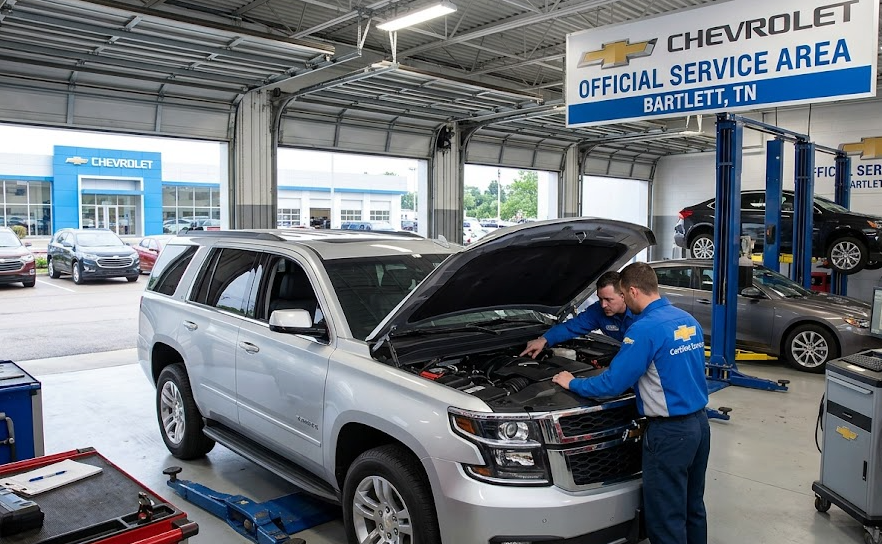
chevy official service

In this guide, we break down common Chevrolet service intervals, explain how GM Maintenance Minder fits in, connect the schedule to local West Tennessee driving patterns, and show you how our service team helps Bartlett-area drivers stay ahead of larger repair bills.

Definition: A Chevrolet maintenance schedule is the factory-recommended pattern of inspections and services used to help keep a Chevy safe, efficient, and reliable over time. It usually includes oil service, tire rotation, inspections, filters, fluids, and model-specific items based on mileage, time, and driving conditions.

Recommended Service Intervals for Your Chevrolet

Key Takeaway: The smartest Chevrolet maintenance schedule starts with factory guidance, but it works best when you match it to how you really drive in Bartlett and the surrounding areas.

What the Typical Chevrolet Service Rhythm Looks Like

For many Chevrolet owners, a good routine starting point is a service visit around every 7,500 miles or 12 months, especially for oil service, tire rotation, and basic inspections. That broad rhythm shows up across many Chevrolet dealer maintenance references, but Chevrolet’s own support materials make something just as important clear: your exact vehicle schedule should always be verified through your owner’s manual and your model-year guidance. That means the general cadence is useful, but it is not the whole story.

This is where a lot of maintenance confusion starts. Drivers want one neat number that works for every model and every use case. But a Chevrolet Equinox, Silverado 1500, Tahoe, or Traverse may not be driven the same way, even if they all live in Bartlett. A Lakeland owner who drives very low miles can still need time-based service because oil age, fluid condition, battery health, and inspection intervals do not disappear just because the odometer climbs slowly. A Bartlett commuter who does constant short trips can build wear differently than someone doing long highway miles into Memphis. That is why we recommend treating the schedule as a pattern to follow with model-specific checks, not as a single universal rule.

A simple way to think about the normal rhythm is this:

  • Regular oil service based on oil life or scheduled interval
  • Tire rotation at routine service points
  • Brake, battery, belt, hose, and fluid inspections on a regular basis
  • Air filter and cabin filter checks as part of ongoing upkeep
  • More attention to tires, brakes, and fluid condition when usage becomes heavier
Service ItemTypical Starting RhythmWhy It MattersBest For
Oil serviceAround 7,500 miles / 12 months as a broad guideHelps protect engine longevityMost owners
Tire rotationUsually paired with routine servicePromotes more even tire wearCommuters and families
Brake inspectionRegular inspection basisCatches wear before stopping performance dropsStop-and-go drivers
Fluid checksRoutine visit itemHelps spot issues before repairs growAll drivers
Cabin / engine filtersPeriodic inspection and replacementSupports airflow and system efficiencyDaily-use vehicles
Multi-point inspectionAt regular service visitsHelps catch small issues earlyAll drivers

Based on general Chevrolet/dealer maintenance guidance and Chevrolet owner resources.

What most owners do not realize is that “normal maintenance” is not just about mileage. Time matters, driving pattern matters, and inspection habits matter. Based on what we see at our dealership, owners who keep a consistent rhythm and respond to small service needs early usually avoid the larger repair conversations that come from waiting too long.
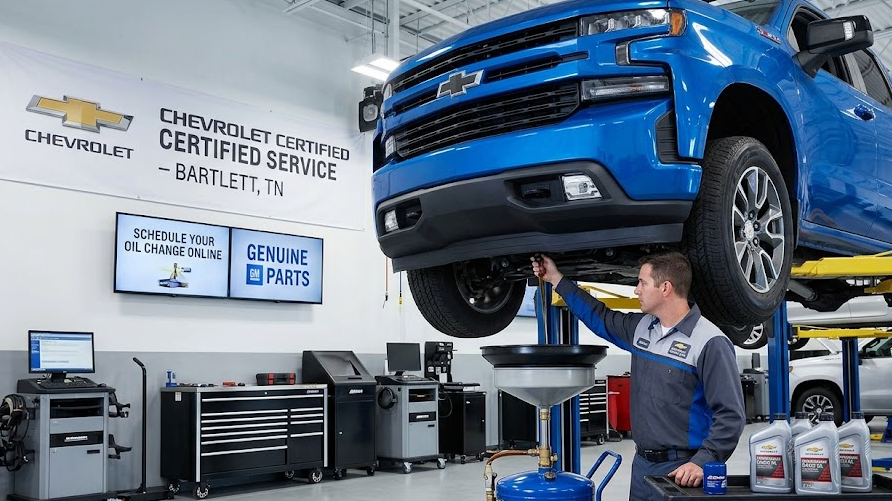
chevy oil change

Oil Changes, Tire Rotations, Inspections, and Filters Explained

The maintenance items owners hear most often are the ones that deserve the most plain-language explanation.

Oil service matters because it protects the engine over time and is one of the easiest maintenance items to delay when life gets busy. Tire rotations matter because uneven wear builds faster than many drivers expect, especially with regular commuting, short-trip driving, and family hauling. Brake inspections matter because the earlier we catch pad wear or uneven wear patterns, the easier the next step usually is. Filter checks matter because cabin comfort, airflow, and engine breathing all depend on items that wear out gradually and often go unnoticed until performance drops. Chevrolet service information and dealer maintenance references consistently center these items because they form the foundation of basic long-term vehicle care.

For a Bartlett commuter, oil and tires tend to move to the front of the conversation. For a Germantown family SUV owner doing school runs plus weekend highway trips, tire rotations and brake checks stay important because the vehicle sees a wide mix of load and trip length. For a Collierville truck owner towing occasionally, brakes, tires, and fluid condition deserve even more attention because towing changes how quickly some wear items matter.

We usually tell owners to think of maintenance in three buckets:

  • Protect the engine: oil service, fluid condition, inspection timing
  • Protect the contact points: tires, alignment awareness, brake wear
  • Protect daily comfort and reliability: battery, filters, wipers, seasonal checks

That is also why a multi-point inspection matters more than it sounds. It is not filler. It is the part of the visit that helps catch a tire issue, brake wear pattern, weak battery, leaking fluid, or filter condition before it turns into a bigger repair.

How GM Maintenance Minder Fits Into Your Service Timing

GM Maintenance Minder is useful, but it is not magic. Chevrolet and dealer maintenance guidance treat it as one part of the ownership picture, not the only part. In practical terms, it helps estimate engine oil life based on how the vehicle is driven. That makes it more helpful than a fixed sticker in many situations because it reflects actual use more than a one-size-fits-all estimate. But it still does not replace the owner’s manual, common-sense inspection timing, or service items that are not strictly tied to oil life.
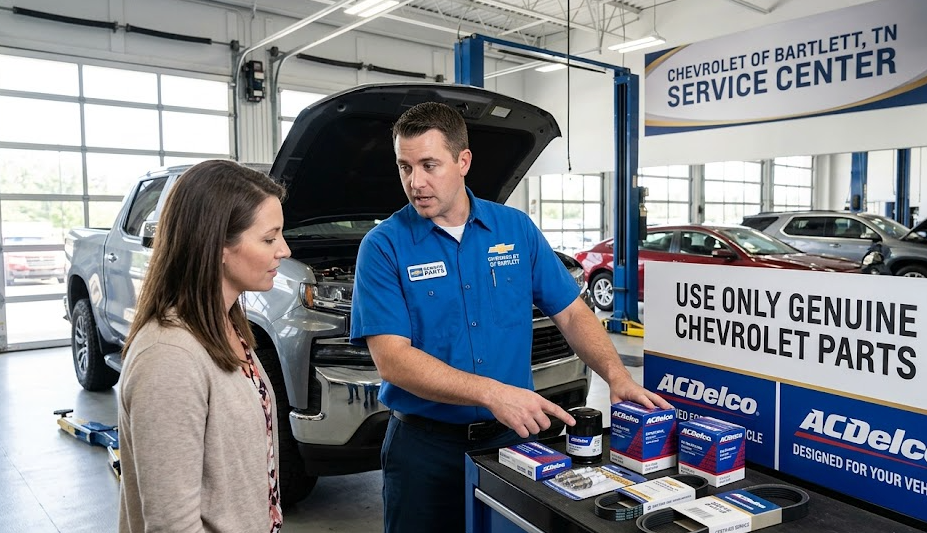
chevrolet service with genuine parts

For a Memphis-area commuter stuck in traffic, the system may bring oil service into focus differently than it would for a long-distance highway driver. For a Lakeland owner with lower mileage, it can help prevent the “I barely drove it, so I probably do not need service” mindset from stretching too far. For an Arlington family making many short stops each week, it is helpful, but it still does not answer every maintenance question by itself.

That is why our service team advises owners to use GM Maintenance Minder as a decision tool, not as a replacement for inspections, manual guidance, or regular service discipline.

Tennessee Driving Conditions That Affect Maintenance

Key Takeaway: Bartlett and Memphis-area driving can shift maintenance needs faster than owners expect because short trips, stop-and-go traffic, heat, and seasonal weather all change wear patterns.

How Local Driving Patterns Change Maintenance Needs

Not every mile is equal. That is one of the most important service truths for local Chevrolet owners. Short trips, repeated starts and stops, hot-weather driving, heavy traffic, and occasional towing all affect the way a vehicle ages. Bartlett and greater Memphis drivers often deal with exactly that mix. Even when annual mileage does not look high, the driving pattern can still be harder on oil life, brake wear, tires, and battery condition than a simpler highway routine would be.

For a Bartlett commuter doing repeated in-town drives, the maintenance conversation usually needs more attention on tires, brakes, and oil rhythm. For a Germantown family making school runs during the week and highway drives on weekends, the service needs are broader because the vehicle sees both stop-and-go use and longer travel. For a Memphis-area driver who sits in traffic often, brake wear and tire wear become more important to watch because the vehicle is constantly cycling through low-speed driving and frequent stops.

Local Driving PatternWhat It StressesWhat to Watch CloselyBest For
Frequent short tripsOil condition, battery, brake useOil timing, battery checks, brake inspectionBartlett in-town drivers
Stop-and-go Memphis trafficBrakes, tires, heat loadBrake wear, tire rotation rhythmDaily commuters
Summer heat and storm-season useBattery, fluids, tire conditionBattery health, fluids, tire inspectionWest Tennessee owners
Highway family travelTires, fluids, long-run reliabilityTire condition, filter checks, inspection timingGermantown / Collierville families
Occasional towingBrakes, tires, fluidsBrake checks, tire condition, fluid inspectionTruck and SUV towing users
Low-mileage ownershipTime-based wearCalendar-based service attentionLakeland low-mileage drivers

Based on general Chevrolet service resources and local-use interpretation.

The key difference between these conditions is not whether the vehicle can handle them. It can. The difference is how quickly they make routine maintenance matter. We recommend being more disciplined, not more anxious, when your driving pattern is built around short trips, traffic, towing, or weather swings.
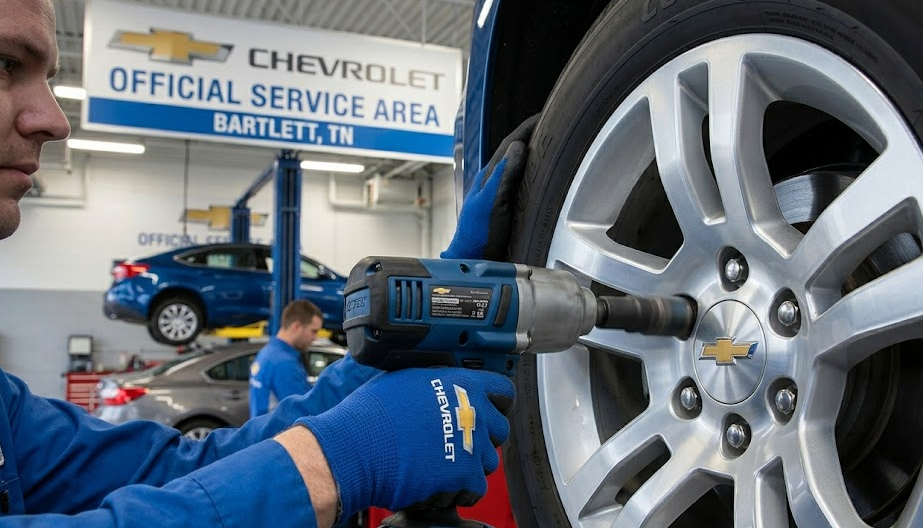
chevrolet service tire rotation

Which Maintenance Items Matter Most for Commuters, Families, and Towing Users

Once we translate local conditions into ownership types, the schedule gets clearer.

If you are a Bartlett commuter, we recommend prioritizing oil rhythm, tire rotation, brake inspections, and battery awareness because short trips and stop-and-go use build wear in ways many drivers underestimate.

If you are a Germantown or Collierville family driver, we recommend staying disciplined on tires, brakes, filters, and multi-point inspections because family loading, mixed trip lengths, and regular weekend travel create a wider wear pattern.

If you tow occasionally with a truck or SUV, we recommend extra attention to brakes, tires, and fluid condition because towing adds stress even when it is not constant.

If you are a Lakeland low-mileage owner, we recommend not letting the calendar disappear just because the mileage stays low.

If you drive heavily in Memphis traffic, we recommend staying ahead on brake and tire checks because those are the systems most likely to show the wear first.

For many owners, the smartest service rhythm is not a single mileage number. It is a pattern of regular visits that keeps oil, tires, brakes, fluids, and filters from drifting too far out of attention.

When drivers come to us asking whether they are “late” on service, we usually start with use pattern, not fear. We look at mileage, time, trip length, traffic exposure, and what the vehicle has been doing lately. That helps us give more practical guidance instead of just repeating a broad interval. We can also check the items that matter most right now, which often turns the conversation from vague worry into a clear next step. If you want our service team to help you sort that out, call us at 901-451-6720 or use our scheduling tools online.

Book Your Chevy Service at Dobbs Brothers Chevrolet

Key Takeaway: Staying ahead on routine Chevrolet maintenance usually costs less, disrupts less, and protects more than waiting until wear turns into a bigger repair.

How We Help Bartlett-Area Drivers Stay Ahead of Wear

Our service process is built around helping local Chevrolet owners stay ahead of problems instead of reacting after something has already gotten expensive. That starts with routine oil service, tire rotation, brake and fluid checks, battery awareness, and multi-point inspections. But the real value is in matching the service plan to the way you drive. A Bartlett commuter, a Germantown family SUV owner, a Lakeland low-mileage driver, and a Collierville truck owner towing occasionally should not all get the exact same conversation.

For Bartlett and Memphis-area drivers, staying ahead matters because local use patterns can create wear slowly and quietly. A battery can weaken before it fully fails. Tires can wear unevenly before the owner realizes rotation timing slipped. Brake wear can become more expensive when it is pushed too far. Fluids and filters can go from routine to neglected without a dramatic warning light. That is why we recommend using regular service visits as checkpoints, not just oil-change stops.

Owner ProfileMain RiskService PriorityWhy It Helps
Bartlett commuterShort-trip wear and brake useOil, tires, brakesKeeps daily-use wear in check
Germantown family driverMixed local and highway useTires, filters, inspectionsSupports family-trip reliability
Collierville truck ownerOccasional towing stressBrakes, tires, fluidsProtects towing confidence
Lakeland low-mileage ownerWaiting too long on time-based serviceCalendar-based visitsPrevents hidden neglect
Memphis traffic driverConstant stopping and heat exposureBrakes, tires, batteryReduces stress-related wear

Based on what we see here, drivers who stay on a consistent service rhythm usually keep ownership simpler and more predictable. That is the goal. Not over-servicing the vehicle, and not letting little things age into bigger bills.

We are here to help Chevrolet drivers from Bartlett, Memphis, Germantown, Collierville, Arlington, and Lakeland stay current without guessing. Our service center can help you schedule routine maintenance, check what is due, and talk through what matters most for your vehicle and your driving pattern. If you use GM Rewards, eligible paid certified service can also connect back into the ownership value conversation. You can visit us at 7850 HWY 64 in Bartlett, schedule online, or call 901-451-6720 and we will help you line up the right next step for your Chevy.

What GM Maintenance Minder Does and Does Not Tell You

Key Takeaway: GM Maintenance Minder is helpful for oil-life timing, but it does not replace the owner’s manual, inspections, or attention to how your Chevy is actually being used.

This is one of the biggest misunderstandings we see. Owners treat the Maintenance Minder like a complete maintenance plan when it is really a very useful signal inside a bigger plan. Chevrolet’s owner resources and dealer guidance make it clear that model-specific manual guidance still matters. The system may help estimate oil service timing based on driving behavior, but it does not erase the need for routine inspections, tire care, brake attention, filter checks, or time-based awareness.
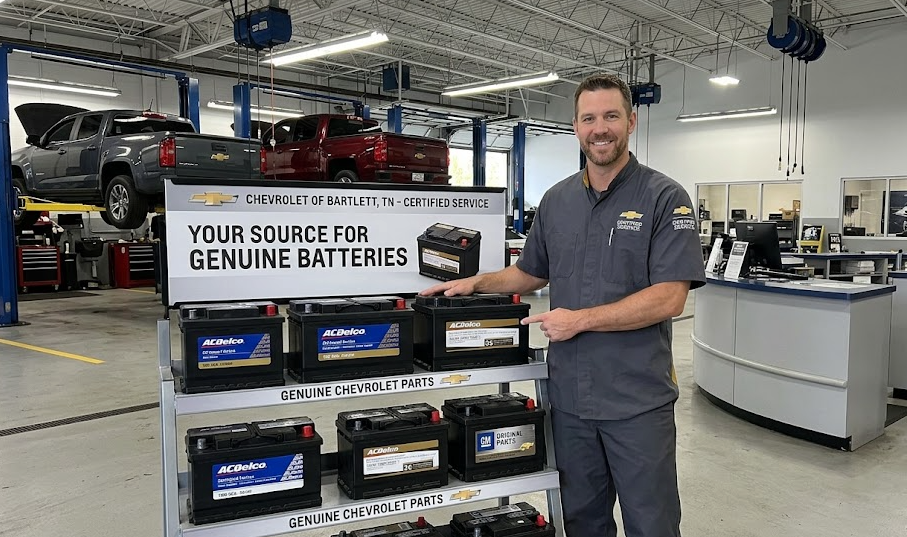
chevy official batteries

For a Memphis-area commuter in traffic, the system can be more helpful than a fixed sticker because the use pattern is not simple. For a Lakeland low-mileage owner, it can also help prevent the mistake of ignoring time-based service. But if a driver assumes “no warning means nothing matters,” that is where problems start. We recommend using the system as a guide and our service team as the place to verify what actually needs attention now.

Choosing a Service Rhythm That Matches How You Actually Drive

Key Takeaway: The right Chevrolet maintenance rhythm is the one that fits your driving pattern closely enough to prevent neglect without turning routine service into guesswork.

This is where a lot of owners either underdo maintenance or overdo it. The goal is not to service blindly. The goal is to build a rhythm that matches reality.

  • Choose a more consistent rhythm if you do short trips, stop-and-go driving, or mixed family use
  • Pay closer attention to brakes and tires if commuting or family hauling defines your week
  • Keep time-based service in mind even when miles stay low
  • Add more inspection discipline when towing or heavier use enters the picture

For an Arlington family doing lots of short trips, time and inspection timing matter more than the odometer alone suggests. For a Germantown commuter, a steady routine with oil, tires, and inspections usually keeps ownership simple. For a Collierville truck owner towing periodically, being “a little early” on brake and tire awareness is usually better than being late.

Key Takeaways

  • Many Chevrolet owners should think in terms of a broad 7,500-mile or 12-month rhythm, then verify by model and use case.
  • GM Maintenance Minder is useful, but it does not replace the owner’s manual.
  • Bartlett and Memphis-area short trips and traffic can make maintenance matter sooner.
  • Oil, tires, brakes, filters, fluids, and inspections are the core maintenance priorities.
  • Low mileage does not eliminate time-based service needs.
  • Routine service usually prevents bigger repair conversations later.

Chevrolet Maintenance Schedule FAQs for Bartlett TN Drivers

How often should I service my Chevrolet?

For many Chevrolet drivers, a broad starting point is around every 7,500 miles or 12 months for routine service, but the exact schedule depends on your model, owner’s manual, and how the vehicle is used. We recommend checking your manual and using GM Maintenance Minder as part of the decision, not the only factor. Short trips, traffic, towing, and local conditions can change what “normal” really looks like.

Does GM Maintenance Minder replace the owner’s manual?

No. It is helpful, but it does not replace the owner’s manual. It can help estimate oil service timing based on real driving behavior, but vehicle-specific service guidance, inspections, and other maintenance items still matter. That is why we recommend using it as a tool, not as a full maintenance plan by itself.

Do short trips and Memphis traffic count as severe driving?

They can absolutely increase maintenance importance. Short trips, stop-and-go traffic, repeated braking, and heat all change how some wear items age. That does not mean you need to panic or service the vehicle randomly. It means those driving patterns make inspections, tire care, brake awareness, and oil timing more important than they might be for a simple highway routine.

What maintenance should I never put off?

Oil service, tire care, brake inspections, and warning-light-related issues should never drift too far. Those are the areas where small delays can grow into larger costs or bigger safety concerns. We also do not recommend ignoring battery signs, fluid concerns, or visible tire wear just because the vehicle still “feels fine.”

We know Chevrolet maintenance can feel vague when you are trying to balance mileage, time, warning systems, and real life. That is why we focus on practical guidance that fits how you actually drive. At Dobbs Brothers Chevrolet, 7850 HWY 64, Bartlett, TN 38133, we help drivers from Bartlett, Memphis, Germantown, Collierville, Arlington, and Lakeland stay ahead on oil service, tire care, inspections, and the routine maintenance that protects long-term ownership. We can help you schedule the right visit, check what matters most now, and keep your Chevy on a more predictable rhythm. Call us at 901-451-6720 or use our online service tools and let us help you keep your vehicle in shape without guesswork.
Posted in:

Recommended Posts

Silverado EV Home Charging Guide for Bartlett

Silverado EV Home Charging Guide for Bartlett

For Bartlett drivers considering the 2026 Chevrolet Silverado EV, home charging comes down to three basic options: a standard household outlet for occasional top-offs, a dedicated 240-volt Level 2 charger for reliable overnight charging, and public DC fast charging for longer trips. Most Silverado EV owners do the vast majority of their charging at home overnight, which means the vehicle is ready to go every morning without a single stop at a public station. At Dobbs Brothers Chevrolet, we talk to EV-curious truck buyers and current gas-truck owners every week who want a straight answer on what home charging actually looks like day to day. A Cordova homeowner installing a garage-mounted Level 2 charger has a very different setup than a Bartlett contractor who needs to top off at a worksite between jobs, and both look different from a family planning a weekend tow to Pickwick Lake and wondering how far the range will really stretch. We carry the 2026 Silverado EV in our Bartlett showroom and work with customers through the charging setup process regularly. In this guide, we walk through Level 1, Level 2, and DC fast charging, compare your home charging options, and match specific ownership situations to what actually works, so you can plan your charging setup before you ever bring the truck home. Definition: Silverado EV home charging refers to the process of recharging the Chevrolet Silverado EV's battery using a household electrical outlet or a dedicated home charging station, rather than relying solely on public charging infrastructure. It typically involves either Level 1 charging through a standard 120-volt outlet or Level 2 charging through a professionally installed 240-volt system. For drivers in Bartlett and the greater Memphis area, the right home charging setup depends on daily driving distance, garage or driveway access, and how the truck is used for work or towing. In This Guide Silverado EV Charging Basics Level 1 and Level 2 Charging DC Fast Charging Range and Work Use Home Charging Readiness Charging Option Comparison Table Garage, Driveway, and Worksite Scenarios Memphis-Area EV Truck Ownership Commutes, Towing, and Summer Range Technology Deep Dive Service Floor Perspective Key Takeaways FAQ Silverado EV Charging Basics The Silverado EV supports three charging methods, and most owners rely on Level 2 home charging for daily use while treating DC fast charging as a road-trip tool rather than a daily habit. Level 1 and Level 2 Charging Level 1 charging uses a standard 120-volt household outlet, the same kind already in most Bartlett garages. It's the slowest method available, and we typically recommend it only for topping off a nearly full battery after a short errand run, not as a primary daily charging method. Level 2 charging uses a dedicated 240-volt circuit, which requires professional installation, and it's what most Silverado EV owners actually use every night. Level 1 (120V): best for occasional top-offs, not full overnight charging Level 2 (240V): GM-estimated 24 to 41 miles of range added per hour, professional installation required Level 2 charging typically restores a full charge overnight for most daily driving patterns Both options plug into the truck's standard charge port without special adapters at home For a Bartlett homeowner installing their first home charger, we recommend planning for Level 2 from the start rather than relying on a household outlet, since a 240-volt setup means the truck is genuinely ready every morning regardless of how much driving happened the day before. We carry this conversation into every Silverado EV sale, since getting the charging setup right up front avoids frustration down the road. Browse Silverado EV Inventory DC Fast Charging DC fast charging is built for the road, not the driveway. The 2026 Silverado EV can accept up to 350 kW at compatible public fast-charging stations, which Chevrolet estimates can add between 74 and 120 miles of range in just 10 minutes depending on trim and conditions. Chevy customers now have access to a network of more than 250,000 public chargers, including over 20,000 Tesla Supercharger locations that work with a GM-approved NACS adapter. Our sales team explains DC fast charging as the tool you use on a longer trip toward Nashville or when you need range in a hurry, not something you'll rely on for everyday Bartlett driving if you have home charging set up properly. For most local commuting and errands, overnight Level 2 charging at home covers the need entirely without a single stop at a public station. Range and Work Use Range on the 2026 Silverado EV varies by trim and battery configuration, with GM-estimated figures reaching up to 493 miles on the Max Range 8WT configuration and up to 478 miles on the LT and Trail Boss Max Range builds. What we see here in Bartlett is that most daily driving, including a full commute into Memphis and back, uses only a small fraction of a full charge, which is part of why overnight Level 2 charging works so well for most owners. For a Bartlett contractor running tools off the truck's offboard power system during the workday, range management matters more than it does for a typical commuter, since both driving and power draw pull from the same battery. The Silverado EV offers up to 11 outlets and up to 10.2 kW of available offboard power, which is useful on a job site, but we recommend planning your charging schedule around both driving and tool use if you're relying on the truck as a mobile power source. Charging Method Power Source Speed Typical Use Level 1 120V household outlet Slowest, several miles per hour Occasional top-offs Level 2 (Home) 240V dedicated circuit 24 to 41 miles per hour Overnight daily charging DC Fast Charging Public 350 kW stations 74 to 120 miles in 10 minutes Road trips and quick top-offs away from home Installation Required Level 2 needs professional install N/A One-time setup cost Public Network Access 250,000+ chargers, 20,000+ Superchargers via NACS adapter Varies by station Travel and backup charging Offboard Power Up to 11 outlets, 10.2 kW available N/A Worksite tools and equipment Best For Level 2 at home for daily driving, DC fast charging for travel, Level 1 for occasional backup Based on Chevrolet official website. Home Charging Readiness Most Silverado EV owners never need public charging for daily driving once a Level 2 home charger is properly installed, but the right setup depends on where and how you park. Charging Option Comparison Table When Bartlett drivers ask us how to plan their home charging setup, we walk through the tradeoffs between the three main charging methods based on daily driving patterns and access to installation space. Scenario Level 1 Level 2 DC Fast Charging Daily commute, home overnight Too slow for full recharge Best fit, full charge overnight Not needed daily No garage, driveway only Workable as backup Possible with outdoor-rated install Not practical daily Long weekend trips Not practical Good for topping off before departure Best fit, fast top-offs on the road Apartment or no charger access Limited usefulness Not available without install Best fit, relies on public network Worksite power needs Not applicable Good for overnight recovery after tool use Useful if traveling between job sites Upfront cost None, uses existing outlet Installation cost required No install cost, pay per session Best For Occasional backup charging only Most Bartlett homeowners with garage or driveway access Road trips and drivers without home charging access Based on Chevrolet official website. For most Bartlett homeowners with a garage or driveway, we recommend planning for Level 2 home charging from day one, since it covers essentially all daily driving needs without a single trip to a public charger. If you're renting or don't have a space for a dedicated charger, we recommend mapping out DC fast charging locations along your regular routes before you take delivery, so charging becomes part of your routine rather than an afterthought. Ask About Home Charging Equipment Garage, Driveway, and Worksite Scenarios Here's how we match specific ownership situations to a charging setup for our Bartlett customers: For a Bartlett homeowner with an attached garage, we recommend a professionally installed Level 2 charger mounted on the garage wall, since it's the most convenient and weather-protected setup for overnight charging. For a Germantown driver with only driveway access, we recommend an outdoor-rated Level 2 charging station, since standard Level 2 equipment can be installed outside with the right weatherproofing. For a Cordova contractor running a Silverado EV between job sites, we recommend planning charging around both driving distance and offboard power use, since running tools off the truck during the day will pull from the same battery you need for the drive home. If you're still working out your setup, use this quick check: If you have a garage or driveway and drive under 100 miles a day, Level 2 home charging alone will likely cover your needs. If you don't have space for a home charger, plan your routine around DC fast charging locations near your regular routes. If you use the truck for worksite power in addition to driving, plan your charging schedule around both uses together. If you're trying to figure out the right home charging setup before bringing home a Silverado EV, we'd rather walk through it with you in person than have you guess from a spec sheet. We keep Silverado EV units in stock at our Bartlett showroom, and our team can talk through Level 2 installation basics, connect you with charging equipment resources, and answer questions about how the truck fits your specific garage, driveway, or worksite situation. If you're weighing an EV truck against a gas Silverado for the first time, bring your daily driving routine and we'll help you figure out whether the charging setup actually works for your life, not just your interest in the technology. We've worked with Bartlett, Cordova, and Germantown customers through this exact process, and we're happy to talk through your specific home setup before you ever sign paperwork. You can browse our current Silverado EV inventory anytime at our new inventory page, or call us directly at 901-451-6720 to set up a time to talk through charging options. We want you confident in the setup before the truck ever comes home. Schedule a Silverado EV Test Drive Memphis-Area EV Truck Ownership Memphis-area summer heat, daily commute distances, and towing to local lakes all affect real-world Silverado EV range differently than the EPA-estimated numbers suggest. Commutes, Towing, and Summer Range Bartlett sits close enough to Memphis that most daily commutes fall well within a single charge, even accounting for real-world range being somewhat lower than GM-estimated figures. Where range planning matters more is towing and extreme heat. Memphis-area summer heat can affect battery performance and range similarly to how it affects any EV, and running the cabin air conditioning heavily during long, stop-and-go Hwy 64 traffic in July and August will reduce your effective range compared to cooler-weather driving. Towing has a bigger impact on range than most first-time EV truck buyers expect. For a Germantown family towing a camper or boat to Pickwick Lake, we recommend planning for meaningfully reduced range compared to the EPA-estimated figures, since towing draws significantly more energy than unloaded highway driving. The Silverado EV is rated to tow up to 12,500 pounds when properly equipped, and its regenerative braking can help provide engine-brake-like control when descending hills with a loaded trailer, but we still recommend planning charging stops more conservatively than you would for a gas truck's fuel stops. Driving Scenario Range Impact Recommendation Daily Bartlett-to-Memphis commute Minimal, well within a single charge Standard overnight Level 2 charging is sufficient Summer heat with heavy AC use on Hwy 64 Moderate reduction vs EPA estimate Charge to full before longer summer drives Towing a camper or boat to Pickwick Lake Significant reduction vs EPA estimate Plan charging stops more conservatively than a gas truck's fuel stops Highway trips toward Nashville or beyond Moderate reduction at higher speeds Use DC fast charging stops along the route Cold winter mornings Moderate reduction, typical of all EVs Precondition the battery while still plugged in when possible We've helped a number of Bartlett and Cordova drivers make the jump from a gas Silverado to the Silverado EV, and the questions almost always come back to range in real conditions, not the number on a spec sheet. If you're on the fence, we'd like to walk through your actual routine with you, your daily commute, whether you tow regularly, and how you plan to charge at home, before you commit to a configuration. Stop by our showroom at 7850 Hwy 64 and we'll talk through exactly how the Silverado EV would perform on your specific routes, including any regular runs out toward Pickwick Lake or Herb Parsons Lake. While you're here, ask about GM Rewards, since points earned on service visits and parts purchases can go toward your next visit. We work with drivers throughout Germantown, Collierville, and Lakeland who are considering the switch to an EV truck, so feel free to browse our inventory at dobbsbrotherschevy.com before you come in. Whatever you decide, we want you making that decision with real information, not just marketing numbers. Explore GM Rewards Benefits Technology Deep Dive The Silverado EV's charging and power tools go beyond basic range management, giving owners real control over how energy is used both on the road and at a worksite. Beyond the basic charging levels, the Silverado EV includes energy management tools designed to help owners plan around real driving conditions rather than relying on a single static range number. A range reserve feature lets drivers set aside a specific amount of range to guarantee reaching a particular destination, which is useful for a longer trip where charging options along the way are uncertain. The myChevrolet mobile app also helps locate charging stations along a planned route, which matters more for Silverado EV owners than for gas truck owners used to fuel stations on every corner. For a Bartlett contractor using the truck's offboard power system, the up to 11 available outlets and 10.2 kW of offboard power essentially turn the Silverado EV into a mobile generator for job site tools, work lighting, or even home backup power during an outage. We recommend thinking of this as a genuine feature rather than a novelty, since it can replace a separate generator for many small business and contractor use cases we see regularly in the Bartlett and Cordova area. Get Pre-Approved for Your Silverado EV Service Floor Perspective Our service team sees fewer routine maintenance visits with the Silverado EV compared to a gas truck, but charging equipment care still matters for long-term reliability. From our service floor, the biggest maintenance difference between the Silverado EV and a gas Silverado is the absence of oil changes, spark plugs, and traditional engine maintenance. That doesn't mean there's nothing to maintain. Our technicians recommend having your home Level 2 charging equipment inspected periodically, particularly the wiring and connection points, since a home charging setup gets used far more often than most household electrical circuits. We also recommend keeping an eye on tire wear, since electric trucks like the Silverado EV carry additional battery weight that can affect tire wear patterns compared to a gas-powered equivalent. Based on what we see at Dobbs Brothers Chevrolet, most Silverado EV owners report fewer overall service visits than they experienced with a gas truck, but the visits that do happen, particularly tire rotations and any charging equipment checks, matter just as much for keeping the truck running reliably long term. Schedule Silverado EV Service Key Takeaways Level 2 home charging (240V) adds a GM-estimated 24 to 41 miles of range per hour and covers most daily driving overnight. DC fast charging at 350 kW can add 74 to 120 miles of range in just 10 minutes for road trips. The 2026 Silverado EV offers up to 493 miles of GM-estimated range depending on trim and battery configuration. Towing to spots like Pickwick Lake meaningfully reduces range compared to EPA-estimated figures. For most Bartlett homeowners, a professionally installed Level 2 charger is the right home charging solution. The Silverado EV's offboard power system can support job site tools or serve as home backup power. Frequently Asked Questions How long does it take to charge a Silverado EV at home? With a Level 2 home charger, the Silverado EV adds a GM-estimated 24 to 41 miles of range per hour, which typically means a full overnight charge covers a complete recharge for most daily driving patterns. A standard 120-volt Level 1 outlet charges much more slowly and is better suited for occasional top-offs rather than a full daily recharge. Based on what we see at Dobbs Brothers Chevrolet, most Bartlett owners plug in every night and wake up with a full or nearly full battery. Do I need a special charger installed at my house? For daily Level 2 charging, yes, you'll need a professionally installed 240-volt charging station, since a standard household outlet only supports slower Level 1 charging. We recommend planning for this installation before your Silverado EV arrives, so the truck is ready to charge overnight from day one. Our team can point you toward resources for getting a Level 2 charger installed at your Bartlett or Cordova home. How much does towing affect Silverado EV range? Towing has a noticeably bigger impact on range than unloaded highway driving. For a family towing a camper or boat to Pickwick Lake, we recommend planning for a meaningful reduction from the EPA-estimated range figures rather than assuming full-charge numbers will hold while towing. The Silverado EV is rated to tow up to 12,500 pounds when properly equipped, but charging stops should be planned more conservatively than fuel stops on a comparable gas truck. Can the Silverado EV work as a backup power source? Yes, the Silverado EV offers up to 11 outlets and up to 10.2 kW of available offboard power, which can support job site tools, work lighting, or home backup power during an outage. We recommend planning your charging schedule around both driving and power use if you plan to rely on this feature regularly. Related Articles Keep reading more Chevrolet model comparisons, service guides, and ownership tips from Dobbs Brothers Chevrolet. EV Guide 2026 Chevrolet Blazer EV vs Equinox EV: Which Electric SUV for Bartlett Compare two of Chevrolet's electric SUV options for Bartlett-area drivers. Read More Towing Guide 2026 Chevrolet Towing Capacity Guide for Bartlett Drivers A closer look at towing capability across the Chevrolet lineup, including electric trucks. Read More Trim Guide 2026 Chevrolet Silverado 1500 Trim Levels Explained Near Bartlett TN Compare gas-powered Silverado trims for Bartlett-area truck buyers. Read More Maintenance Guide Chevrolet Maintenance Schedule and Tips for Bartlett Drivers General maintenance guidance for keeping any Chevrolet, gas or electric, running reliably. Read More

2026 Chevrolet Equinox ACTIV vs RS in Bartlett

2026 Chevrolet Equinox ACTIV vs RS in Bartlett

For Bartlett drivers comparing the 2026 Chevrolet Equinox ACTIV against the Equinox RS, the short answer is this: both share the same 1.5-liter turbocharged engine and 175 horsepower, so the real difference comes down to styling and standard drivetrain rather than raw performance. The ACTIV brings standard all-wheel drive, a raised suspension, and all-terrain tires for a more rugged stance, while the RS leans into a sportier look with darker exterior trim and a lower, firmer ride. At Dobbs Brothers Chevrolet, we help Bartlett and Cordova commuters weigh these two trims every week, and the decision usually comes down to daily driving conditions rather than horsepower. For a Cordova commuter who deals with wet or uneven pavement on the daily drive into Memphis, we often point toward the ACTIV and its standard all-wheel drive. For a Germantown driver who wants a sharper look and doesn't need standard AWD, the RS tends to be the better value. We carry both trims in our Bartlett showroom, and in this guide, we walk through the styling and equipment differences, compare specs side by side, and match specific driver profiles to the Equinox trim that fits their daily routine, so you can request current availability already knowing which configuration makes sense for your driving. Definition: The Chevrolet Equinox ACTIV and RS are two upper trim levels of the compact Equinox SUV, built around different personalities rather than different capability tiers. The ACTIV emphasizes rugged, all-weather utility with standard all-wheel drive, while the RS emphasizes sport-inspired styling and technology. For drivers in Bartlett and the greater Memphis area, each trim offers a different daily-driving benefit depending on road conditions and personal style preference. In This Guide Equinox Trim Differences ACTIV Design and Utility RS Style and Tech Engine, Safety, and Cabin Basics ACTIV or RS Buyer Fit ACTIV vs RS Comparison Table Commuting, Family, and Weekend Use Bartlett and Cordova Ownership Context Daily Parking, Weather, and Cargo Needs Local Dealer Insight Ownership Reality Check Key Takeaways FAQ Equinox Trim Differences The ACTIV and RS share the same engine and core technology, so the decision comes down to standard drivetrain, ride height, and styling personality. ACTIV Design and Utility The 2026 Chevrolet Equinox ACTIV is built around all-weather confidence. It comes with standard all-wheel drive rather than making it an option, along with a suspension raised roughly two inches over the LT and RS for better ground clearance. We carry this trim specifically for Bartlett and Cordova customers who deal with wet roads, gravel driveways, or uneven pavement on a regular basis. Standard all-wheel drive, not optional like on the RS Raised suspension for improved ground clearance All-terrain tires designed for light off-pavement use Unique exterior badging and roof rails Rugged-styled interior trim accents For a Cordova commuter driving through construction zones or rougher secondary roads on the way into Memphis, the ACTIV's raised stance and all-terrain tires add a real margin of comfort over standard road tires. Based on our experience at Dobbs Brothers Chevrolet, ACTIV buyers tend to be drivers who value functional confidence over outright styling, though the ACTIV still looks distinct with its roof rails and unique trim. Browse Equinox ACTIV Inventory RS Style and Tech The 2026 Chevrolet Equinox RS shares the ACTIV's 175-horsepower turbocharged engine, but it shifts the trim's focus toward sport-inspired styling rather than off-pavement capability. Our sales team walks customers through the RS's darker exterior trim, unique wheels, and sport body kit every week, and it's a popular pick for drivers who want a more aggressive look without stepping up to a different vehicle class. All-wheel drive remains optional on the RS rather than standard, which typically keeps its base price a bit more approachable for drivers who don't need it every day. For a Germantown driver whose daily commute stays mostly on paved roads and highways, the RS delivers the styling upgrade without paying for standard AWD you may not use. We find that RS buyers tend to prioritize how the vehicle looks in the driveway and drives on pavement, while still getting the same core technology and safety features as every other Equinox trim. Engine, Safety, and Cabin Basics Beyond the styling and drivetrain differences, both the ACTIV and RS share the same core Equinox foundation. Every 2026 Equinox comes with Chevy Safety Assist as standard equipment, which bundles automatic emergency braking, lane keep assist, and forward collision alert regardless of trim. Both trims also come with an 11.3-inch touchscreen, wireless Apple CarPlay and Android Auto, heated front seats, and a heated steering wheel as standard equipment. What we see here in Bartlett is that customers cross-shopping the ACTIV and RS are often surprised that neither trim gives up daily-use technology to get its distinct look. The 1.5-liter turbocharged engine producing 175 horsepower is identical across both trims, so acceleration and daily drivability feel the same whether you're in an ACTIV or an RS. The real-world difference shows up in ride height, tire type, and how the suspension responds to Bartlett's rougher side streets and Cordova's construction-heavy commuter routes. Feature Equinox ACTIV Equinox RS Engine 1.5L turbo, 175 hp 1.5L turbo, 175 hp Drivetrain AWD (standard) AWD (optional) Suspension / Ride Height Raised, off-road tuned Standard, sport-tuned Tires All-terrain Standard performance Touchscreen 11.3-inch standard 11.3-inch standard Styling Focus Rugged, adventure-ready Sport, blacked-out accents Best For All-weather confidence, rougher roads, standard AWD Sportier look, pavement-focused driving, lower cost of entry Based on Chevrolet official website. Confirm current pricing and availability with our sales team, as figures can shift by model year and configuration. ACTIV or RS Buyer Fit Choosing between the ACTIV and RS comes down to how much you value standard all-wheel drive versus a sportier, pavement-focused ride. ACTIV vs RS Comparison Table When Bartlett and Cordova drivers come in undecided between these two trims, we walk through a simple decision matrix built around daily driving conditions rather than styling preference alone. Scenario Equinox ACTIV Equinox RS Daily commute on wet or uneven roads Best suited, standard AWD and all-terrain tires Capable with optional AWD Sportier daily-driver look Rugged styling, not sport-focused Best suited, blacked-out sport styling Lower cost of entry Standard AWD adds to base cost Slightly more approachable without AWD Gravel driveways or rural roads Best suited, raised suspension Adequate on pavement, less ideal off it Highway commuting into Memphis Comfortable, all-weather confidence Comfortable, sportier ride feel Family errands and daily cargo Similar cargo room to RS Similar cargo room to ACTIV Best For Drivers who want standard all-weather capability Drivers who want sport styling without standard AWD Based on Chevrolet official website. For most Bartlett and Cordova drivers, we recommend the ACTIV when wet roads, rougher pavement, or occasional gravel driving are part of your regular routine, because standard all-wheel drive and all-terrain tires add real confidence the RS doesn't match without the optional AWD upgrade. If your driving stays mostly on smooth pavement and you want a sportier look, the RS delivers that without paying for capability you may not use daily. See Current New Chevy Specials Commuting, Family, and Weekend Use Here's how we match specific driver profiles to an Equinox trim inside our Bartlett showroom: For Cordova commuters who deal with construction zones and uneven pavement on the drive into Memphis, we recommend the ACTIV because standard AWD and all-terrain tires handle rough transitions more confidently than standard tires. For Germantown drivers who want a sportier look for daily errands and weekend drives, we recommend the RS because the darker trim and unique wheels deliver the styling upgrade without the added cost of standard AWD. For Collierville families who split time between smooth neighborhood streets and occasional gravel roads near local parks, we recommend the ACTIV for the added ground clearance and all-weather traction. If you're still deciding, use this quick check: If your daily drive includes wet, rough, or unpaved sections, we recommend the ACTIV. If your priority is sportier styling on mostly paved roads, we recommend the RS. If you're still unsure, our team can pull both trims from our Bartlett inventory so you can compare them side by side. If you're weighing the Equinox ACTIV against the RS, we genuinely think the fastest way to decide is sitting in both trims back to back at our Bartlett showroom. We keep a rotating selection of ACTIV and RS builds in stock, so you can compare the ride height, the tires, and the styling details in person rather than guessing from a spec sheet. Our sales team can also walk you through current new Chevy specials, since incentives on these two trims shift throughout the month. If your daily commute includes rougher roads around Cordova or Bartlett, bring up your specific route and we'll help you figure out whether standard AWD is worth it for your situation. We've helped drivers throughout Bartlett, Cordova, and Germantown make this exact comparison for years, and we're happy to talk through your daily routine before you ever sit in a vehicle. You can request current availability anytime through our Equinox model research page, or call us directly at 901-451-6720 to set up a time to compare both trims the same day. We want you confident in your choice, not just satisfied with it. Request Equinox ACTIV or RS Availability Bartlett and Cordova Ownership Context Bartlett's neighborhood streets and Cordova's commuter routes into Memphis create real, daily differences between how the ACTIV and RS feel to drive. Daily Parking, Weather, and Cargo Needs Bartlett and Cordova sit close enough to Memphis that a lot of our customers split their daily driving between quiet neighborhood streets and busier commuter routes with more construction and uneven pavement. That mix matters when you're choosing between the ACTIV and RS. During West Tennessee's wetter months, we've seen firsthand how the ACTIV's standard all-wheel drive and all-terrain tires keep traction more consistent on slick roads than the RS's standard tires, especially for Cordova commuters navigating construction zones on the way into Memphis. Daily parking is another area where the two trims feel similar rather than different, since both share the same compact Equinox footprint regardless of trim. Cargo room is also essentially identical between the ACTIV and RS, so neither trim gives up practical space to get its distinct styling. Because our dealership sits directly on Hwy 64 in Bartlett, we're positioned to let customers test both trims on the exact mix of roads they'll be driving every day, not a closed course that doesn't reflect real Bartlett and Cordova conditions. Local Condition ACTIV Advantage RS Advantage Wet or rainy commutes into Memphis Standard AWD improves traction Adequate with optional AWD Construction zones on Cordova commuter routes Raised suspension handles uneven pavement Standard ride height, less ground clearance Neighborhood street parking in Bartlett Similar footprint to RS Similar footprint to ACTIV Daily cargo for errands and groceries Comparable cargo room to RS Comparable cargo room to ACTIV Smooth highway commuting Comfortable, slightly firmer off-road tires Comfortable, sportier tuned ride Occasional gravel roads near Collierville parks Better suited, all-terrain tires Less ideal, standard tires We've watched a lot of Bartlett and Cordova drivers narrow this exact decision down to their actual daily commute rather than which trim looks better in photos. If you're ready to see how either trim handles your specific route, we'd rather show you than tell you. Stop by our showroom at 7850 Hwy 64 for a test drive that includes a stretch of your actual commute pattern, not just a parking lot loop. While you're here, ask our team about GM Rewards, which lets you earn points on service visits and parts purchases that can go toward your next Equinox or your current one's maintenance. We also work with drivers throughout Germantown and Collierville who prefer to schedule ahead, so feel free to browse our current Equinox inventory at dobbsbrotherschevy.com before you come in. Whether you end up in an ACTIV or an RS, we want the process to feel like talking to neighbors who happen to know a lot about Chevrolets, not a sales pitch. Schedule Your Equinox Test Drive Local Dealer Insight Being a Bartlett-based dealership lets us match Equinox trims to real Cordova and Memphis-area commuting patterns, not just showroom impressions. We're not guessing at how these two trims hold up around here, we're driving the same roads our customers drive every day. Our position on Hwy 64 means we regularly see how the ACTIV's standard AWD performs during Cordova's rush-hour construction detours and how the RS holds its sportier ride feel on smoother Bartlett neighborhood streets. That local vantage point shapes how we advise drivers when they come in undecided between these two trims. We also track which trim our own customer base tends to stick with over time. Cordova commuters who deal with regular construction and uneven pavement consistently tell us the ACTIV's all-terrain tires and standard AWD earn their keep, while Bartlett and Germantown drivers whose routes stay mostly on smooth roads tell us they appreciate the RS's styling without ever missing the ACTIV's off-pavement hardware. We share these patterns with new shoppers so the decision is grounded in how our own customers actually use these vehicles. Meet Our Bartlett Sales Team Ownership Reality Check The price gap between the ACTIV and RS is close enough that daily driving conditions, not sticker price, should usually drive the decision. Beyond the upfront price, we get a lot of ownership-cost questions from Bartlett and Cordova drivers comparing these two trims. The ACTIV's all-terrain tires typically wear differently than the RS's standard tires, and depending on how much rough-road driving you do, you may find yourself rotating or replacing them on a slightly different schedule. Our service team recommends checking tire wear at every oil change interval regardless of trim, since Memphis-area heat and stop-and-go traffic both accelerate wear on any tire type. Insurance costs are usually close between the two trims since they share the same engine and safety equipment, though the ACTIV's standard AWD can occasionally push comprehensive coverage costs up slightly compared to a base RS without AWD. Maintenance intervals are identical across both trims because they share the same 1.5-liter turbocharged engine, so oil changes, filter replacements, and factory-scheduled maintenance follow the same Chevrolet-recommended schedule either way. Where the two trims can diverge is resale value in a market like ours: Cordova and Memphis-area buyers shopping the used market sometimes place a premium on ACTIV trims because standard AWD is less common to find used at this price point, while RS trims often attract buyers who specifically want the sport styling and are comfortable without standard AWD. We recommend factoring your typical driving conditions, not just the purchase price, into which trim holds its value better for your situation. Get Pre-Approved for Your Equinox Key Takeaways The Equinox ACTIV and RS share the same 175-horsepower, 1.5-liter turbocharged engine. The ACTIV comes with standard all-wheel drive, a raised suspension, and all-terrain tires. The RS offers sportier styling with all-wheel drive available as an option rather than standard. Both trims include an 11.3-inch touchscreen and Chevy Safety Assist as standard equipment. For Cordova commuters dealing with rough or wet roads, we recommend the ACTIV. For drivers who want sport styling on mostly paved roads, we recommend the RS. Frequently Asked Questions What's the real difference between the Equinox ACTIV and RS? The core difference is drivetrain and styling rather than performance. The 2026 Equinox ACTIV comes with standard all-wheel drive, a raised suspension, and all-terrain tires for a more rugged, all-weather-ready setup. The RS shares the same 175-horsepower engine but focuses on sport-inspired styling, with all-wheel drive offered as an option instead of standard equipment. Based on what our sales team sees in Bartlett, the choice usually comes down to how much of your daily driving happens on rough or wet roads versus smooth pavement. Does the Equinox ACTIV have standard all-wheel drive? Yes. Unlike the RS, which offers all-wheel drive as an optional upgrade, the Equinox ACTIV comes with all-wheel drive as standard equipment across the trim. This is one of the main reasons we recommend the ACTIV for Cordova and Bartlett commuters who deal with wet or uneven roads on a regular basis, since it removes the AWD decision entirely rather than leaving it as an add-on choice. Is the Equinox RS just a styling package, or does it drive differently? The RS is primarily a styling and equipment trim rather than a performance upgrade, since it shares the same 1.5-liter turbocharged engine and 175 horsepower as the ACTIV. What changes is the exterior look, with darker trim, unique wheels, and a sport body kit, along with a standard ride height rather than the ACTIV's raised suspension. Drivers looking for the sportiest available look on the Equinox tend to gravitate toward the RS specifically for this styling difference. Which Equinox trim is better for Memphis-area rain and construction zones? For Cordova and Bartlett commutes that regularly involve wet roads or construction-related uneven pavement, we typically recommend the ACTIV. Its standard all-wheel drive and all-terrain tires handle these conditions more confidently than the RS's standard tire setup, particularly during West Tennessee's wetter months. Related Articles Keep reading more Chevrolet model comparisons, service guides, and ownership tips from Dobbs Brothers Chevrolet. SUV Guide 2026 Chevrolet Equinox vs Traverse: Which SUV Fits Your Bartlett Family See how the compact Equinox compares to the three-row Traverse for Bartlett-area families. Read More Trim Guide 2026 Chevrolet Trax ACTIV vs 2RS in Bartlett See how ACTIV and RS styling compare on the smaller Trax lineup. Read More Technology Guide 2026 Chevrolet Equinox Features and Technology Near Bartlett, TN A closer look at the tech and safety features standard across the Equinox lineup. Read More Back-to-School Guide 2026 Chevy SUVs for Back-to-School Season: Which Fits Your Bartlett Family? Compare the Trax, Equinox, Traverse, and Tahoe for school-year family routines. Read More

traverse z71 vs high country

Traverse Z71 vs High Country for Bartlett Families

For Bartlett families comparing the 2026 Chevrolet Traverse Z71 against the 2026 Chevrolet Traverse High Country, the short answer is this: the Z71 is built for grip, ground clearance, and rougher roads, while the High Country is built for comfort, technology, and a more upscale cabin. Both trims share the same 2.5-liter turbocharged engine, 328 horsepower, 326 lb-ft of torque, and 8-speed automatic transmission, so the real difference comes down to how and where you drive. At Dobbs Brothers Chevrolet, we help Bartlett, Memphis, and Germantown families weigh these two flagship Traverse trims every week, and the choice usually comes down to lifestyle rather than raw capability. For a Collierville family that spends weekends hauling a camper to Pickwick Lake or navigating gravel access roads near Shelby Farms, we typically point toward the Z71 and its Twin-Clutch AWD system. For an Arlington or Lakeland family that wants Super Cruise, massaging front seats, and a Bose premium sound system for long highway drives, the High Country tends to be the better fit. We carry both trims in our Bartlett showroom, and we know how each one drives on the roads our customers use every day, from the Hwy 64 corridor to I-40 access points around Memphis. In this guide, we walk through the trim-level differences, compare specs side by side, and match specific driver profiles to the Traverse that fits their needs, so you can walk into our dealership already knowing which configuration makes sense for your family and your budget. Definition: The Chevrolet Traverse Z71 and High Country are two top trim levels of the three-row Traverse SUV, built around different priorities: off-road capability versus premium comfort. The Z71 adds traction and ground clearance hardware, while the High Country adds advanced technology and upscale materials. For drivers in Bartlett and the greater Memphis area, each trim offers different practical benefits depending on terrain, towing needs, and seasonal weather. In This Guide Traverse Trim Positioning Z71 Capability High Country Comfort Engine, Seating, and Safety Which Traverse Trim Fits Z71 vs High Country Comparison Table Family Cargo and Weekend Use Memphis-Area Family Driving School Runs, Sports Gear, and Road Trips Local Dealer Insight Ownership Reality Check Key Takeaways FAQ Traverse Trim Positioning The Z71 trades nothing in engine power but adds off-road hardware and standard Twin-Clutch AWD, while the High Country keeps the standard ride and adds premium technology and comfort features. Z71 Capability The 2026 Chevrolet Traverse Z71 starts with the same 2.5-liter turbocharged engine as every other Traverse trim, producing 328 horsepower and 326 lb-ft of torque through an 8-speed automatic transmission. What sets the Z71 apart is standard Twin-Clutch AWD, a system that can send torque side to side across the rear axle instead of just splitting it front to rear. We carry this trim starting in our Bartlett inventory specifically for customers who need real traction, not just an AWD badge. Along with the Twin-Clutch system, the Z71 adds: Terrain Mode, which recalibrates the 8-speed transmission to hold lower gears longer for low-speed traction Hill Descent Control for controlled downhill travel on uneven grades Off-road-tuned suspension with additional ride height A skid plate that protects the turbocharged engine's oil pan from debris All-terrain tires and Z71-specific exterior badging For a weekend adventurer hauling kayaks or camping gear to Pickwick Lake or navigating gravel roads near Shelby Farms, the Z71's off-road hardware makes a real difference in how confident the SUV feels off pavement. Based on our experience at Dobbs Brothers Chevrolet, the Z71 also holds up well through West Tennessee's wetter months, since the Twin-Clutch AWD system responds faster to slippery pavement than a standard front-biased AWD setup. We do want to set expectations correctly: the Z71 is built for gravel, wet grass, light trail access, and confident all-weather driving rather than technical trail work. Browse Traverse Z71 Inventory High Country Comfort The 2026 Chevrolet Traverse High Country shares the Z71's 328-horsepower turbocharged engine, but it shifts the trim's priorities toward comfort and technology rather than terrain capability. Our sales team walks customers through the High Country's cabin upgrades every week, and the two features that get the most attention are Super Cruise, Chevrolet's hands-free highway driving system, and massaging front seats, a rare feature in this vehicle class. The High Country also adds a premium Bose sound system, additional leather trim, and unique 20-inch wheels that separate it visually from the rest of the lineup. For a family that spends more time on I-40 or Hwy 64 than on gravel roads, these features change the day-to-day experience of owning a Traverse more than any off-road hardware would. We find that High Country buyers tend to be families upgrading from a smaller Chevy SUV, like the Equinox, who want more space without giving up the tech features they are used to. All-wheel drive remains optional rather than standard on the High Country, so if all-weather traction matters as much as comfort, we recommend speaking with our team about adding it to your build. Engine, Seating, and Safety Beyond the headline differences, both the Z71 and High Country share the same core Traverse architecture underneath. Every 2026 Traverse comes with Chevy Safety Assist as standard equipment, which bundles automatic emergency braking, lane keep assist with lane departure warning, and forward collision alert regardless of trim. Seating configuration is where shoppers sometimes get surprised: the LT trim offers a flexible 7- or 8-passenger layout, but the Z71 and High Country are both configured with second-row captain's chairs, which brings seating to 7 passengers with more legroom and easier third-row access for kids and gear. What we see here in Bartlett is that families cross-shopping the Traverse against the three-row Chevy Blazer are usually surprised by how much more cargo room the Traverse offers behind the third row. Both the Z71 and High Country are available with an optional towing package that brings maximum towing capacity up to 5,000 pounds when properly equipped, which covers most small campers, jet ski trailers, and utility trailers that Memphis-area families haul to area lakes. The 17.7-inch infotainment touchscreen and wireless Apple CarPlay are standard across both trims, so neither buyer gives up daily-use technology by choosing one over the other. Feature Traverse Z71 Traverse High Country Engine 2.5L turbo, 328 hp / 326 lb-ft 2.5L turbo, 328 hp / 326 lb-ft AWD System Twin-Clutch AWD (standard) Available AWD (optional) Ride Height / Suspension Off-road-tuned, raised Standard Traverse tuning Seating 7-passenger, captain's chairs 7-passenger, captain's chairs Signature Tech Terrain Mode, Hill Descent Control Super Cruise, massaging front seats Max Towing (properly equipped) Up to 5,000 lbs Up to 5,000 lbs Best For Off-road access, all-weather traction, gravel and trail driving Highway comfort, premium tech, upscale cabin Based on Chevrolet official website. Which Traverse Trim Fits Choosing between the Z71 and High Country comes down to where you drive most, not which trim is objectively better. Z71 vs High Country Comparison Table When Bartlett families ask us directly which Traverse trim to choose, we start with a side-by-side look at how each one handles daily use versus weekend use. Below is our decision matrix comparing the Z71 and High Country, plus how the more budget-friendly LT trim fits into the conversation for context. Scenario Traverse Z71 Traverse High Country Traverse LT Daily commuting on Hwy 64/I-40 Comfortable, extra traction margin Most comfortable, quietest cabin Comfortable, fewer premium features Towing a camper or boat Confident with trailering package Equally capable with trailering package Available, less standard equipment Unpaved roads or gravel driveways Best suited, Twin-Clutch AWD plus skid plate Adequate with optional AWD Not ideal without AWD Long highway road trips Comfortable Best suited, Super Cruise reduces fatigue Comfortable Budget-conscious 3-row shopping Mid-range pricing Highest-priced Traverse trim Most affordable entry point Family with young kids Captain's chairs ease car seat access Captain's chairs ease car seat access 8-passenger option available Best For Families who mix pavement and unpaved roads Families who prioritize comfort and tech on long drives Families who want maximum value and passenger flexibility Based on Chevrolet official website. For most Bartlett families cross-shopping these two trims, we recommend the Traverse Z71 when unpaved roads, boat ramps, or camper towing are a regular part of your routine, because the standard Twin-Clutch AWD and off-road hardware add real capability the High Country does not match. If your driving is mostly highway and neighborhood streets, the High Country's comfort and technology package delivers more everyday value. See Current Chevrolet Special Offers Family Cargo and Weekend Use To make the decision easier, here's how we match specific driver profiles to a Traverse trim inside our Bartlett showroom: For Germantown families who tow a travel trailer to Pickwick Lake most summers, we recommend the Traverse Z71 because the standard Twin-Clutch AWD and trailering package handle boat-launch inclines and wet grass better than a standard AWD setup. For Collierville parents who spend more time on I-40 commuting to Memphis than on unpaved roads, we recommend the Traverse High Country because Super Cruise and the massaging front seats make long daily drives noticeably less tiring. For Arlington families cross-shopping the Traverse against a three-row Tahoe or Suburban, we recommend the Traverse High Country because it delivers a similar premium feel in a more efficient, easier-to-park footprint. If you're still not sure, use this quick check: If your weekends usually include gravel roads, boat ramps, or camping gear, we recommend the Z71. If your priority is the smoothest highway ride and the most advanced technology available on the Traverse, we recommend the High Country. If you're still deciding, our team can pull both trims from our Bartlett inventory so you can compare them back to back. If you're weighing the Traverse Z71 against the High Country, we genuinely think the best next step is sitting in both trims back to back at our Bartlett showroom. We keep a rotating selection of Z71 and High Country builds in stock, so you can compare the ride height, the captain's chairs, and the tech packages in person rather than guessing from a spec sheet. Our sales team can also walk you through current Chevrolet Special Offers on the Traverse lineup, since incentives on these two trims shift throughout the year. If towing capacity is part of your decision, bring your camper or trailer specs with you and we'll help you match the right trailering package to your setup. We've helped Bartlett, Memphis, and Germantown families make this exact comparison for years, and we're happy to talk through your specific driving habits before you ever sit in a vehicle. You can browse our live Traverse inventory anytime at our Traverse model research page, or call us directly at 901-451-6720 to set up a specific time to test drive both trims the same day. We want you to leave our lot confident in your choice, not just satisfied with it. Compare Traverse Z71 and High Country Memphis-Area Family Driving Bartlett and Memphis-area driving conditions, from storm-season rain to Hwy 64 traffic, make the Z71 and High Country perform differently in ways a spec sheet alone won't show. School Runs, Sports Gear, and Road Trips Bartlett sits right along the Hwy 64 corridor, which means most of our customers split their driving between suburban streets, highway commutes into Memphis, and the occasional gravel road out toward Lakeland or Arlington. That mix matters when you're choosing between the Z71 and High Country. During West Tennessee's storm season, heavy rain can turn neighborhood streets and construction-zone shortcuts slick fast, and we've seen firsthand how the Z71's Twin-Clutch AWD keeps traction more consistent than a standard AWD system in those conditions. For Collierville and Germantown drivers who deal with more standing water and debris on rural cut-throughs after storms, the Z71's raised ride height and skid plate add a real margin of confidence. On the other side, Memphis's summer heat puts more strain on climate and comfort systems than most drivers realize, and the High Country's additional cabin insulation and upgraded HVAC controls hold cooling performance better on long, stop-and-go Hwy 64 traffic during July and August. Because our dealership sits directly on Hwy 64 in Bartlett, we're positioned to let customers test both trims on the exact roads they'll be driving every day, not a closed course or a highway loop that doesn't reflect real Memphis-area conditions. Whether you're coming from Lakeland, Arlington, Collierville, or Germantown, our showroom is a short drive away, and we keep both trims ready for same-day test drives. Local Condition Z71 Advantage High Country Advantage Storm-season rain and standing water Twin-Clutch AWD improves traction Standard traction adequate on paved roads Gravel roads near Lakeland and Arlington Raised suspension, skid plate protection Not optimized for unpaved surfaces Hwy 64/I-40 stop-and-go summer traffic Comfortable, not the primary focus Enhanced cabin insulation and HVAC performance Boat ramps at Pickwick Lake or Herb Parsons Lake Better low-speed traction on wet grass and mud Adequate with optional AWD Long-distance Memphis commutes Solid, all-weather confidence Super Cruise reduces driver fatigue Neighborhood and school-zone driving in Bartlett Slightly firmer ride Smoother, quieter ride We've been part of the Bartlett community for years, and a lot of the families who buy a Traverse Z71 or High Country from us are repeat customers who first came in for a Silverado or an Equinox. If you're ready to see how either trim handles the roads you drive every day, we'd rather show you than tell you. Stop by our showroom at 7850 Hwy 64 for a test drive that actually includes a stretch of highway and a few side streets, not just a parking lot loop. While you're here, ask our team about GM Rewards, which lets you earn points on service visits and parts purchases that can go toward your next Traverse or your current one's maintenance. We also work with families throughout Germantown, Collierville, and Lakeland who prefer to schedule ahead, so feel free to browse our current Traverse inventory at dobbsbrotherschevy.com before you come in. Whether you end up in a Z71 or a High Country, we want the process to feel like talking to neighbors who happen to know a lot about Chevrolets, not a sales pitch. Schedule Your Traverse Test Drive Local Dealer Insight Being a Bartlett-based dealership on Hwy 64 lets us match Traverse trims to real driving routines, not just showroom impressions. We're not guessing at how these two trims perform around here, we're driving the same roads our customers drive every day. Our position on Hwy 64 means we regularly see how the Z71 handles the gravel cutoffs toward Lakeland and how the High Country holds up during Memphis rush hour on I-40. That local vantage point shapes how we advise Bartlett, Germantown, and Collierville families when they come in undecided between these two trims. We also track which trim tends to hold up best for our specific customer base over time. Families who tow trailers to Pickwick Lake or haul equipment for weekend projects consistently report back that the Z71's Twin-Clutch AWD earns its keep, while families whose driving stays mostly on pavement tell us the High Country's comfort features get used every single day rather than sitting unused. We share these patterns with new shoppers so the decision is grounded in how our own customers actually use these vehicles, not just factory marketing copy. Meet Our Bartlett Sales Team Ownership Reality Check The sticker price gap between the Z71 and High Country isn't the only cost difference worth considering, tires, resale, and typical use all factor in too. Beyond the upfront price, we get a lot of ownership-cost questions from Bartlett families comparing these two trims. The Z71's all-terrain tires typically wear differently than the High Country's standard road tires, and depending on how much unpaved driving you do, you may find yourself rotating or replacing them on a slightly different schedule. Our service team recommends checking tire wear at every oil change interval regardless of trim, since Memphis-area heat and stop-and-go traffic both accelerate wear. Insurance costs are usually close between the two trims since they share the same engine and safety equipment, though the High Country's higher price point and additional tech features can occasionally push comprehensive coverage costs up slightly. Maintenance intervals are identical across both trims because they share the same 2.5-liter turbocharged engine and 8-speed transmission, so oil changes, filter replacements, and factory-scheduled maintenance follow the same Chevrolet-recommended schedule either way. Where the two trims genuinely diverge is resale value in a market like ours: Bartlett and Memphis-area buyers shopping the used market tend to place a premium on Z71 trims because off-road-capable three-row SUVs are less common in local used inventory, while High Country trims often attract buyers moving up from a Blazer or Equinox who want a specific luxury feature set. We recommend factoring your typical driving conditions, not just the purchase price, into which trim holds its value better for your situation. Get Pre-Approved for Your Traverse Key Takeaways The Traverse Z71 and High Country share the same 328-horsepower turbocharged engine and 8-speed transmission. The Z71 adds standard Twin-Clutch AWD, Terrain Mode, and off-road hardware for unpaved roads and towing. The High Country adds Super Cruise, massaging front seats, and a Bose premium sound system for highway comfort. Both trims offer up to 5,000 pounds of towing capacity when properly equipped. For Bartlett families who regularly drive gravel roads or tow near local lakes, we recommend the Z71. For families who prioritize highway comfort and technology, we recommend the High Country. Frequently Asked Questions Which Traverse trim is better for towing, the Z71 or High Country? Both the 2026 Traverse Z71 and High Country offer the same maximum towing capacity of up to 5,000 pounds when equipped with the available trailering package, so towing capacity alone won't decide this for you. Where the two trims differ is confidence at the boat ramp or campsite. Based on what our service team sees in Bartlett, the Z71's standard Twin-Clutch AWD and off-road-tuned suspension make backing a trailer down a wet or unpaved ramp noticeably easier, which matters for families launching boats at Pickwick Lake or Herb Parsons Lake. If most of your towing happens on paved roads to a campground, either trim will get the job done. Does the Traverse High Country come with Super Cruise? Super Cruise is one of the signature features available on the 2026 Chevrolet Traverse High Country, and it's a major reason families choose this trim over the Z71. Super Cruise allows hands-free driving on compatible mapped highways, which our customers commuting into Memphis on I-40 tend to appreciate most during longer, repetitive drives. The system uses a driver-facing camera to confirm attention is on the road, so it's designed to reduce fatigue rather than remove the driver from the loop entirely. The Z71 does not offer Super Cruise, since its trim focus is off-road hardware rather than highway-assist technology. Is the Traverse Z71 good for Bartlett's rainy season? We get this question often heading into West Tennessee's wetter months, and the short answer is yes. The Traverse Z71's Twin-Clutch AWD system actively sends torque across the rear axle for better grip on wet or uneven pavement, which our technicians have found performs more consistently in heavy rain than a standard front-biased AWD setup. Add in the Z71's slightly raised ride height and all-terrain tires, and it handles flooded intersections, muddy shoulders, and slick neighborhood streets around Bartlett and Collierville with more margin than the standard Traverse trims. If storm-season driving is a real part of your year, we typically recommend the Z71 over the High Country. Can I add all-wheel drive to the High Country? Yes, all-wheel drive is available as an option on the Traverse High Country, it just isn't standard the way it is on the Z71. Our sales team can walk you through current AWD availability and pricing on in-stock High Country builds, since configuration can vary by specific vehicle. Related Articles Keep reading more Chevrolet model comparisons, service guides, and ownership tips from Dobbs Brothers Chevrolet. SUV Guide 2026 Chevrolet Equinox vs Traverse: Which SUV Fits Your Bartlett Family See how the compact Equinox compares to the three-row Traverse for Bartlett-area families. Read More Family Features Guide 2026 Chevrolet Traverse Features and Family Amenities near Bartlett, TN A closer look at the family-friendly technology and cargo features across the Traverse lineup. Read More Style Comparison 2026 Chevrolet Blazer vs Traverse: Style or Space in Bartlett TN Compare the sportier two-row Blazer against the family-focused three-row Traverse. Read More Back-to-School Guide 2026 Chevy SUVs for Back-to-School Season: Which Fits Your Bartlett Family? Compare the Trax, Equinox, Traverse, and Tahoe for school-year family routines. Read More