




For Bartlett drivers considering the 2026 Chevrolet Silverado EV, home charging comes down to three basic options: a standard household outlet for occasional top-offs, a dedicated 240-volt Level 2 charger for reliable overnight charging, and public DC fast charging for longer trips. Most Silverado EV owners do the vast majority of their charging at home overnight, which means the vehicle is ready to go every morning without a single stop at a public station.
At Dobbs Brothers Chevrolet, we talk to EV-curious truck buyers and current gas-truck owners every week who want a straight answer on what home charging actually looks like day to day. A Cordova homeowner installing a garage-mounted Level 2 charger has a very different setup than a Bartlett contractor who needs to top off at a worksite between jobs, and both look different from a family planning a weekend tow to Pickwick Lake and wondering how far the range will really stretch.
We carry the 2026 Silverado EV in our Bartlett showroom and work with customers through the charging setup process regularly. In this guide, we walk through Level 1, Level 2, and DC fast charging, compare your home charging options, and match specific ownership situations to what actually works, so you can plan your charging setup before you ever bring the truck home.
Silverado EV Charging Basics
Level 1 and Level 2 Charging
Level 1 charging uses a standard 120-volt household outlet, the same kind already in most Bartlett garages. It's the slowest method available, and we typically recommend it only for topping off a nearly full battery after a short errand run, not as a primary daily charging method. Level 2 charging uses a dedicated 240-volt circuit, which requires professional installation, and it's what most Silverado EV owners actually use every night.
- Level 1 (120V): best for occasional top-offs, not full overnight charging
- Level 2 (240V): GM-estimated 24 to 41 miles of range added per hour, professional installation required
- Level 2 charging typically restores a full charge overnight for most daily driving patterns
- Both options plug into the truck's standard charge port without special adapters at home
For a Bartlett homeowner installing their first home charger, we recommend planning for Level 2 from the start rather than relying on a household outlet, since a 240-volt setup means the truck is genuinely ready every morning regardless of how much driving happened the day before. We carry this conversation into every Silverado EV sale, since getting the charging setup right up front avoids frustration down the road.
Browse Silverado EV InventoryDC Fast Charging
DC fast charging is built for the road, not the driveway. The 2026 Silverado EV can accept up to 350 kW at compatible public fast-charging stations, which Chevrolet estimates can add between 74 and 120 miles of range in just 10 minutes depending on trim and conditions. Chevy customers now have access to a network of more than 250,000 public chargers, including over 20,000 Tesla Supercharger locations that work with a GM-approved NACS adapter.
Our sales team explains DC fast charging as the tool you use on a longer trip toward Nashville or when you need range in a hurry, not something you'll rely on for everyday Bartlett driving if you have home charging set up properly. For most local commuting and errands, overnight Level 2 charging at home covers the need entirely without a single stop at a public station.
Range and Work Use
Range on the 2026 Silverado EV varies by trim and battery configuration, with GM-estimated figures reaching up to 493 miles on the Max Range 8WT configuration and up to 478 miles on the LT and Trail Boss Max Range builds. What we see here in Bartlett is that most daily driving, including a full commute into Memphis and back, uses only a small fraction of a full charge, which is part of why overnight Level 2 charging works so well for most owners.
For a Bartlett contractor running tools off the truck's offboard power system during the workday, range management matters more than it does for a typical commuter, since both driving and power draw pull from the same battery. The Silverado EV offers up to 11 outlets and up to 10.2 kW of available offboard power, which is useful on a job site, but we recommend planning your charging schedule around both driving and tool use if you're relying on the truck as a mobile power source.
| Charging Method | Power Source | Speed | Typical Use |
|---|---|---|---|
| Level 1 | 120V household outlet | Slowest, several miles per hour | Occasional top-offs |
| Level 2 (Home) | 240V dedicated circuit | 24 to 41 miles per hour | Overnight daily charging |
| DC Fast Charging | Public 350 kW stations | 74 to 120 miles in 10 minutes | Road trips and quick top-offs away from home |
| Installation Required | Level 2 needs professional install | N/A | One-time setup cost |
| Public Network Access | 250,000+ chargers, 20,000+ Superchargers via NACS adapter | Varies by station | Travel and backup charging |
| Offboard Power | Up to 11 outlets, 10.2 kW available | N/A | Worksite tools and equipment |
| Best For | Level 2 at home for daily driving, DC fast charging for travel, Level 1 for occasional backup | ||
Based on Chevrolet official website.
Home Charging Readiness
Charging Option Comparison Table
When Bartlett drivers ask us how to plan their home charging setup, we walk through the tradeoffs between the three main charging methods based on daily driving patterns and access to installation space.
| Scenario | Level 1 | Level 2 | DC Fast Charging |
|---|---|---|---|
| Daily commute, home overnight | Too slow for full recharge | Best fit, full charge overnight | Not needed daily |
| No garage, driveway only | Workable as backup | Possible with outdoor-rated install | Not practical daily |
| Long weekend trips | Not practical | Good for topping off before departure | Best fit, fast top-offs on the road |
| Apartment or no charger access | Limited usefulness | Not available without install | Best fit, relies on public network |
| Worksite power needs | Not applicable | Good for overnight recovery after tool use | Useful if traveling between job sites |
| Upfront cost | None, uses existing outlet | Installation cost required | No install cost, pay per session |
| Best For | Occasional backup charging only | Most Bartlett homeowners with garage or driveway access | Road trips and drivers without home charging access |
Based on Chevrolet official website.
For most Bartlett homeowners with a garage or driveway, we recommend planning for Level 2 home charging from day one, since it covers essentially all daily driving needs without a single trip to a public charger. If you're renting or don't have a space for a dedicated charger, we recommend mapping out DC fast charging locations along your regular routes before you take delivery, so charging becomes part of your routine rather than an afterthought.
Ask About Home Charging EquipmentGarage, Driveway, and Worksite Scenarios
Here's how we match specific ownership situations to a charging setup for our Bartlett customers:
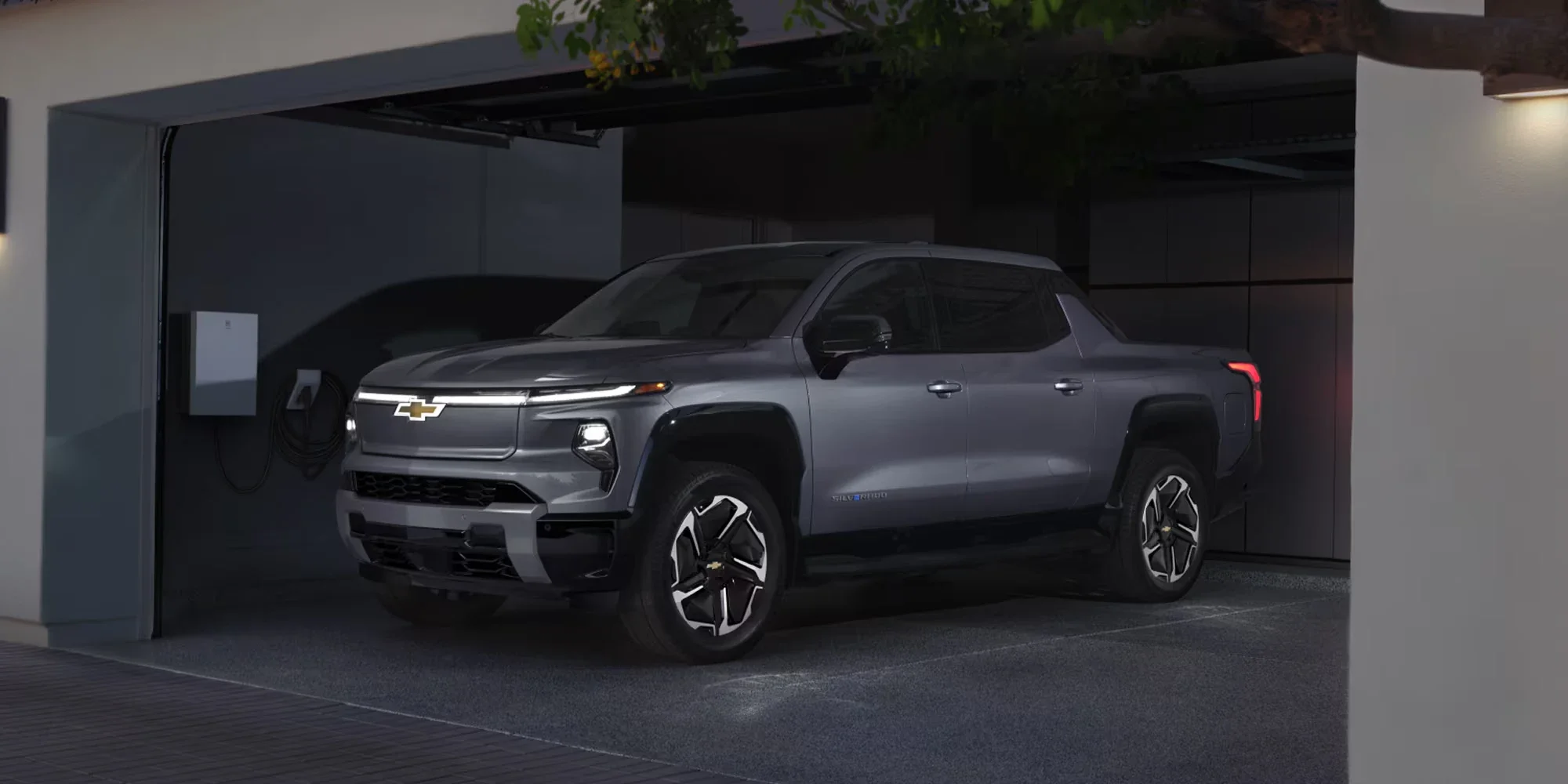
- For a Bartlett homeowner with an attached garage, we recommend a professionally installed Level 2 charger mounted on the garage wall, since it's the most convenient and weather-protected setup for overnight charging.
- For a Germantown driver with only driveway access, we recommend an outdoor-rated Level 2 charging station, since standard Level 2 equipment can be installed outside with the right weatherproofing.
- For a Cordova contractor running a Silverado EV between job sites, we recommend planning charging around both driving distance and offboard power use, since running tools off the truck during the day will pull from the same battery you need for the drive home.
If you're still working out your setup, use this quick check:
- If you have a garage or driveway and drive under 100 miles a day, Level 2 home charging alone will likely cover your needs.
- If you don't have space for a home charger, plan your routine around DC fast charging locations near your regular routes.
- If you use the truck for worksite power in addition to driving, plan your charging schedule around both uses together.
If you're trying to figure out the right home charging setup before bringing home a Silverado EV, we'd rather walk through it with you in person than have you guess from a spec sheet. We keep Silverado EV units in stock at our Bartlett showroom, and our team can talk through Level 2 installation basics, connect you with charging equipment resources, and answer questions about how the truck fits your specific garage, driveway, or worksite situation. If you're weighing an EV truck against a gas Silverado for the first time, bring your daily driving routine and we'll help you figure out whether the charging setup actually works for your life, not just your interest in the technology. We've worked with Bartlett, Cordova, and Germantown customers through this exact process, and we're happy to talk through your specific home setup before you ever sign paperwork. You can browse our current Silverado EV inventory anytime at our new inventory page, or call us directly at 901-451-6720 to set up a time to talk through charging options. We want you confident in the setup before the truck ever comes home.
Memphis-Area EV Truck Ownership
Commutes, Towing, and Summer Range
Bartlett sits close enough to Memphis that most daily commutes fall well within a single charge, even accounting for real-world range being somewhat lower than GM-estimated figures. Where range planning matters more is towing and extreme heat. Memphis-area summer heat can affect battery performance and range similarly to how it affects any EV, and running the cabin air conditioning heavily during long, stop-and-go Hwy 64 traffic in July and August will reduce your effective range compared to cooler-weather driving.
Towing has a bigger impact on range than most first-time EV truck buyers expect. For a Germantown family towing a camper or boat to Pickwick Lake, we recommend planning for meaningfully reduced range compared to the EPA-estimated figures, since towing draws significantly more energy than unloaded highway driving. The Silverado EV is rated to tow up to 12,500 pounds when properly equipped, and its regenerative braking can help provide engine-brake-like control when descending hills with a loaded trailer, but we still recommend planning charging stops more conservatively than you would for a gas truck's fuel stops.
| Driving Scenario | Range Impact | Recommendation |
|---|---|---|
| Daily Bartlett-to-Memphis commute | Minimal, well within a single charge | Standard overnight Level 2 charging is sufficient |
| Summer heat with heavy AC use on Hwy 64 | Moderate reduction vs EPA estimate | Charge to full before longer summer drives |
| Towing a camper or boat to Pickwick Lake | Significant reduction vs EPA estimate | Plan charging stops more conservatively than a gas truck's fuel stops |
| Highway trips toward Nashville or beyond | Moderate reduction at higher speeds | Use DC fast charging stops along the route |
| Cold winter mornings | Moderate reduction, typical of all EVs | Precondition the battery while still plugged in when possible |
We've helped a number of Bartlett and Cordova drivers make the jump from a gas Silverado to the Silverado EV, and the questions almost always come back to range in real conditions, not the number on a spec sheet. If you're on the fence, we'd like to walk through your actual routine with you, your daily commute, whether you tow regularly, and how you plan to charge at home, before you commit to a configuration. Stop by our showroom at 7850 Hwy 64 and we'll talk through exactly how the Silverado EV would perform on your specific routes, including any regular runs out toward Pickwick Lake or Herb Parsons Lake. While you're here, ask about GM Rewards, since points earned on service visits and parts purchases can go toward your next visit. We work with drivers throughout Germantown, Collierville, and Lakeland who are considering the switch to an EV truck, so feel free to browse our inventory at dobbsbrotherschevy.com before you come in. Whatever you decide, we want you making that decision with real information, not just marketing numbers.
Technology Deep Dive
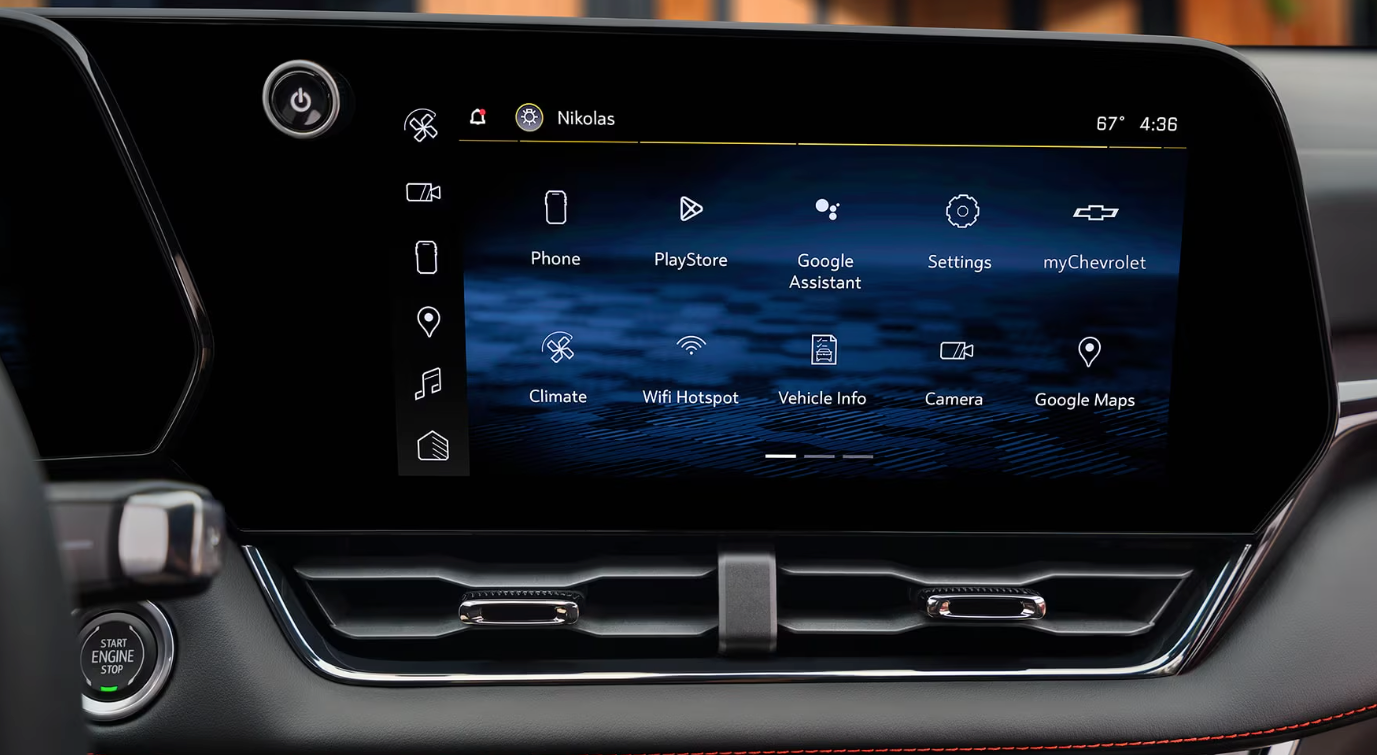
Beyond the basic charging levels, the Silverado EV includes energy management tools designed to help owners plan around real driving conditions rather than relying on a single static range number. A range reserve feature lets drivers set aside a specific amount of range to guarantee reaching a particular destination, which is useful for a longer trip where charging options along the way are uncertain. The myChevrolet mobile app also helps locate charging stations along a planned route, which matters more for Silverado EV owners than for gas truck owners used to fuel stations on every corner.
For a Bartlett contractor using the truck's offboard power system, the up to 11 available outlets and 10.2 kW of offboard power essentially turn the Silverado EV into a mobile generator for job site tools, work lighting, or even home backup power during an outage. We recommend thinking of this as a genuine feature rather than a novelty, since it can replace a separate generator for many small business and contractor use cases we see regularly in the Bartlett and Cordova area.
Get Pre-Approved for Your Silverado EVService Floor Perspective
From our service floor, the biggest maintenance difference between the Silverado EV and a gas Silverado is the absence of oil changes, spark plugs, and traditional engine maintenance. That doesn't mean there's nothing to maintain. Our technicians recommend having your home Level 2 charging equipment inspected periodically, particularly the wiring and connection points, since a home charging setup gets used far more often than most household electrical circuits.
We also recommend keeping an eye on tire wear, since electric trucks like the Silverado EV carry additional battery weight that can affect tire wear patterns compared to a gas-powered equivalent. Based on what we see at Dobbs Brothers Chevrolet, most Silverado EV owners report fewer overall service visits than they experienced with a gas truck, but the visits that do happen, particularly tire rotations and any charging equipment checks, matter just as much for keeping the truck running reliably long term.
Schedule Silverado EV ServiceKey Takeaways
- Level 2 home charging (240V) adds a GM-estimated 24 to 41 miles of range per hour and covers most daily driving overnight.
- DC fast charging at 350 kW can add 74 to 120 miles of range in just 10 minutes for road trips.
- The 2026 Silverado EV offers up to 493 miles of GM-estimated range depending on trim and battery configuration.
- Towing to spots like Pickwick Lake meaningfully reduces range compared to EPA-estimated figures.
- For most Bartlett homeowners, a professionally installed Level 2 charger is the right home charging solution.
- The Silverado EV's offboard power system can support job site tools or serve as home backup power.
Frequently Asked Questions
How long does it take to charge a Silverado EV at home?
With a Level 2 home charger, the Silverado EV adds a GM-estimated 24 to 41 miles of range per hour, which typically means a full overnight charge covers a complete recharge for most daily driving patterns. A standard 120-volt Level 1 outlet charges much more slowly and is better suited for occasional top-offs rather than a full daily recharge. Based on what we see at Dobbs Brothers Chevrolet, most Bartlett owners plug in every night and wake up with a full or nearly full battery.
Do I need a special charger installed at my house?
For daily Level 2 charging, yes, you'll need a professionally installed 240-volt charging station, since a standard household outlet only supports slower Level 1 charging. We recommend planning for this installation before your Silverado EV arrives, so the truck is ready to charge overnight from day one. Our team can point you toward resources for getting a Level 2 charger installed at your Bartlett or Cordova home.
How much does towing affect Silverado EV range?
Towing has a noticeably bigger impact on range than unloaded highway driving. For a family towing a camper or boat to Pickwick Lake, we recommend planning for a meaningful reduction from the EPA-estimated range figures rather than assuming full-charge numbers will hold while towing. The Silverado EV is rated to tow up to 12,500 pounds when properly equipped, but charging stops should be planned more conservatively than fuel stops on a comparable gas truck.
Can the Silverado EV work as a backup power source?
Yes, the Silverado EV offers up to 11 outlets and up to 10.2 kW of available offboard power, which can support job site tools, work lighting, or home backup power during an outage. We recommend planning your charging schedule around both driving and power use if you plan to rely on this feature regularly.
Related Articles
Keep reading more Chevrolet model comparisons, service guides, and ownership tips from Dobbs Brothers Chevrolet.
EV Guide
2026 Chevrolet Blazer EV vs Equinox EV: Which Electric SUV for Bartlett
Compare two of Chevrolet's electric SUV options for Bartlett-area drivers.
Towing Guide
2026 Chevrolet Towing Capacity Guide for Bartlett Drivers
A closer look at towing capability across the Chevrolet lineup, including electric trucks.
Trim Guide
2026 Chevrolet Silverado 1500 Trim Levels Explained Near Bartlett TN
Compare gas-powered Silverado trims for Bartlett-area truck buyers.
Maintenance Guide
Chevrolet Maintenance Schedule and Tips for Bartlett Drivers
General maintenance guidance for keeping any Chevrolet, gas or electric, running reliably.